I have spent a lot of time reading about the Georgia Guidestones. This article covers everything you need to know.
You will learn what was written on the stones, what those messages meant, and why people loved or feared them.
I cover the history, the ten inscriptions, the controversy, and how the monument was blown up in 2022.
I have pulled together facts and context so you do not have to search all over. One thing I can tell you after all this research, these stones raised more questions than they answered.
If you have ever wondered what the Georgia Guidestones were really about, you are in the right place.
The History of the Georgia Guidestones
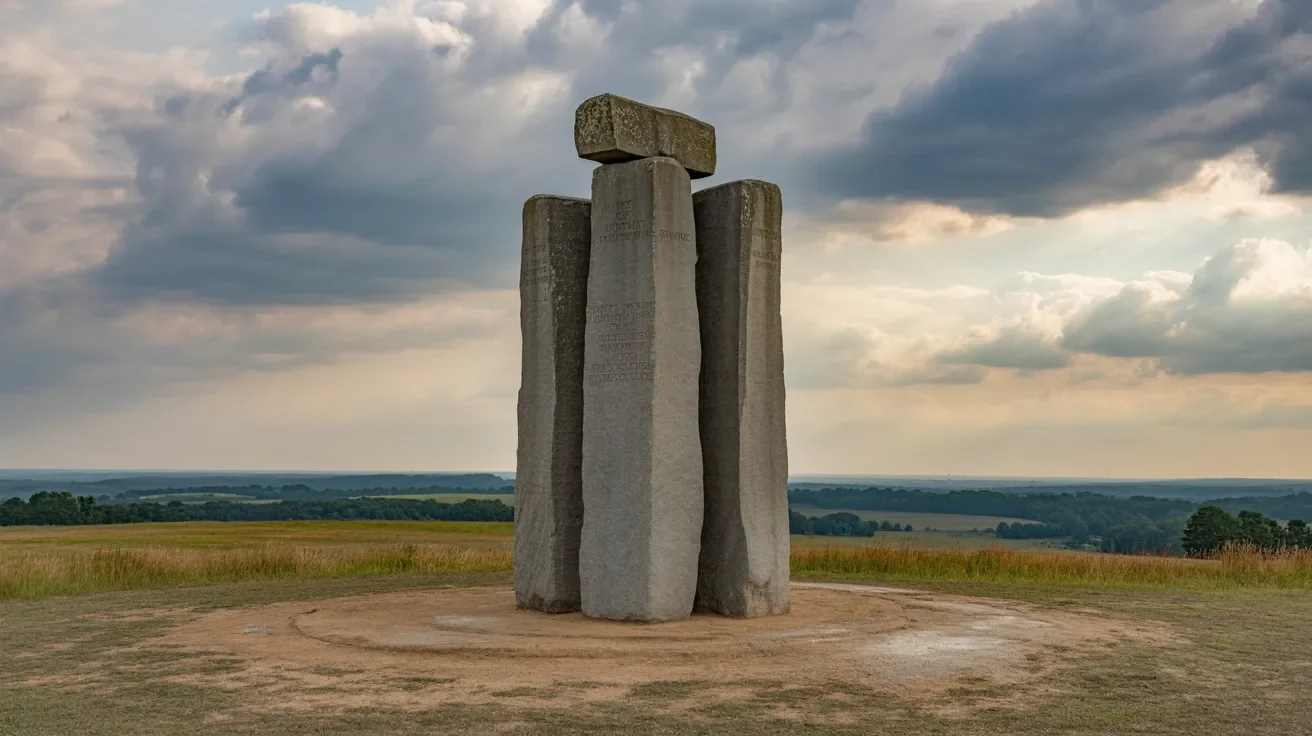
The Georgia Guidestones were a granite monument in Elbert County, Georgia.
They stood from 1980 until their destruction in 2022, and many people called them America's Stonehenge because of how much they looked like the famous monument in England.
The monument was commissioned anonymously by someone using the name R.C. Christian. No one ever confirmed who this person really was.
The Elberton Granite Association built the structure. Local stonecutters said it was the most complex job they had ever taken on. The monument stood about 19 feet tall and weighed close to 120 tons total.
It was set in an "X" pattern, with each line of the axis pointing toward specific areas of the moon's annual rotation. The stones also had slots and holes that worked like a sundial and a calendar.
Tourists came from all over the country. Some came out of curiosity. Others came because they believed the stones held something important.
What Was Written on the Georgia Guidestones?
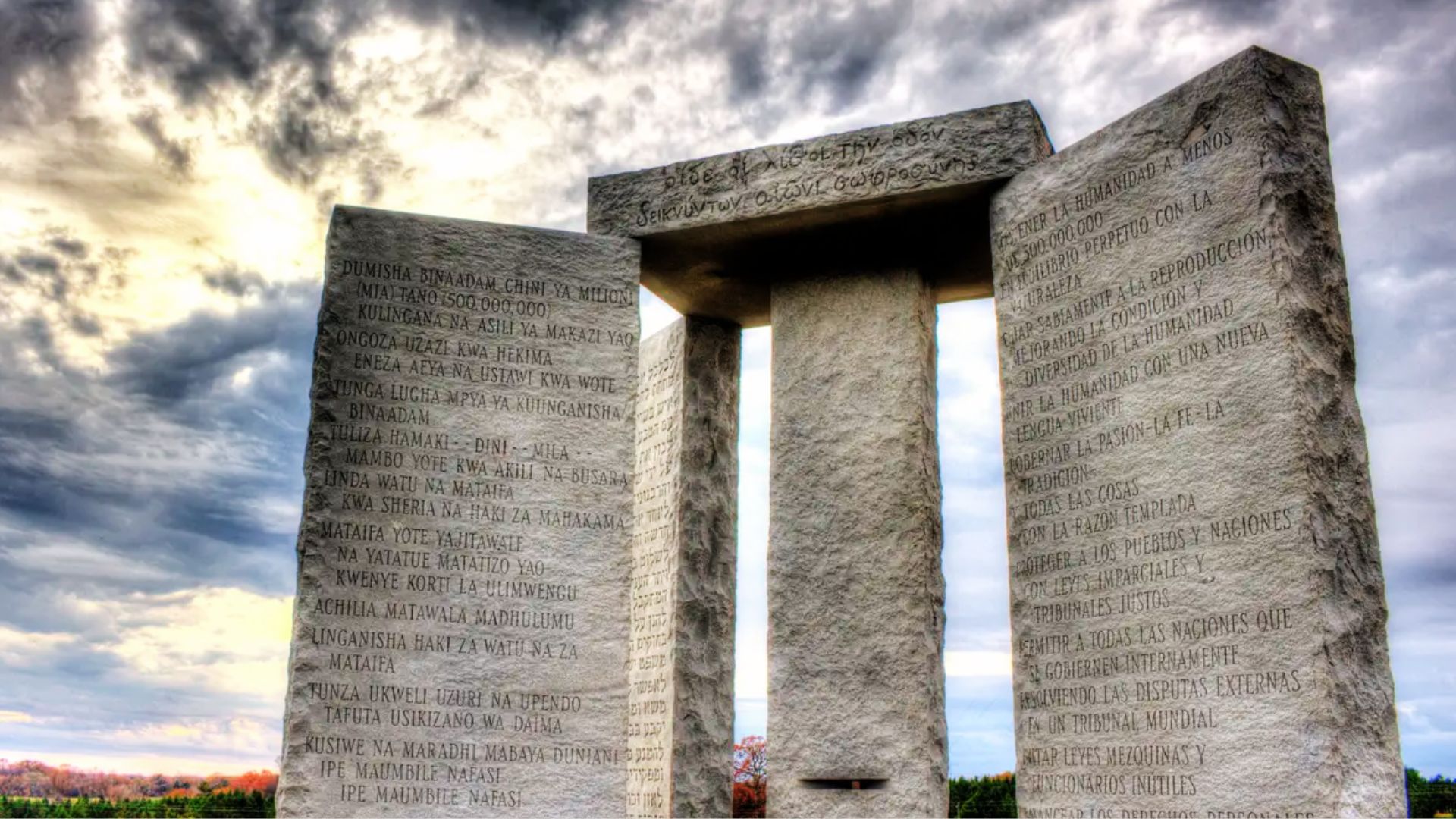
The monument featured inscriptions in eight languages, with ten messages carved into the stone. The languages included English, Spanish, Swahili, Hindi, Hebrew, Arabic, Chinese, and Russian.
Here are the ten guidelines, exactly as they were written:
- Maintain humanity under 500,000,000 in perpetual balance with nature
- Guide reproduction wisely, improving fitness and diversity
- Unite humanity with a living new language
- Rule passion, faith, tradition, and all things with tempered reason
- Protect people and nations with fair laws and just courts
- Let all nations rule internally while resolving external disputes in a world court
- Avoid petty laws and useless officials
- Balance personal rights with social duties
- Prize truth, beauty, love, and harmony with the infinite
- Leave room for nature and respect the Earth
Ten simple lines. But they sparked decades of debate.
What Did the Messages Mean?
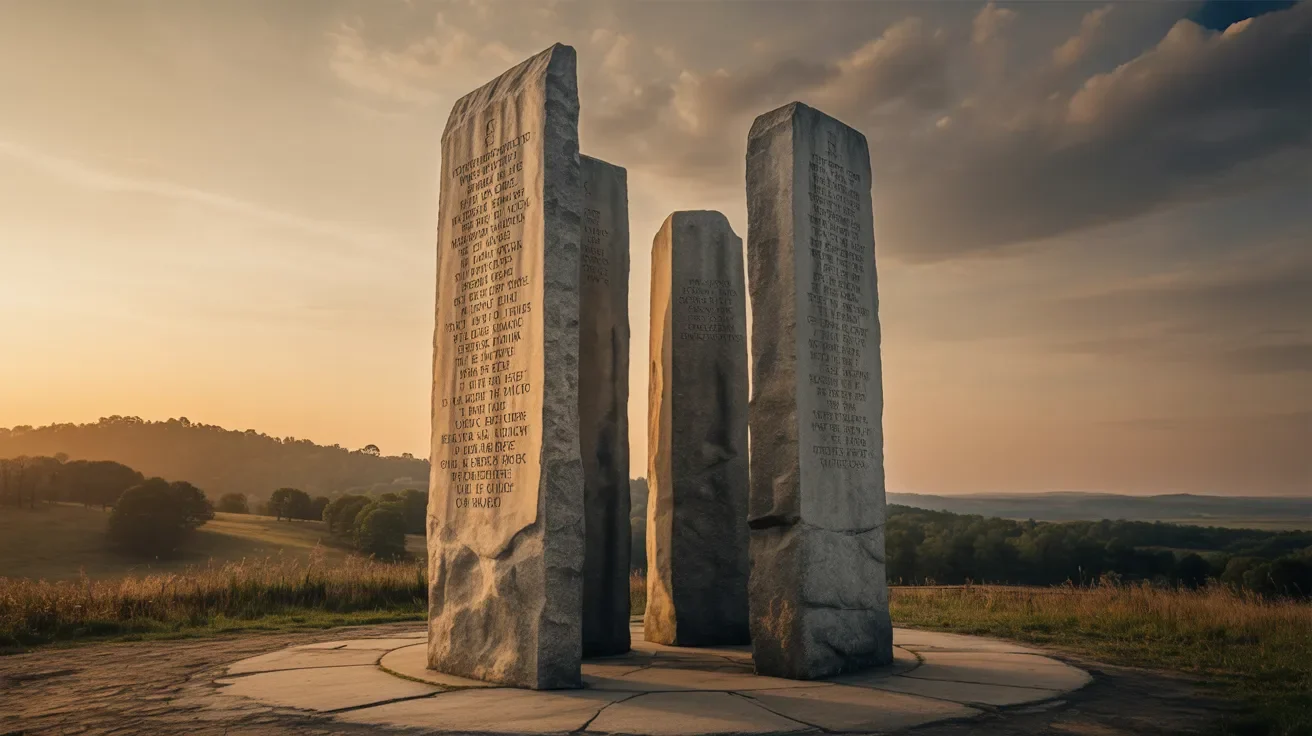
The ten inscriptions covered a range of topics, but most of them centered around humanity's relationship with nature, governance, and personal responsibility
Environmental and Population Themes
The first guideline was the most controversial. Keeping the world's population under 500 million sounded extreme to many people.
At the time the stones were built, the global population was already over four billion.
To some, this meant the creator wanted mass depopulation. To others, it meant finding long-term balance with the planet.
The tenth guideline also focused on nature, asking people to leave space for the Earth and treat it with care.
Governance and Global Unity
Several guidelines focused on how the world should be governed. One called for a world court to handle disputes between nations.
Another asked for fair laws and just courts. One guideline pushed for a shared global language.
These ideas felt like a blueprint for world government to many readers. Critics saw this as a threat to national sovereignty. Supporters saw it as a call for cooperation.
Ethics and Human Responsibility
Some guidelines were more personal. One asked people to balance their rights with their duties to others.
Another called for truth, love, and harmony. One said to rule with reason rather than let passion or blind faith take over.
These were not extreme ideas on their own. But placed alongside the population guideline, they made people nervous about who wrote them and why.
Why Were the Guidestones Controversial?
From the start, people disagreed about what the stones stood for. The mystery around the creator made things worse. No one knew who R.C. Christian really was or what group he represented.
The most contentious guideline was the one about keeping the global population under 500 million. Many people interpreted this as a call for mass depopulation.
Religious groups called the stones satanic. Conspiracy theorists tied them to the New World Order.
Some people believed a secret group of elites planned to wipe out most of humanity and use the stones as their guide.
In 2008, a masked man calling himself an "American patriot" defaced the monument, tying the Guidestones to a coming new world order and conspiracy theories spread by groups like QAnon.
The controversy never went away. It only grew louder over time.
The Destruction of the Georgia Guidestones
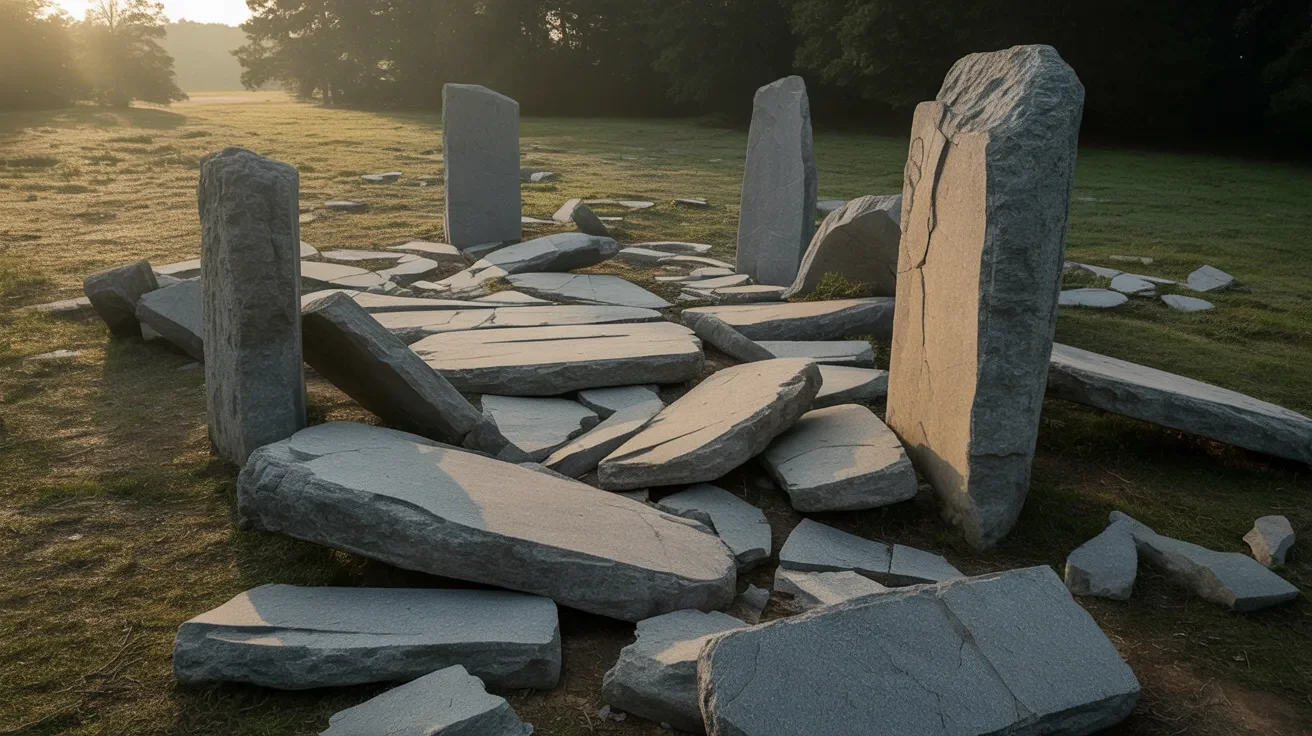
In May 2022, Republican candidate for governor Kandiss Taylor called the site "satanic" and vowed to destroy it if elected. This brought fresh attention to the stones on social media.
In the early morning of July 6, 2022, an explosion destroyed one of the six granite slabs. The Georgia Bureau of Investigation found evidence of a bomb and released camera footage of the blast.
The remaining stones were removed the next day after officials said they were unsafe.
No one has been publicly charged for the bombing. The investigation remained open.
Today, the Guidestones exist only in photographs, archived footage, and fragments kept by the county.
Cultural Significance of the Georgia Guidestones
The stones meant different things to different people. Some saw them as a warning. Others saw them as wisdom. Many just saw them as a mystery worth solving.
They drew tourists, documentary crews, and researchers for over 40 years. They appeared in books, films, and online theories.
They became a symbol of how people project their fears and hopes onto things they do not fully understand.
Even after the explosion, people kept talking about them. In some ways, the destruction made them more famous. The questions they raised did not disappear with the granite.
Who built them? What did they really mean? Who blew them up? Those answers may never come.
Conclusion
I find the Georgia Guidestones fascinating, even now that they are gone. Ten guidelines carved into stone, written in eight languages, by someone who never gave their real name.
Some of those ideas made sense. Others scared people. And that mix of reason and fear is probably why the stones stayed in public debate for over 40 years.
Their destruction did not end the conversation. If anything, it made the mystery bigger. The world lost a strange landmark in 2022.
But the questions behind it are still very much alive. What do you think the Georgia Guidestones were really trying to say?
Frequently Asked Questions
Who built the Georgia Guidestones?
They were commissioned in 1979 by a person using the pseudonym R.C. Christian, whose real identity was never confirmed.
How many languages were on the Georgia Guidestones?
The ten inscriptions were carved in eight languages, including English, Arabic, Hindi, and Chinese.
When were the Georgia Guidestones destroyed?
An explosion damaged the monument on July 6, 2022, and officials demolished the rest the same day for safety reasons.
What was the most controversial message on the Guidestones?
The guideline calling for keeping the global population under 500 million drew the most criticism and conspiracy theories.
Has anyone been charged for bombing the Georgia Guidestones?
As of now, no one has been publicly charged, and the investigation by the Georgia Bureau of Investigation remains open.