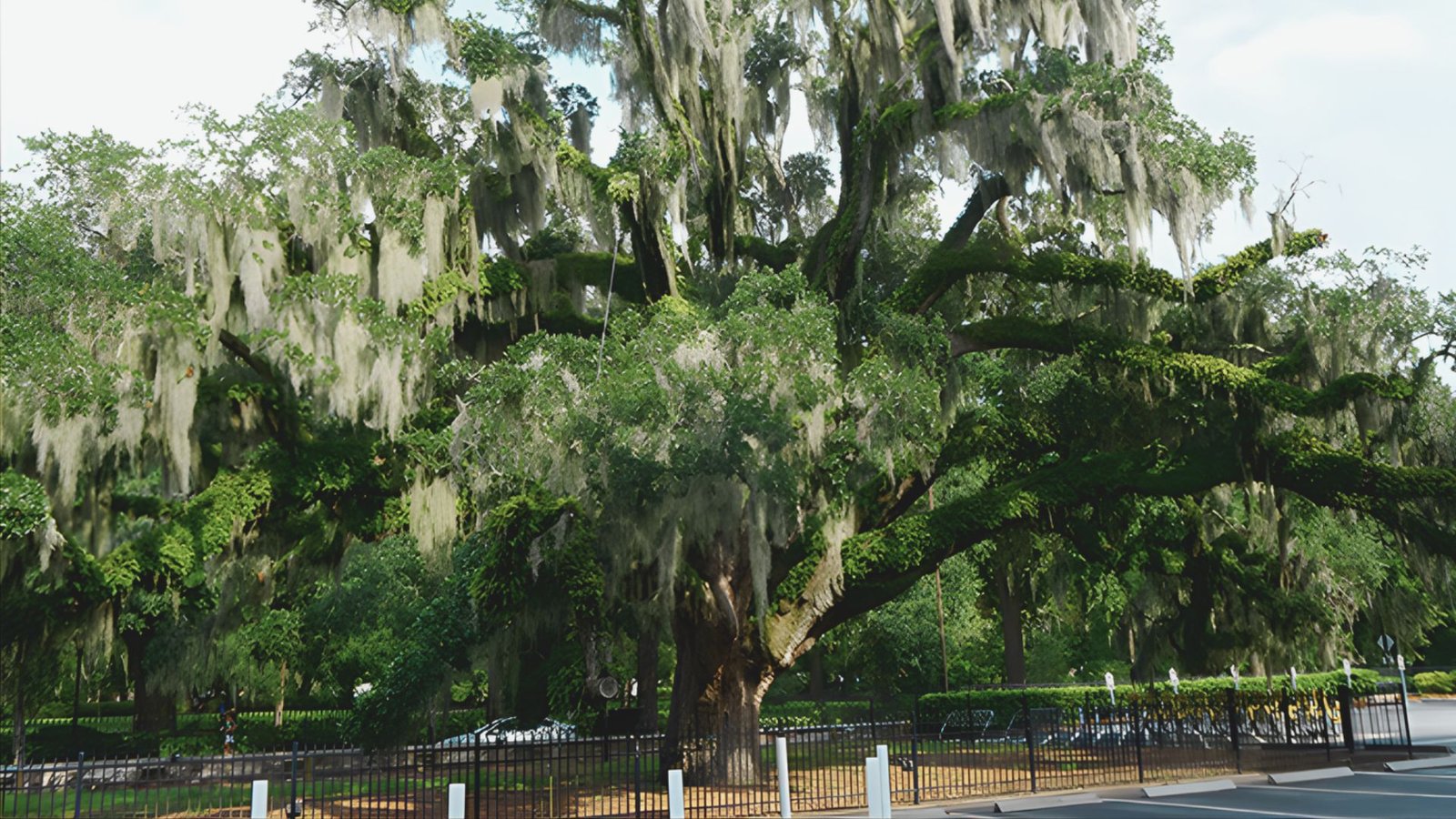
Savannah earned its nickname “The Forest City” for good reason. If you’ve ever walked down its historic streets, you know exactly what I mean.
The trees here aren’t just part of the scenery. They define it.
Live oaks form natural canopies over centuries-old squares. Spanish moss drapes from their branches like silver curtains.
Native Southern trees fill every park and corner with shade and character.
I’ll walk you through what makes Savannah’s trees so special.
Let’s get started.
Why Savannah Is Known as the Forest City

Savannah’s tree-filled reputation started in the early 1800s when city planners made greenery a priority. They planted trees throughout the streets and squares on purpose.
The goal was simple: provide shade in Georgia’s hot summers and create a city that looked good year-round.
It worked. Those original trees grew into the massive oaks you see today. They give Savannah its historic Southern charm.
Walk through any neighborhood and you’ll see how the tree canopy shapes the entire feel of the city.
The Most Iconic Trees in Savannah
From towering live oaks to colorful crepe myrtles, these native and ornamental trees give Savannah its signature Southern look.
Southern Live Oak (Quercus virginiana)

The Southern live oak dominates Savannah’s landscape. You’ll recognize these trees instantly by their massive, spreading branches.
Georgia made it the official state tree in 1937. Live oaks can grow 60 feet tall with canopies spreading over 100 feet wide. Some live for 500 years or more.
Savannah’s coastal climate gives them everything they need: mild winters, humid summers, and sandy soil.
These trees survive hurricanes that knock down other species. Their low, heavy branches and deep roots keep them anchored.
Southern Magnolia (Magnolia grandiflora)

Southern magnolias line many of Savannah’s streets and parks.
Their thick, waxy leaves stay green all year.
The real showstopper? Those massive white flowers bloom in late spring and early summer, filling the air with a sweet scent.
Each flower can measure 12 inches across.
Palmetto (Sabal palmetto)

The palmetto palm adds a tropical feel to Savannah’s streetscapes. These palms grow naturally along the Georgia coast.
They stand out next to the sprawling live oaks. While oaks spread wide and low, palmettos shoot straight up with fan-shaped fronds.
This mix gives Savannah its signature Southern coastal look.
Crepe Myrtle (Lagerstroemia)

Crepe myrtles are smaller trees that line many residential streets. They grow 15 to 25 feet tall.
In summer, they burst into color with pink, purple, red, or white flowers. Even in winter, their smooth, peeling bark looks attractive.
These trees keep Savannah colorful year-round.
Other Common Trees Found in Savannah
Beyond the famous oaks and magnolias, several other tree species add color and variety to Savannah’s green spaces.
Dogwood Trees

Dogwoods bloom in early spring with white or pink flowers that cover the entire tree.
You’ll find them throughout Savannah’s parks and in landscaped residential areas. They prefer the shade under taller oaks.
Tulip Trees

Tulip trees have distinctively shaped leaves that look like someone cut off the top.
In late spring, they produce tulip-shaped flowers in yellow and orange. These tall trees grow in larger parks and green spaces around the city.
Sweet Gum & Black Gum Trees

Sweet gum and black gum trees were planted specifically for their fall color. Sweet gums turn brilliant red and purple in autumn.
Black gums shift to deep red and orange. Both species add seasonal variety to streets that stay mostly green year-round.
Best Places to See Trees in Savannah

- Savannah’s Historic Squares: The 22 historic squares showcase the city’s tree canopy at its best. Each square features mature live oaks that create natural outdoor rooms. Chippewa Square and Monterey Square have some of the oldest specimens.
- Forsyth Park: This 30-acre park is Savannah’s green heart. Massive live oaks line the walking paths. You’ll also find magnolias, palms, and seasonal flowering trees throughout the grounds.
- Bonaventure Cemetery: Bonaventure’s tree-draped paths make it one of the most photographed spots in Savannah. Live oaks covered in Spanish moss create a canopy over the historic graves. The cemetery sits right on the Wilmington River.
- Laurel Grove Cemetery: Laurel Grove offers another peaceful spot to see old-growth trees. The North and South sections both feature centuries-old oaks and magnolias mixed with native understory plants.
- Jones Street: Many consider Jones Street the prettiest in Savannah. Live oaks arch over the brick road, creating a tunnel effect. Historic homes line both sides under the shade.
- Wormsloe Historic Site: The entrance to Wormsloe features a 1.5-mile avenue lined with 400 live oaks. This tree-lined drive is one of the most photographed spots in Georgia. It’s been there since the 1890s.
How to Identify Common Trees in Savannah

Live oaks are easy to spot. Look for massive branches that spread wider than the tree is tall. Spanish moss usually drapes from the limbs.
The leaves stay green all year and have rounded edges. Magnolias have thick, glossy leaves that feel waxy to the touch. Their large white flowers bloom in summer and smell sweet.
Crepe myrtles have slender trunks with smooth, peeling bark. In summer, you’ll see clusters of pink, purple, red, or white flowers at the top.
Palmettos are tall palms with fan-shaped fronds that spread out like fingers at the crown.
Spanish Moss and Savannah’s Trees
Spanish moss drapes from nearly every live oak in Savannah, creating the city’s iconic look. Here’s what this silvery plant actually is and how it affects the trees.
|
Topic |
Details |
|
What Is Spanish Moss? |
Spanish moss (Tillandsia usneoides) isn’t actually moss at all. It’s a bromeliad, related to pineapples. The plant has no roots and doesn’t take nutrients from the trees it grows on. It’s an air plant that gets everything it needs from moisture and dust in the air. |
|
Why Spanish Moss Thrives in Savannah |
Savannah’s humid coastal climate is perfect for Spanish moss. The plant needs consistent moisture and warm temperatures. It grows best on live oaks and other hardwoods with rough bark. The moss absorbs water and nutrients directly from rain, fog, and air. High humidity keeps it alive year-round. |
|
Does Spanish Moss Harm Trees? |
Spanish moss is an epiphyte, not a parasite. It doesn’t steal nutrients from trees. However, heavy moss can weigh down branches and block sunlight to leaves. This becomes a problem during storms when wet moss adds extra weight. Older or weaker branches may break under the load, especially after heavy rain. |
Conclusion
Savannah’s trees are living landmarks that tell the city’s story. They’ve stood through centuries of history and shaped how the city looks today.
Next time you visit, slow down and really look at the trees around you. Walk Jones Street under the oak canopy. Stroll through Forsyth Park.
Visit Bonaventure Cemetery when the light filters through the Spanish moss.
These trees make Savannah what it is. Don’t just stick to the main tourist spots. The best views are often on quiet side streets where the oaks have been growing for 200 years.
Have you seen Savannah’s trees in person? Share your favorite spots in the comments below.
Frequently Asked Questions
What is the most common tree in Savannah?
The Southern live oak is by far the most common tree in Savannah. These massive oaks line nearly every street, square, and park throughout the city.
Is Spanish moss harmful to trees?
Spanish moss doesn’t harm trees directly since it’s not a parasite. However, heavy moss can weigh down branches and block sunlight, which may stress older or weaker limbs during storms.
When is the best time to see Savannah’s trees?
Spring is ideal when dogwoods and magnolias bloom, but Savannah’s trees look good year-round. Fall brings color from sweet gum trees, while live oaks stay green through winter.
How old are the live oaks in Savannah?
Many of Savannah’s live oaks are 200 to 300 years old. Some of the oldest specimens in places like Forsyth Park and the historic squares date back to the early 1800s.
Can you walk under the oak trees at Wormsloe?
Yes, you can walk the 1.5-mile oak-lined avenue at Wormsloe Historic Site. The path is open to visitors and it’s one of the most popular spots for photos in Savannah.