Ever think if a self-guided walking tour of Savannah can really show you the city’s charm without a guide?
I had the same question, and if you’re here, you’re likely looking for an easy, flexible way to visit Savannah on foot.
This guide covers a practical walking route, the best times to go, useful apps, and simple tips to keep your walk smooth and enjoyable.
I’ve built this walk using firsthand planning experience and careful local research, so you can check out with confidence and curiosity.
Let’s start with what makes Savannah so easy and rewarding to walk.
Things to Know About Savannah- An Overview

Savannah is a walkable city with a simple grid layout that works well for self-guided walking.
The Historic District is flat, easy to move around, and built around small public squares placed every few blocks.
Most major attractions are close together, so a car is rarely needed. Founded in 1733, Savannah’s history is visible through preserved streets, homes, churches, and public spaces.
Walking allows you to move easily between landmarks and notice architectural details and public green spaces.
Weather affects comfort, with spring and fall being the best seasons for walking, while summers can be hot and humid.
Key points to know:
- Flat streets and short distances
- 22 historic squares within the city grid
- Most sights located in the Historic District
- Walking is the most practical way to visit
- Cooler months and mornings are best for walking
Knowing these basics makes navigating Savannah easier and more comfortable.
Stop-by-Stop Self-Guided Walking Tour of Savannah
This walking route takes you through Savannah’s Historic District from south to north.
Each stop builds on the city’s layout, history, and everyday charm without rushing the experience.
Stop 1- Forsyth Park Fountain

Forsyth Park is a natural starting point because it sits at the southern edge of the Historic District.
The white cast-iron fountain, installed in 1858, is Savannah’s most photographed landmark. The park’s wide paths help you ease into the walk.
For photos, stand slightly off-center for symmetry, or step back near the palm trees to capture the fountain and moss-draped oaks together.
Stop 2- Monterey Square

Monterey Square is known for its balanced layout and surrounding historic homes.
The Mercer-Williams House, built in the 1860s, stands out for its Italianate design and layered history.
This square feels quieter than many others, which makes it ideal for observing architecture. Its clean lines, shaded corners, and calm setting often make it a favorite among Savannah’s 22 squares.
Stop 3- Madison Square

Madison Square connects Savannah’s past to the Revolutionary War era. Monuments here honor General Nathanael Greene and Sergeant William Jasper.
Look around to spot nearby landmarks like historic churches and civic buildings.
The square offers plenty of shade and benches, making it a good place to rest briefly before continuing north through the Historic District.
Stop 4- Green-Meldrim House

The Green-Meldrim House played an important role during the Civil War, serving as General Sherman’s headquarters in 1864.
From the outside, notice the Gothic Revival details, cast-iron railings, and layered brickwork.
While the interior is sometimes open for tours, the exterior alone tells much of its story and fits well into a self-guided walking pace.
Stop 5- Chippewa Square

Chippewa Square is often linked to Forrest Gump, though the famous bench scene was filmed elsewhere.
Still, the square remains a central landmark along Bull Street. Its location makes it a natural meeting point and transition area in the walk.
Nearby cafés and restrooms are easy to find, making this a practical pause during your tour.
Stop 6- Wright Square

Wright Square is one of Savannah’s oldest squares and carries deep historical meaning.
The Tomochichi monument honors the Yamacraw leader who helped early settlers establish the city.
This square feels calmer than others nearby. Walk toward the edges to find quiet corners and plaques that many visitors pass without noticing.
Stop 7- City Market

City Market is where the walk shifts from history to modern Savannah life. This four-block area is best for food, drinks, and short breaks.
Some spots lean tourist-focused, but you’ll also find local cafés and casual lunch options.
It’s a good place to refuel without fully leaving the walking route.
Stop 8- Johnson Square

Johnson Square is Savannah’s oldest square and marks the city’s original planning vision. Monuments here honor figures from the Revolutionary War.
Look up to notice surrounding banks and historic commercial buildings, which show Savannah’s growth as a port city.
The square’s open layout makes it easy to understand how the city expanded outward.
Stop 9- Factors Walk & River Street

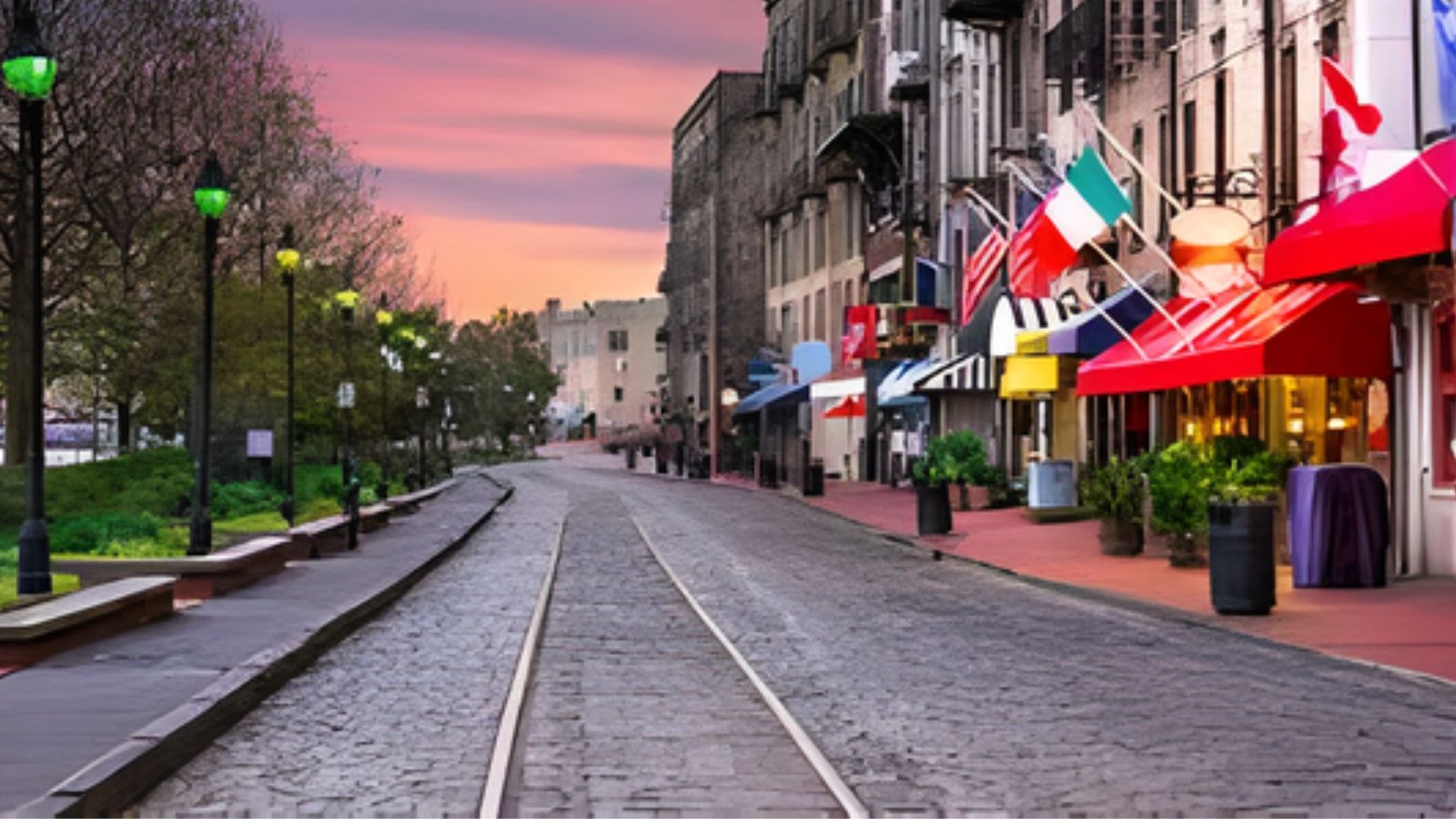
This final stop reveals Savannah’s role in the cotton trade. Old warehouse buildings line Factors Walk above River Street.
Watch your step on the uneven cobblestones, especially after rain.
From the riverfront, you’ll see cargo ships pass by, and sunset offers the best light for river views and a calm ending to the walk.
By moving stop by stop, you experience the city as it was designed slow, connected, and easy to check out on foot.
Optional Route Extensions to Customize Your Walk
These short detours can be added to your main walking route without changing the overall flow. Each option focuses on a specific interest and works best as a brief add-on.
Historic Homes Extension: Visit key preserved homes like the Owens-Thomas House, Telfair Academy, and Isaiah Davenport House to understand Savannah’s residential history and early design. These stops sit close together and fit easily into a self-guided walk.
Ghost & Haunted Walking Route: This route includes haunted squares, nearby historic cemeteries, and well-known local legends tied to Savannah’s past. If walking at night, stay on main streets, use proper lighting, and avoid quiet or isolated areas.
Architecture-Focused Route: Visit Federal, Greek Revival, and Victorian styles found throughout the Historic District. Streets like Jones Street and Bull Street offer some of the best examples within a short walking distance.
These extensions allow you to personalize your walk while keeping it simple and manageable.
Best Time to Do a Self-Guided Walking Tour in Savannah
Timing affects how comfortable and relaxed your walk feels in Savannah. Weather, crowds, and events all play a role in planning the best experience.
|
Category |
Details |
|
Best Seasons |
Spring and fall offer mild temperatures and the most comfortable walking conditions. |
|
Summer Conditions |
Hot and humid; walk early morning or evening for comfort. |
|
Winter Conditions |
Cooler and quieter with easy walking, though daylight hours are shorter. |
|
Best Time of Day |
Mornings are cooler and less crowded; evenings are pleasant but busier near dining areas. |
|
Crowd Levels |
March–April are busiest; January–February are the least crowded months. |
|
Special Events |
Large events, especially St. Patrick’s Day, cause street closures and heavy foot traffic. |
This table keeps planning simple while covering the most important timing factors for walking in Savannah.
Self-Guided Walking Tour Savannah Apps
These apps can add structure and context to a self-guided walk, but none are required. Each option suits a different travel style.
- WalknTours: Offers GPS-based audio tours focused on Savannah’s historic squares. Tours work offline and allow you to pause or continue at your own pace.
- VoiceMap (Viator): Uses location-triggered audio that plays automatically as you reach each stop. Best for travelers who want clear narration and historical storytelling.
- GPSmyCity: Provides multiple themed walking routes with strong map support. Works well for route planning, with less emphasis on audio narration.
- App-Based Tour vs DIY Walk: Apps offer guided narration and structure, while DIY walks give full freedom to enjoy, pause, or skip stops as you choose.
Tips for a Better Self-Guided Walking Tour Experience
A little planning can make your walk easier and more comfortable. Use these simple tips as you are visiting Savannah on foot.
- Savannah follows a clear grid layout with squares every few blocks, so move from square to square instead of relying only on street names.
- Main streets like Bull and Drayton help you stay oriented while walking.
- Restrooms are available at Forsyth Park, City Market, and most cafés along the route.
- Carry water, especially in warm months, and refill during food or coffee stops.
- Sidewalks are mostly flat, but some areas have uneven brick or pavement.
- River Street and Factors Walk include cobblestones and ramps that may be difficult for strollers or wheelchairs.
- Walk during daylight hours, stay on busy streets, and avoid quiet lanes at night if walking alone.
- Keep personal belongings secure and be aware of your surroundings.
Conclusion
A self-guided walking tour of Savannah gives you the freedom to see the city at your own pace, without schedules or pressure.
From quiet historic squares to the riverfront, you now know how the city is laid out, and how to plan a smooth route.
I’ve shared this guide so you can feel prepared before stepping out, and can focus on the experience instead of logistics.
Whether you follow the full route or adjust it to your style, you’re set to enjoy Savannah on foot with confidence.
Ready to put this plan into action? Lace up your shoes and start your insanely best walking tour today!
Frequently Asked Questions
How long is a self-guided walking tour in Savannah?
Most self-guided walking tours take between 2 to 4 hours. The time depends on how often you stop for photos, food, or rest.
Are Savannah’s historic squares free to visit?
Yes, all of Savannah’s historic squares are public and free to enter. You can walk, rest, and check them out without any admission cost.
Is this walking tour suitable for kids or seniors?
Yes, the route is suitable for kids and seniors because it is flat and flexible. You can shorten the walk or take breaks at squares and parks as needed.
Is Savannah good for solo travelers?
Yes, Savannah is comfortable for solo travelers, especially during the day. Staying on busy streets and walking in daylight makes exploring feel safe and relaxed.
Can you walk everywhere in Savannah?
You can walk to most major attractions within the Historic District. Areas outside the district may require short rides, but walking works well for sightseeing.