Savannah cats are unlike any domestic cat you have seen before. They are tall, lean, and built like a wild cat, yet they live right in your home.
If you just got one or are thinking about it, you probably want to know how big a Savannah cat actually gets.
The answer is not simple, because size depends on generation, gender, and more.
This guide on Savannah cat size covers everything, from kitten growth stages to full-grown dimensions, so you know exactly what to expect.
I have spent time researching and comparing across generations, including real breeder-submitted data, to give you accurate, trustworthy information you can actually use.
How Big Do Savannah Cats Get?
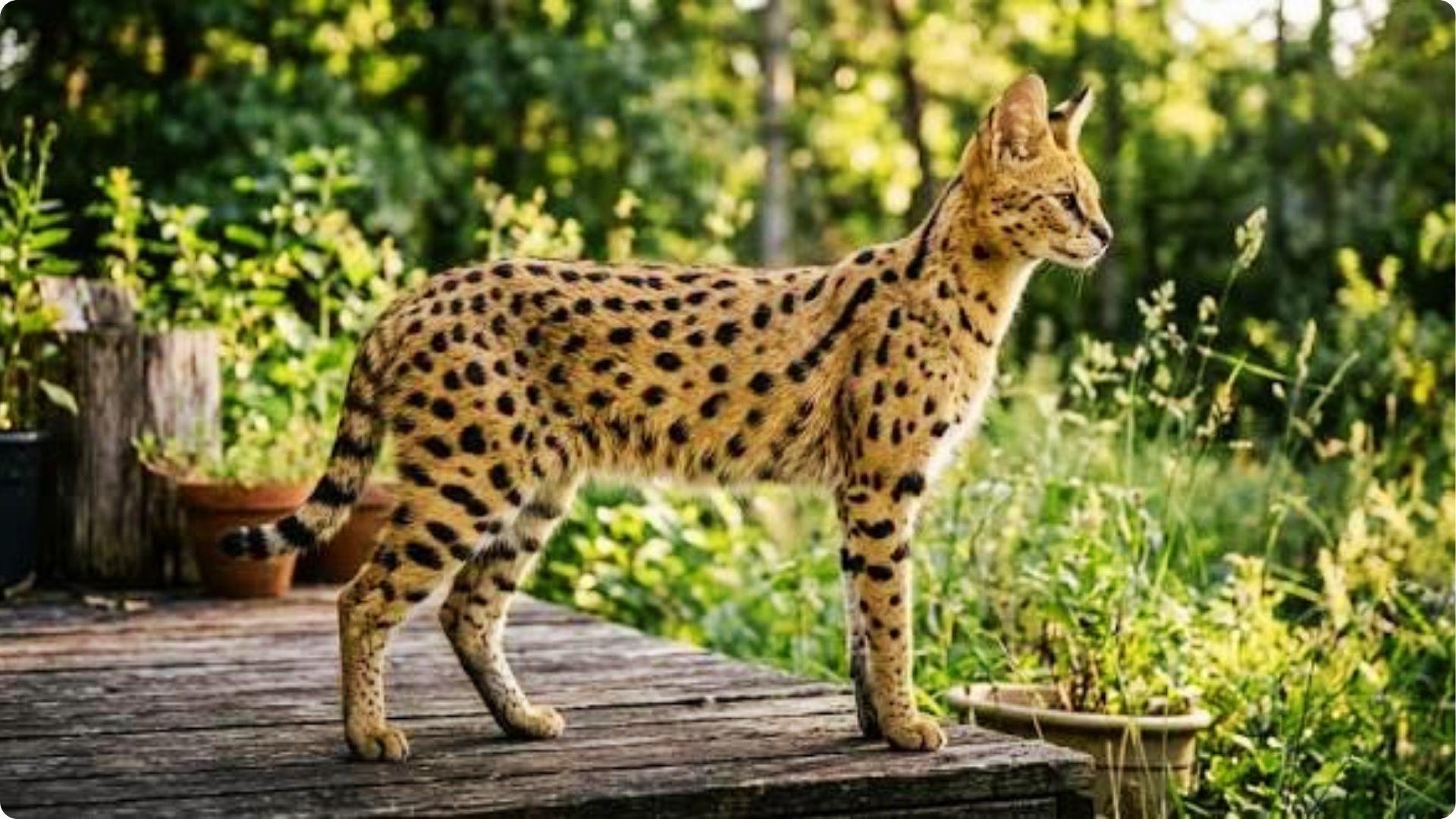
Savannah cats rank among the largest domestic cat breeds in the world, with their size directly tied to how closely they're related to the African serval. Their long legs, lean frame, and extended neck make them look even bigger than the scale actually shows.
- Height: 13 to 17 inches at the shoulder on average, with the tallest F1s reaching 17 to 18 inches.
- Weight: 12 to 25 pounds on average, though F1 males can push past 25 pounds.
- Body length: 20 to 25 inches, not counting the tail.
- Nose to tail: over 40 inches in some individuals.
Because of their long legs and lean build, people routinely underestimate a Savannah cat's actual weight just by looking at it.
Savannah Cat Size by Generation
Each generation of Savannah cat looks and feels different in size. The closer to the serval, the bigger the cat tends to be.
F1 Savannah Cat Size
F1 Savannah cats have one parent, giving them the highest percentage of wild blood of any generation.
They are the largest of all generations. Males can weigh 20 to 25 pounds or more, and some reach up to 30 pounds.
Females are slightly smaller but still noticeably big, typically ranging from 13 to 19 pounds. Their legs are long, their bodies are athletic, and their presence is hard to miss.
F1s are also not lap cats. They bond closely with one or two people but tend to be reserved around strangers and children.
F2 Savannah Cat Size
F2 Savannah cats are second-generation, with several grandparents.
They are still quite large. Males typically weigh 16 to 25 pounds, and some reach 30 pounds or more.
They stand 15 to 18 inches at the shoulder and measure around 20 to 22 inches in body length.
They retain the tall frame and lean build of F1s but tend to be a bit more predictable in temperament and size.
About 80 percent of F2s are social with their immediate family, including children.
F3 Savannah Cat Size
By the third generation, size begins to settle into a more domestic range. F3 males usually weigh 14 to 20 pounds and stand approximately 14 to 17 inches at the shoulder.
They are still taller and longer than most house cats, but the wild several traits are less dominant.
F3s are also known for being highly social with family and strangers, making them a popular choice for households with children.
F4 Savannah Cat Size
F4 Savannah cats are popular among pet owners. Males range from 14 to 20 pounds and stand 14 to 16 inches at the shoulder.
Their size is still impressive, but they behave much more like domestic cats. Many people find this generation a good balance between wild looks and manageable care.
F5 Savannah Cat Size
F5 and beyond are considered fully domestic in terms of temperament. They typically weigh 12 to 16 pounds.
While they are still longer and taller than average house cats, they look much closer to a large domestic breed than a wild hybrid.
SBT Savannahs, which are four or more generations from the serval, fall into a similar size range and are recognized by TICA as a fully domestic classification.
Which Savannah Cat Generation Is the Biggest?
F1 Savannah cats are consistently the largest. Their direct serval lineage and high percentage of wild blood give them greater height, body length, and overall mass.
As you move further from the F1 generation, size generally decreases. However, even F5 cats often outsize typical domestic cats.
Savannah Cat Size Chart by Age
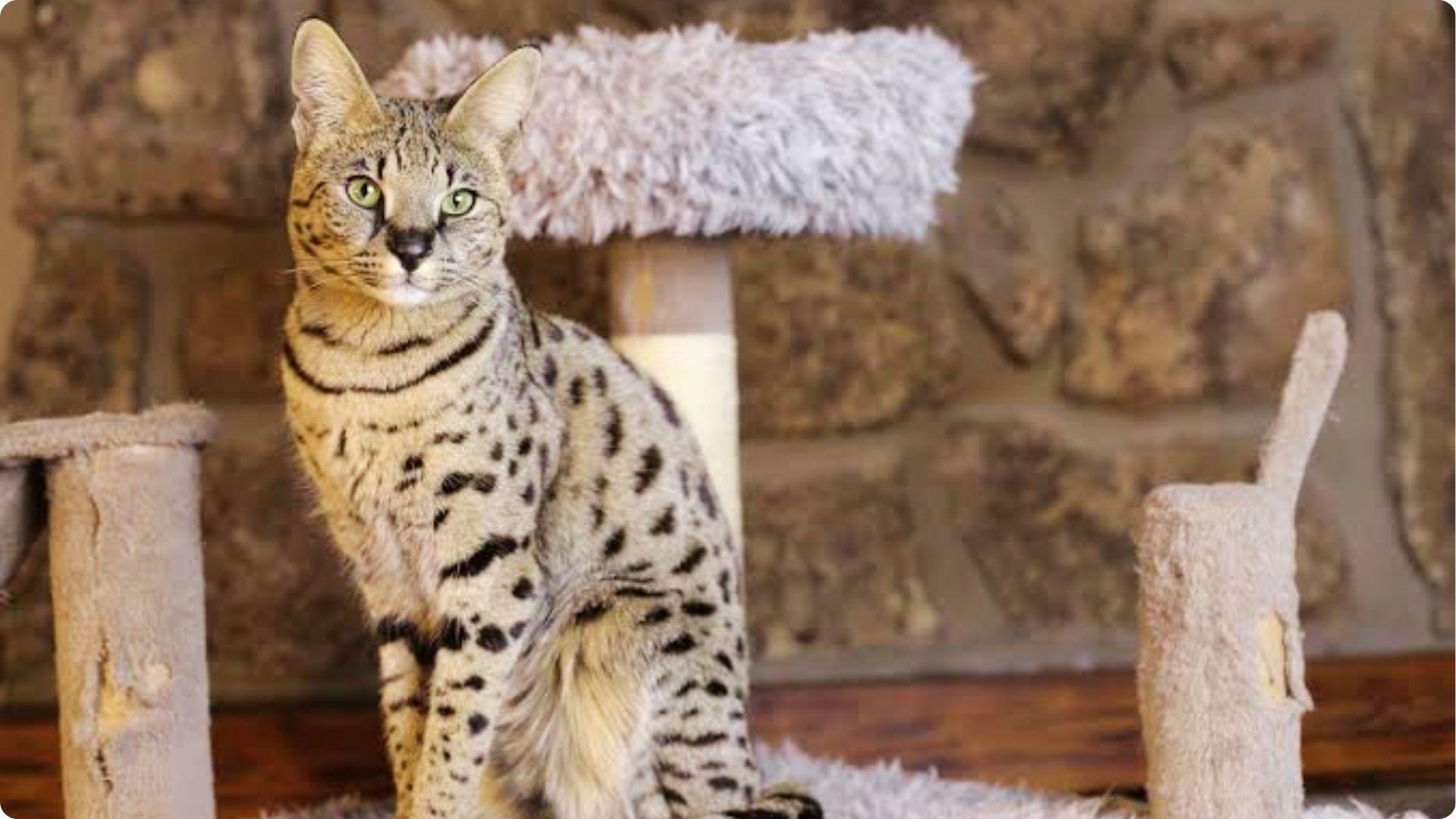
Growth in Savannah cats does not follow the same timeline as regular cats. They develop more slowly and continue growing for longer.
Savannah Kitten Size at 8 to 12 Weeks
At 8 to 12 weeks, Savannah kittens may weigh between 1.5 and 3.5 pounds depending on their generation.
They already have notably long legs and large ears compared to domestic kittens of the same age. Even at this stage, their build hints at the size they will eventually reach.
Savannah Cat Size at 6 Months
By 6 months, many Savannah cats weigh between 5 and 10 pounds. Higher generations like F1 and F2 may be on the heavier end.
At this point, they are still growing rapidly and may look a little lanky or uneven as their body catches up to their long limbs.
Savannah Cat Size at 1 Year
At 1 year old, most Savannah cats have reached close to their full height. However, they continue to fill out in muscle and weight for another year or two.
A 1-year-old Savannah may weigh anywhere from 9 to 18 pounds depending on generation and sex.
Full-Grown Savannah Cat Size at 2 to 3 Years
Savannah cats are typically considered fully grown between 2 and 3 years of age. By this point, their weight, height, and muscle mass have all settled.
Males tend to be on the larger end of the range for their generation, and F1 males at this stage are often the heaviest.
When Do Savannah Cats Stop Growing?

Most Savannah cats stop growing around 2 to 3 years old. This is longer than the typical domestic cat, which usually reaches full size by 12 to 18 months.
The extra time is partly due to their several ancestry. Servals themselves are slow-maturing wild cats, and this trait passes down through the generations.
F1 Savannahs, because of their particularly high wild blood percentage, are often not fully grown until the 3-year mark.
If your Savannah still seems to be filling out after a year, that is completely normal.
What Determines a Savannah Cat's Size?
Size in Savannah cats is not random. Several key factors shape how big your cat will grow.
Genetics and Serval Ancestry
The biggest factor is how much DNA your cat carries. F1 cats have the most wild blood, and that directly translates to greater size.
As generations increase, parental influence decreases, and so does overall body size. Genetic diversity also plays a role within the same generation.
Two F3 cats from different breeding programs can look very different depending on the specific serval lineage each carries.
If you want a larger cat, choosing an earlier generation is the clearest way to get one.
Male vs. Female Savannah Cat Size
Males are consistently larger than females across all generations. A male F2 might weigh 20 pounds while a female from the same litter weighs 14.
If size matters to you, a male Savannah will almost always be bigger. That said, females are still larger than most domestic cats.
Diet and Nutrition
What your cat eats directly affects how well it grows. Savannah cats do well on high-protein diets.
Many owners feed a mix of high-quality dry food, wet food, and raw protein. A raw diet can support lean muscle development, though it should be discussed with a vet before starting.
A cat that is underfed or given poor nutrition during growth may not reach its full genetic size potential.
Exercise and Activity Levels
Savannah cats are active by nature. Regular movement builds lean muscle, which contributes to their overall body size and condition.
Leash training is one option many owners use to give their cats safe outdoor exercise while keeping energy levels in check.
A sedentary Savannah may be underweight or overfat rather than lean and muscular like the breed should be.
Is a Savannah Cat Bigger Than Other Cat Breeds?
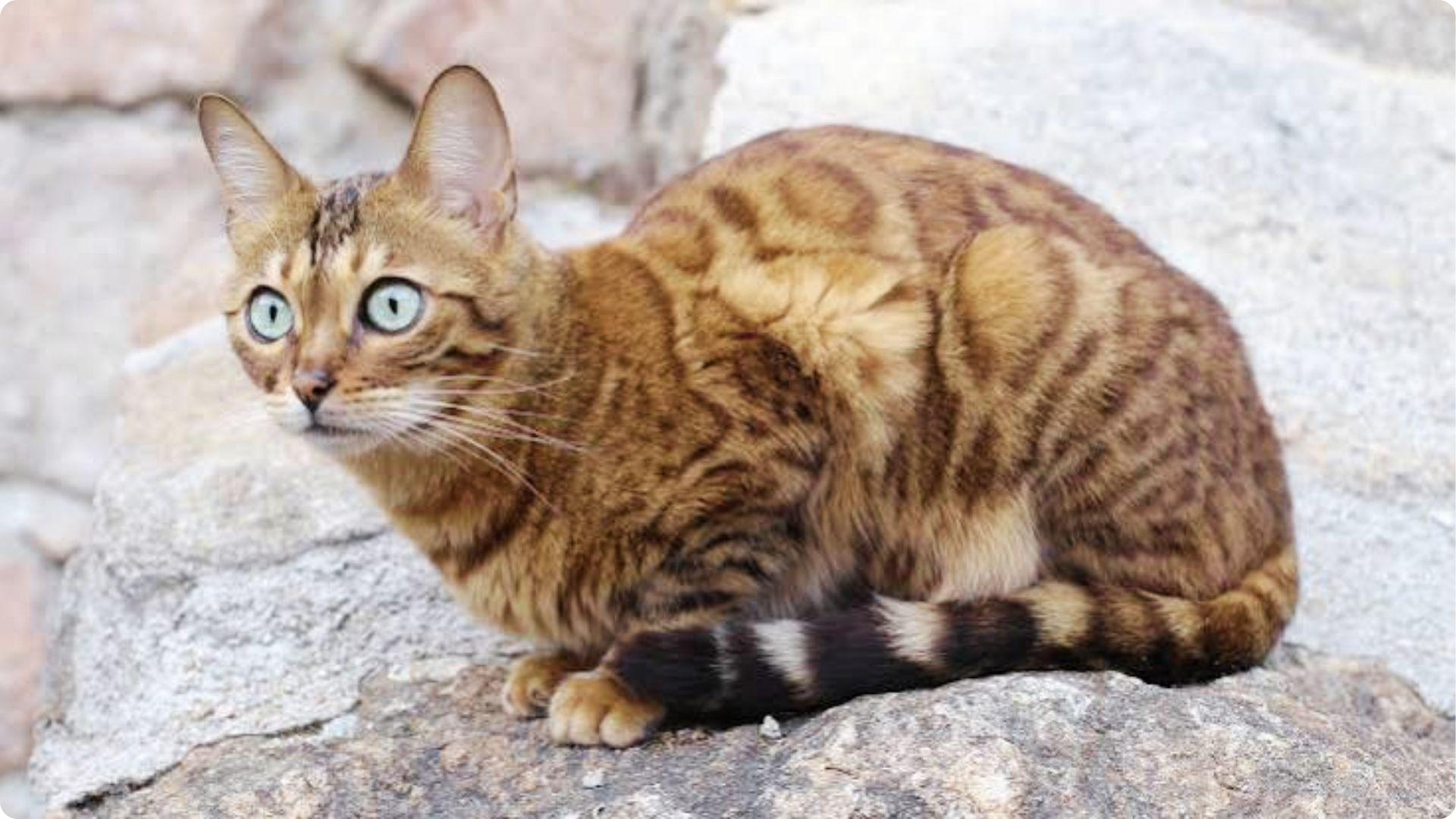
Savannah cats are significantly larger than most domestic breeds, but how they compare depends on the breed in question.
Against a Maine Coon, the comparison is close in weight, as Maine Coons regularly reach 15 to 25 pounds, but Savannah cats stand taller and carry a leaner, wilder frame.
Against the average domestic cat, which weighs just 8 to 10 pounds and stands 9 to 10 inches tall, even an F5 Savannah is noticeably bigger, and early generations can weigh two to three times more.
Compared to the African serval, which weighs 20 to 40 pounds and stands up to 24 inches tall, Savannah cats fall shorter, with each generation moving further from several proportions as the wild blood becomes more diluted.
How Can You Tell If Your Savannah Cat Is a Healthy Size?
Knowing what a healthy Savannah cat looks like helps you catch problems early.
Signs of a Healthy Body Condition
A healthy Savannah cat should have a visible waist when viewed from above. You should be able to feel the ribs without pressing hard, but they should not be visibly sticking out.
The belly should be tucked up slightly rather than hanging low. Muscle tone should be firm, and the coat should look full and clean.
Signs Your Savannah Cat May Be Underweight
If you can see the ribs, spine, or hip bones clearly without touching, your cat may be underweight.
A hollow belly, low energy, or poor coat quality are also signs something may be off with nutrition or health.
Signs Your Savannah Cat May Be Overweight
An overweight Savannah will have a rounded belly, no visible waist, and ribs that are hard to feel.
They may move more slowly than expected for the breed and tire out faster during play. Extra weight puts stress on their joints and organs.
When to Contact a Veterinarian About Growth
If your Savannah kitten is not gaining weight steadily, stops growing too early, or seems much smaller than expected for its generation, speak with a vet.
Sudden weight loss or gain in an adult cat is also worth checking out. Regular vet checkups during the first two years help ensure growth is on track.
Does Savannah Cat Size Affect Their Care?
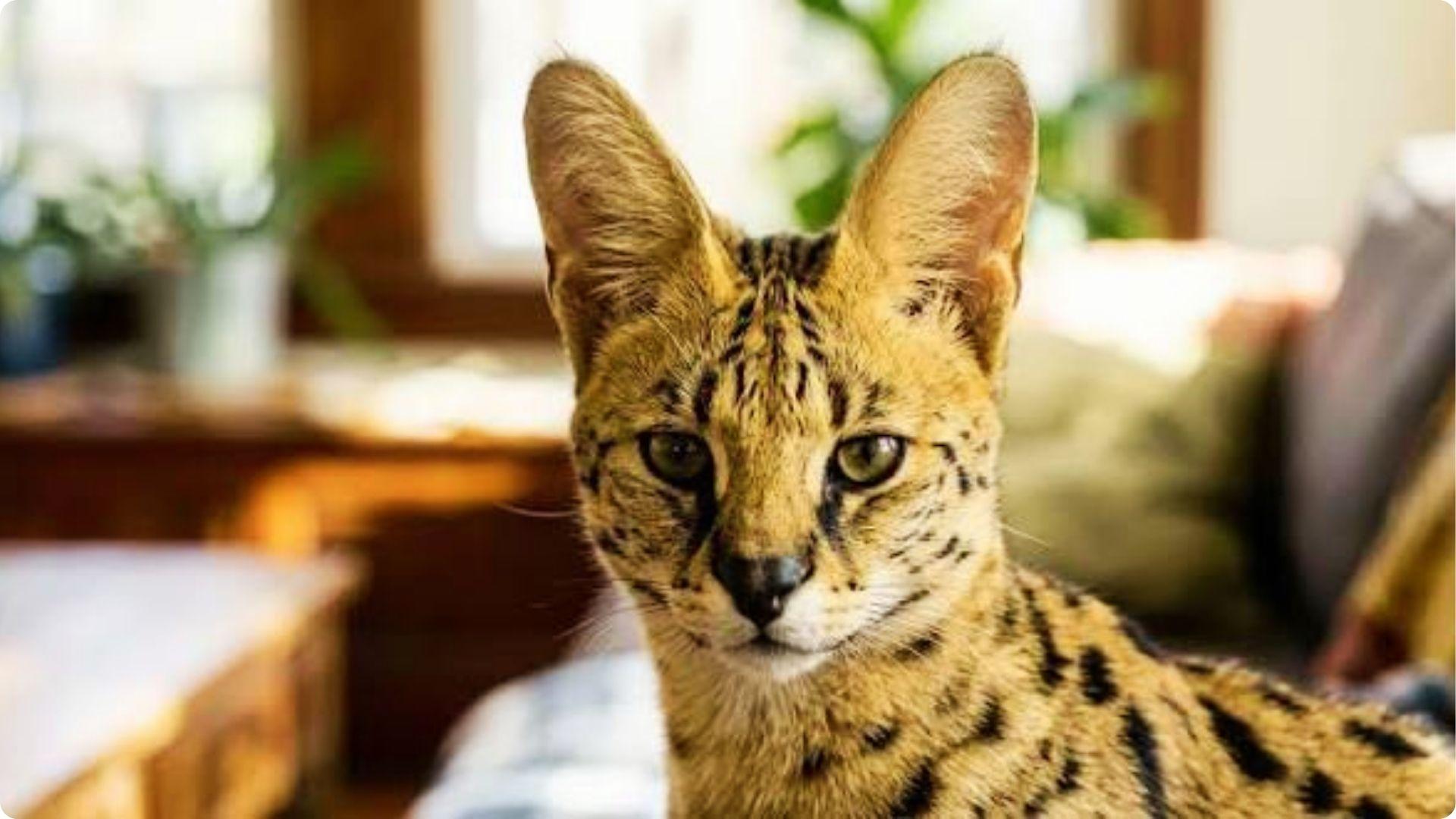
Savannah cat size directly affects how you care for them, and planning ahead saves a lot of trouble down the line.
These cats need open spaces to move freely, as a cramped environment without enrichment leads to stress and destructive behavior.
Litter boxes should be extra-large, at least 24 by 18 inches, and cat furniture must be built sturdy enough to handle their weight without tipping.
Daily play is non-negotiable, with at least one to two active sessions using interactive toys, puzzle feeders, or even leash walks to burn off energy.
On the feeding side, kittens need high-protein, calorie-dense food to support muscle growth, while adults need portions adjusted to their size, activity level, and overall condition.
Common Mistakes When Estimating Savannah Cat Size
Many owners get surprised by their cat's actual size. These are the most common reasons why.
- Not all Savannah cats reach the same size, even within the same generation. Genetics vary between breeders, so always ask about parent sizes before assuming what your cat will look like fully grown.
- Kitten weight at 8 weeks is not a reliable way to predict adult size. Savannah kittens grow in spurts and often look small early on, so looking at both parents gives a far more accurate picture.
- Height does not equal overall body size. A cat standing 16 inches tall may only weigh 14 pounds, so muscle mass and body length together give a truer sense of how big your Savannah actually is.
- Serval size should never be used to predict Savannah cat size. Each generation moves further from several proportions, and even F1 Savannahs are typically smaller than a full-grown serval.
- Assuming all generations look similar is a common error. An F1 and an F5 can look drastically different in height, weight, and build, so generation matters more than most new owners expect.
Conclusion
Understanding Savannah cat size helps you prepare for ownership in a real, practical way.
From the towering F1 to the more manageable F5 or SBT, every generation has its own size range, needs, and personality.
The key is knowing what your specific cat needs based on its generation, age, and health.
Now that you have a clear picture, you are better equipped to give your Savannah cat the right food, space, and care it deserves.
If you found this helpful, drop a comment below with your cat's generation and current size.
Share this guide with anyone else considering a Savannah, and check out our related posts on Savannah cat care and nutrition for even more practical advice.
Frequently Asked Questions
Can two Savannah cats from the same generation be very different in size?
Yes. Genetics vary even within the same generation. Parent size, diet, and individual variation all play a role in final size.
Do Savannah cats grow faster than regular cats?
No, they actually grow more slowly. Savannah cats can take up to three years to fully mature compared to one year for most domestic cats.
Is there a weight limit for a Savannah cat to be considered healthy?
There is no single limit. Healthy weight depends on generation, sex, and muscle mass. Your vet can assess body condition more accurately than scale numbers alone.
Do male Savannah cats always outgrow females?
In most cases, yes. Males tend to be heavier and taller across all generations. However, a large female F1 can still outsize a smaller male F2.
Can a Savannah cat's size affect its lifespan?
Size itself does not directly shorten lifespan. However, obesity in larger cats can cause joint and organ issues. Keeping them at a healthy weight matters more than the number on the scale.