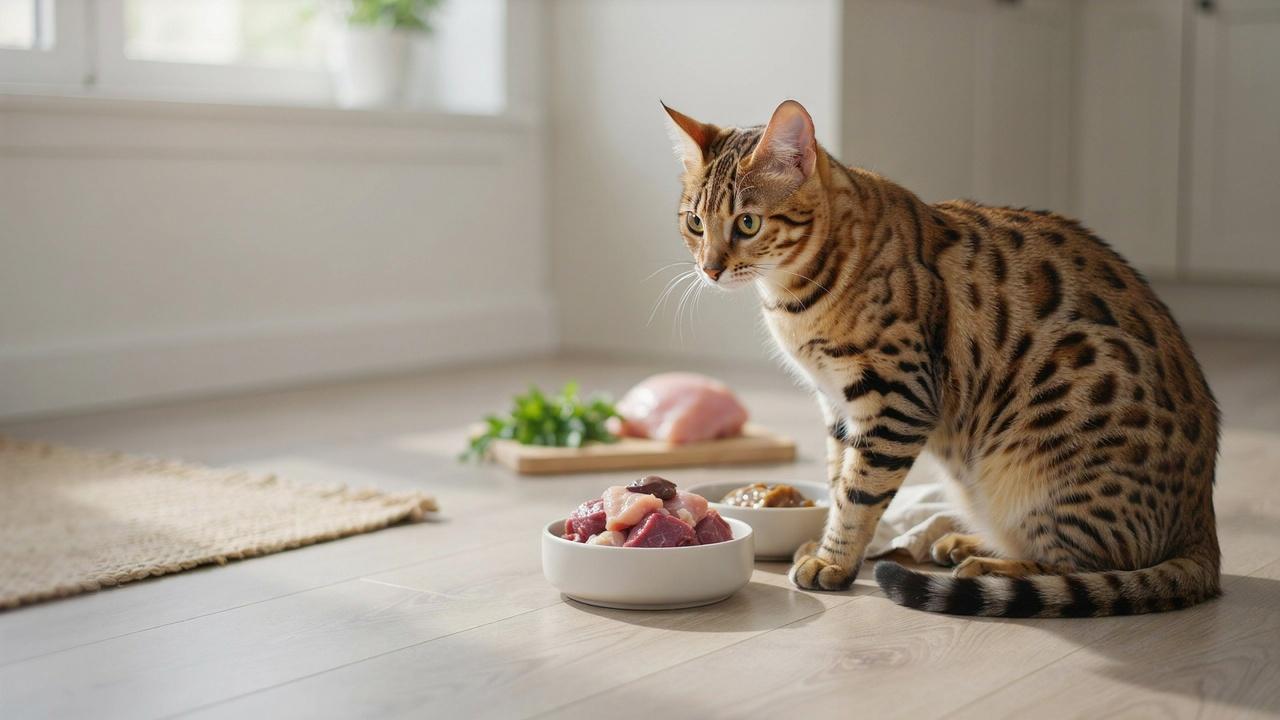
Feeding a Savannah cat is not the same as feeding an average house cat.
These cats are tall, athletic, and descended from wild Serval ancestry, which means their nutritional needs can catch new owners off guard.
Many people are unsure whether to feed raw, wet, or dry food, and how much is actually enough.
This guide on Savannah cat diet covers everything:what to feed, how much, how often, and what to avoid.
Whether your cat is a kitten or an adult, this article gives you clear, practical answers based on reliable information so you can feel confident at every meal.
What Should a Savannah Cat Eat?

The foundation of a good Savannah cat diet is animal-based protein, adequate moisture, and the right balance of fats and nutrients.
High-Protein Cat Food
Savannah cats need a diet that is high in animal protein. Look for foods where a named meat source, such as chicken, turkey, or salmon, is listed as the first ingredient.
Protein supports lean muscle mass, energy, and overall health in these active cats. Aim for foods with at least 35 to 45 percent protein on a dry matter basis.
Wet Cat Food
Wet food is a strong choice for Savannah cats because it contains high moisture content, usually around 70 to 80 percent water.
This helps keep your cat hydrated, supports kidney function, and is generally more palatable.
Most wet foods are also lower in carbohydrates than dry options, which suits the natural biology of cats well.
Dry Cat Food
Dry food is convenient and has a longer shelf life. It can work as part of a Savannah cat's diet, but it should not be the only food offered.
Most dry foods have lower moisture content and higher carbohydrate levels, which are less ideal for cats that evolved as strict carnivores.
If you use dry food, choose a high-quality option with real meat as the primary ingredient.
Raw Cat Food
Some Savannah cat owners feed a raw diet, which typically includes raw muscle meat, organ meat, and raw meaty bones.
The idea is to replicate a natural prey-based diet. This approach can work, but it comes with real risks including bacterial contamination and nutritional imbalances if not done correctly.
A veterinary nutritionist should be involved before starting a raw diet.
Safe Treats and Supplemental Foods
Treats should make up no more than 10 percent of your cat's daily calorie intake.
Safe options include small pieces of cooked chicken, freeze-dried meat treats, or commercial cat treats made from single protein sources.
Avoid treats with artificial flavors, excessive salt, or added sugars.
What Nutrients Does a Savannah Cat Need?
Getting the right nutrients in the right amounts is what separates a good diet from a great one for these cats.
Protein and Essential Amino Acids
Cats are obligate carnivores, meaning their bodies depend on animal-sourced protein to survive.
Savannah cats need high levels of protein to maintain muscle and support metabolic function.
Key amino acids like arginine and lysine must come from their food since cats cannot produce enough on their own.
Fat and Essential Fatty Acids
Dietary fat provides energy and supports skin and coat health. Savannah cats need adequate amounts of omega-3 and omega-6 fatty acids.
Sources like fish oil, chicken fat, and whole prey can supply these. Fat also helps the body absorb fat-soluble vitamins like A, D, E, and K.
Taurine, Vitamins and Minerals
Taurine is a non-negotiable nutrient for cats. Without enough of it, cats develop heart problems and vision loss.
Unlike dogs, cats cannot synthesize taurine on their own. A complete and balanced cat food should always include adequate taurine.
Vitamins like B12 and minerals like calcium and phosphorus in the right ratio also play important roles in long-term health.
Water and Moisture
Cats have a low thirst drive compared to other animals. In the wild, they get most of their hydration from prey.
For Savannah cats, this means moisture in food matters. Wet food, raw food, or a cat water fountain can all help maintain proper hydration and reduce the risk of urinary and kidney issues.
Raw vs. Wet vs. Dry Food: Which Is Best for Savannah Cats?
No single diet works for every cat, so here is an honest look at each option so you can choose based on your cat's needs, your lifestyle, and your budget.
| Diet | Benefits | Risks | Moisture | Protein | Carbs | Best for |
| Raw | High bioavailable protein, natural moisture, may improve coat and digestion | Bacterial risk (Salmonella, E. coli), nutritional imbalances in homemade versions | High | High | Low | Owners with time and expert guidance |
| Wet | High moisture, strong protein, low carbs, palatable and easy to eat | More expensive, opened cans must be used within 24 to 48 hrs | High | High | Low | Most cats recommended as primary diet |
| Dry | Affordable, long shelf life, convenient to store | Low moisture may cause dehydration and kidney strain over time | Low | Moderate | High | Supplement only, not as sole diet |
| Mixed | Combines moisture of wet with convenience of dry, practical and cost-effective | Easy to overfeed combined calorie intake must be monitored | Moderate | High | Moderate | Busy households wanting balance |
Tip: Vets generally recommend high-quality wet food as the primary diet, with dry food as an occasional supplement. Raw feeding requires professional guidance and strict food safety protocols.
How Much Should You Feed a Savannah Cat?

There is no fixed amount that works for every Savannah cat.
Portion size depends on your cat's current weight, age, activity level, body condition score, the calorie density of the food you are using, and whether your cat is intact, spayed, or neutered.
A young, active F1 Savannah will need more calories than a spayed adult of the same weight who spends most of the day indoors.
Always start with the feeding guidelines on the food packaging and adjust based on how your cat looks and feels.
How Many Calories Does a Savannah Cat Need?
Most adult cats need roughly 20 to 30 calories per pound of body weight per day, but this varies.
A Savannah cat that weighs 15 pounds and is moderately active might need 300 to 400 calories daily.
Highly active cats need more. Cats that are overweight or less active may need fewer.
The calorie content per cup or can of food differs widely between brands, so always check the label and calculate based on your cat's actual intake.
How Often Should You Feed a Savannah Cat?
Most adult Savannah cats do well with two meals per day, spaced roughly 12 hours apart. This routine helps with digestion and makes it easier to monitor appetite.
Some owners prefer three smaller meals for cats that tend to eat too fast or seem hungry between meals. Kittens need more frequent feeding, which is covered in the next section.
How to Adjust Portions for Weight Gain or Weight Loss
If your Savannah cat is gaining unwanted weight, reduce portion sizes by 10 to 15 percent and reassess after two to three weeks.
If your cat is too thin, increase portions gradually and rule out any health issues with your vet.
Body condition scoring, which involves feeling the ribs and checking the waist, is a more reliable indicator than the scale alone. Your vet can show you how to do this.
How Do You Choose the Best Food for a Savannah Cat?
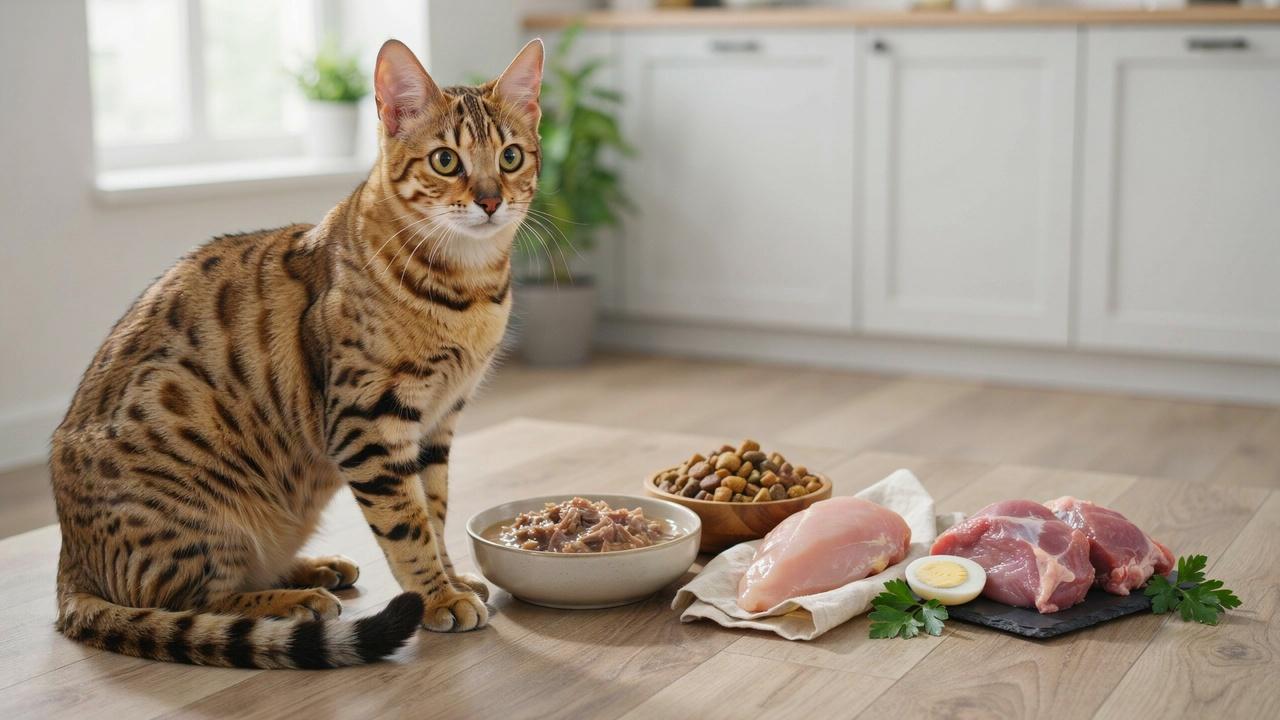
The market is full of cat food options, and not all of them are worth your money. Here is how to cut through the noise.
Look for Complete and Balanced Nutrition
The label should say "complete and balanced" and meet AAFCO nutritional profiles for your cat's life stage.
This is the minimum standard that ensures the food covers your cat's basic nutritional needs. Foods that say "for supplemental feeding only" are not suitable as a primary diet.
Check Protein, Fat and Calorie Content
Look for a food where animal-sourced protein makes up the majority of the ingredient list. The guaranteed analysis on the label shows protein, fat, and moisture percentages.
Use the dry matter basis calculation to compare wet and dry foods accurately. A nutritionist or your vet can walk you through this if needed.
How to Read the Ingredient List
Ingredients are listed by weight before processing. A food that lists chicken, chicken broth, and turkey as the first three ingredients is a stronger choice than one that leads with corn or pea protein.
Be cautious of foods that use multiple grain or plant-based proteins to inflate the total protein number without providing the full amino acid profile your cat needs.
Choosing Food for Your Cat's Age and Activity Level
Kittens need kitten food or all-life-stages food. Adults do best on adult maintenance formulas unless they are very active or pregnant.
Senior cats may benefit from formulas with adjusted protein levels or joint support. Activity level matters too.
A highly active Savannah needs more calories than a calm, indoor cat of the same size.
When a Veterinary Nutritionist Can Help
If your Savannah cat has health issues, food sensitivities, or you are considering a homemade or raw diet, a board-certified veterinary nutritionist is the most reliable resource.
They can create or review a diet plan specific to your cat's health status and goals, which is far safer than guessing.
What a Balanced Raw Diet Needs
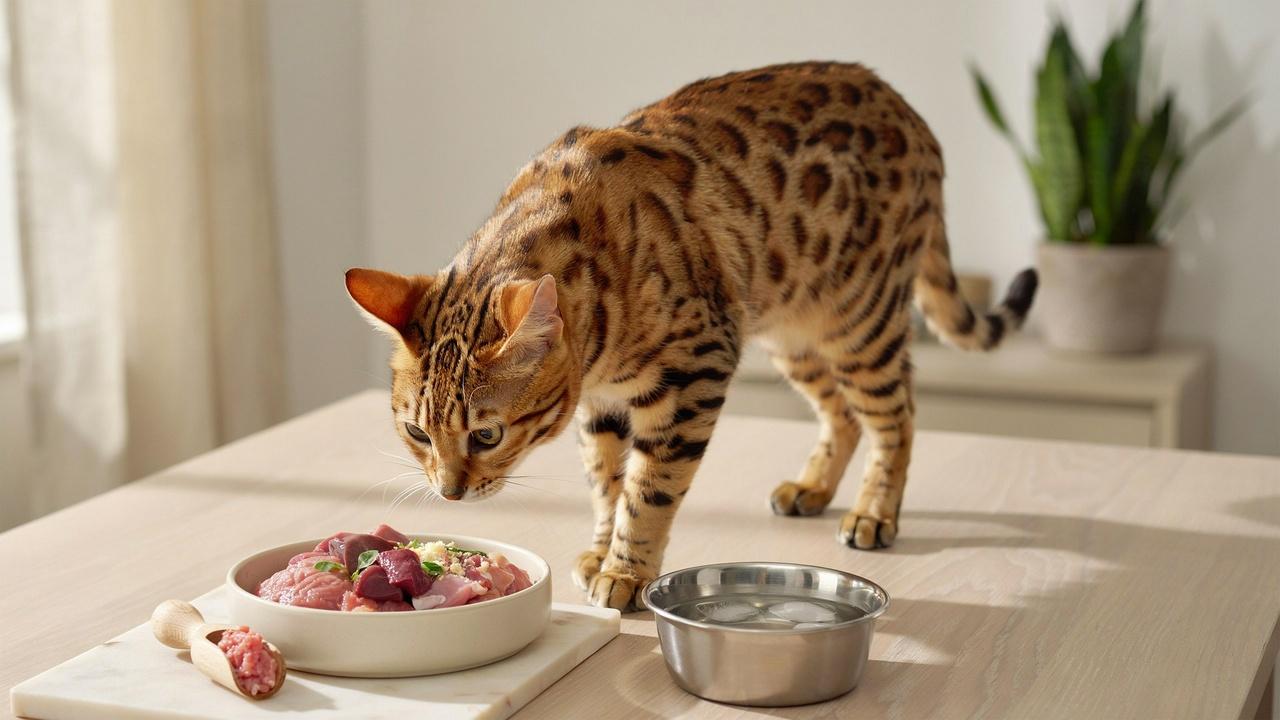
A properly balanced raw diet needs the right ratio of muscle meat, secreting organs, and raw meaty bones.
Raw Meat, Bones and Organ Meat
Muscle meat provides protein but is low in calcium. Organ meat, especially liver, provides important nutrients but can cause toxicity if fed in excess.
Raw meaty bones help with calcium and dental health but carry a choking and obstruction risk. The ratios matter, and getting them right consistently is harder than it sounds.
Taurine and Other Nutritional Requirements
Taurine is particularly vulnerable in a raw diet because some raw meats are naturally lower in taurine, and grinding meat further reduces its levels.
A homemade raw diet that does not account for this can lead to taurine deficiency over time, which causes dilated cardiomyopathy and blindness.
Raw Food Handling and Storage Safety
Raw meat must be stored at safe temperatures, thawed properly, and served in clean bowls. Unused portions should be refrigerated immediately and not left out for extended periods.
Surfaces used for raw food preparation should be sanitized thoroughly to reduce the risk of spreading bacteria to other pets or household members.
Commercial Raw Food vs. Homemade Raw Food
Commercial raw diets that carry an AAFCO complete and balanced statement are generally safer than homemade raw meals because they have been formulated to meet nutritional standards.
Many are also frozen or freeze-dried to reduce pathogen load.
Homemade raw diets should only be prepared following a recipe created by a veterinary nutritionist, not based on general online guides.
How Do You Transition a Savannah Cat to New Food?
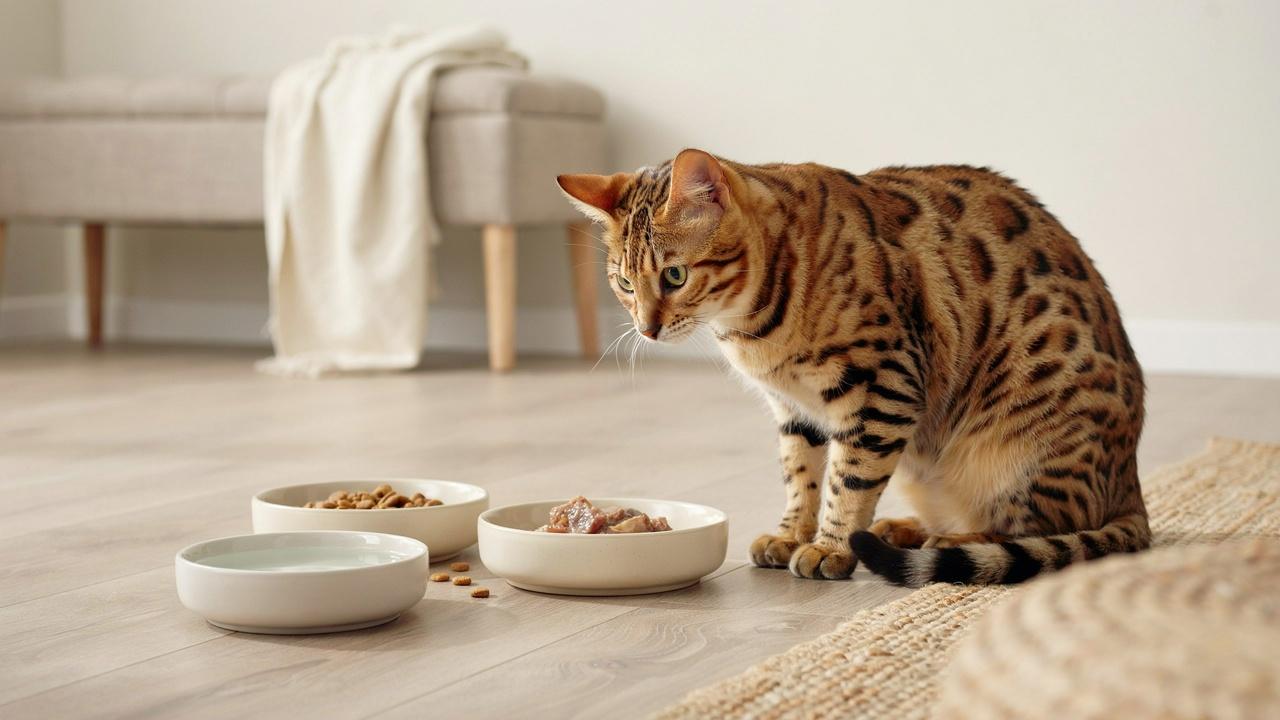
Switching food abruptly is one of the most common causes of digestive upset in cats. A slow, structured transition gives your cat's gut time to adjust.
Start With the Food Your Cat Already Eats
When you bring home a new Savannah cat, ask the breeder or shelter what food the cat has been eating.
Start with that food and keep it consistent for at least the first week or two before making any changes. Cats find consistency comforting, especially in a new environment.
Introduce New Food Gradually
A seven to ten day transition works well for most cats. Start by mixing about 25 percent new food with 75 percent old food for the first few days.
Gradually shift the ratio over the following days until the new food makes up the full meal.
Going slower is always better if your cat has a sensitive stomach.
What to Do If Your Savannah Cat Refuses New Food
Some Savannah cats are stubborn about food changes. Try warming the food slightly to increase aroma.
You can also try a different protein or texture before assuming the cat will not accept the new food at all.
Never leave a cat without food for extended periods in an attempt to force acceptance, as this can lead to hepatic lipidosis, a serious liver condition.
Signs the New Food Is Not Agreeing With Your Cat
Watch for loose stool, vomiting, reduced appetite, or lethargy during a food transition.
Mild digestive changes are normal for a few days, but ongoing symptoms suggest the food may not be a good fit.
Slow the transition down or go back to the previous food and consult your vet if symptoms persist.
What Are the Most Common Savannah Cat Feeding Mistakes?
Even well-intentioned owners make feeding errors that affect their cat's health over time. Here are the ones that come up most often.
- Raw feeding is not required for every Savannah cat, many thrive on high-quality commercial wet food, so don't feel pressured into it if it doesn't suit your lifestyle.
- A high protein percentage on the label doesn't guarantee quality look at the protein source, since plant-based proteins like peas and lentils can inflate the number without meeting your cat's amino acid needs.
- Overfeeding is a common mistake, use packaging guidelines as a starting point, count treats in the daily calorie total, and adjust portions if your cat starts gaining weight.
- Never switch foods abruptly, transition over at least 7 to 10 days, increase the new food gradually, and slow down if you notice digestive upset or stool changes.
- Monitor your cat's weight, appetite, and stool regularly, keep a simple log and see a vet promptly if anything changes suddenly.
How Can You Tell If Your Savannah Cat's Diet Is Working?
Ingredients matter, but so does how your cat actually responds to the food over time. Watching these signs regularly tells you far more than any label can.
Healthy Body Condition and Stable Weight
Your cat should have a visible waist when viewed from above and ribs that you can feel with light pressure but not see.
Weight should remain stable between vet visits. Sudden weight loss or gradual weight gain both signal that something needs to change with the diet or health status.
Normal Appetite and Energy
A Savannah cat on a good diet should be consistently interested in meals and maintain steady energy levels throughout the day.
Lack of interest in food or noticeable drops in activity can indicate a nutritional problem, an illness, or simply a food that your cat has grown tired of.
Healthy Stool and Digestion
Stool should be firm, brown, and passed once or twice a day.
Very soft stool, diarrhea, or constipation that lasts more than a day or two suggests the diet may not be agreeing with your cat.
Mucus or blood in stool always warrants immediate veterinary attention.
Coat, Skin and Hydration
A well-nourished Savannah cat will have a coat that feels smooth and looks healthy. Excessive shedding, flaky skin, or a dull coat can point to deficiencies in fatty acids or protein.
Skin turgor and consistent water intake are basic markers of hydration. Cats eating wet food typically show better hydration than those on dry-only diets.
When to Talk to Your Veterinarian
If you notice consistent changes in weight, stool, appetite, coat condition, or energy that do not resolve within a few days, schedule a vet visit.
Routine wellness checkups, ideally every six to twelve months for adult cats, give you a professional perspective on whether your cat's diet is supporting good health over time.
Conclusion
Getting the Savannah cat diet right does not have to be complicated. Focus on high-protein, moisture-rich food, feed the right amount for your cat's size and activity level, and avoid the common mistakes that catch many owners off guard.
Consistency and nutritional completeness are what matter most, regardless of the feeding approach you choose.
If your cat is thriving, that is your best signal. If something feels off, your vet is always the right next step.
Found this guide helpful? Share it with another Savannah cat owner or drop your questions in the comments below.
Frequently Asked Questions
Can Savannah cats drink tap water safely?
Most tap water is fine for cats, but filtered water is a better option if your local water has a high mineral or chlorine content.
Do Savannah cats need supplements even on commercial food?
Generally no. A complete and balanced commercial food already meets nutritional needs. Adding supplements without vet guidance can cause imbalances.
Can Savannah cats eat dog food in an emergency?
Dog food lacks taurine and the protein levels cats need. It is not safe as a regular meal and should only be a short-term emergency option.
Is grain-free cat food better for Savannah cats?
Not necessarily. Grain-free does not mean low-carb or high-protein. Focus on overall ingredient quality rather than assuming grain-free is superior.
How long can wet food sit out before it goes bad?
Wet food left at room temperature for more than two hours should be discarded. Refrigerate unused portions and use within 24 to 48 hours.