Have you ever been curious about the Georgia state tree and why it was chosen to represent the state? I enjoy learning about state symbols and the stories behind them, so I put together this guide to make the topic simple and easy to understand.
If you are looking for a clear explanation, you are in the right place.
I carefully research reliable sources to provide accurate and easy-to-follow information.
In this blog, I will explain the Georgia state tree, find its history, discuss why it became an official state symbol, and share some interesting facts about its role in Georgia’s landscape.
By the end, you will have a better understanding of this important tree and its connection to the state.
What Is the Georgia State Tree?

The Live Oak is the official state tree of Georgia, formally designated through a legislative act, and is widely recognized across the southeastern United States for its broad canopy, strong branches, and long life.
It has been a part of Georgi’s landscape for centuries and holds real meaning for the people who live there, from coastal areas to inland regions.
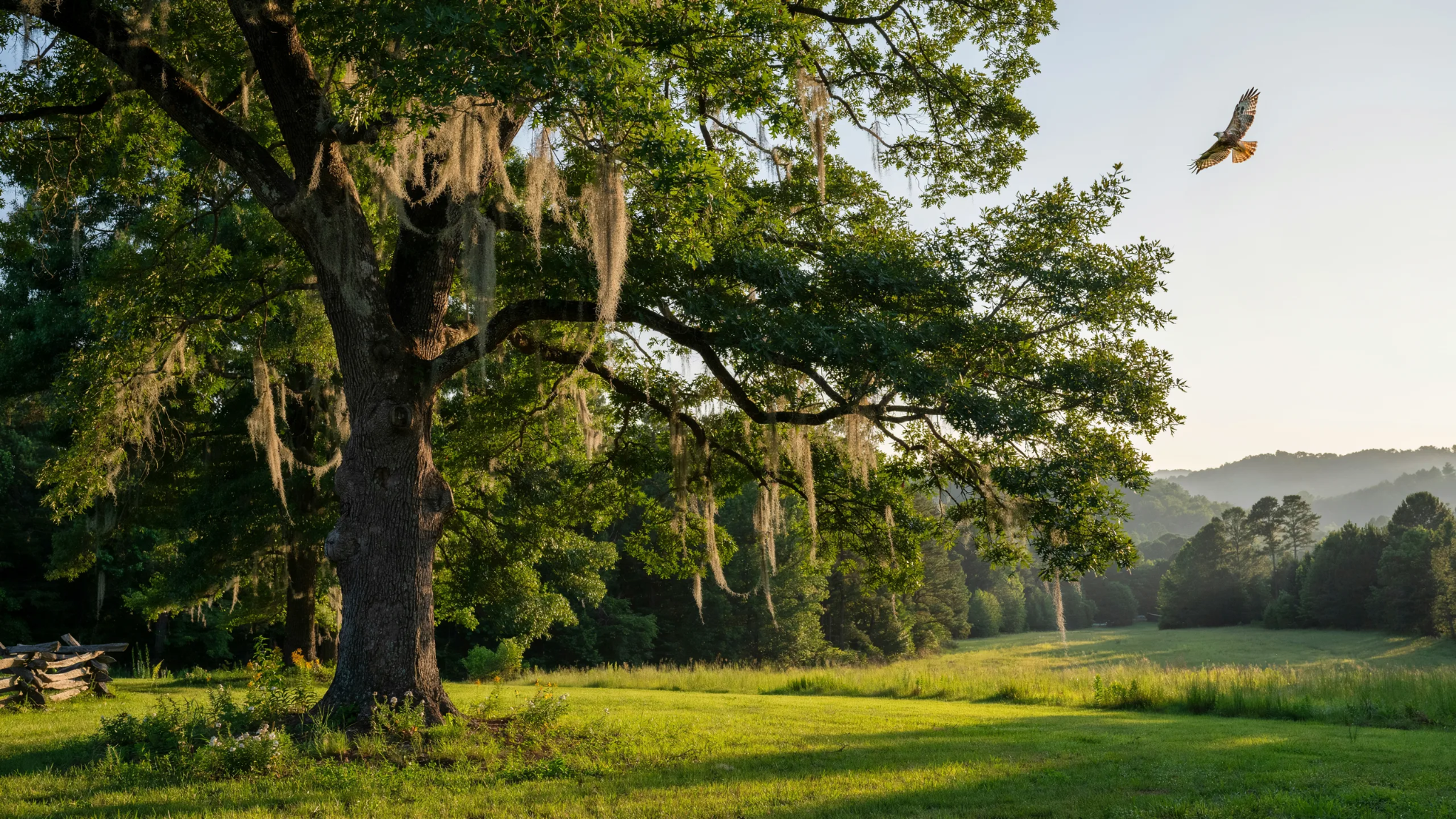
As an evergreen tree, it keeps its leaves year-round and can grow up to 60 to 80 feet tall, with some canopies stretching over 100 feet across.
It produces small, dark acorns that serve as an important food source for wildlife, and its wood is extremely hard and dense, which historically made it valuable for shipbuilding.
Live Oaks grow slowly but can survive for several hundred years, making them one of the most lasting and meaningful symbols of Georgi’s natural world.
Why Is the Live Oak the Georgia State Tree?

The Live Oak was chosen because of its strong presence in Georgi’s landscape, its historical value, and what it has meant to the people of the state over many generations.
Historical Significance
The Live Oak has played a practical role in Georgi’s history. Its wood was highly valued during the era of wooden shipbuilding because of its strength and resistance to rot. Ships built with Live Oak timber were known to be especially durable, and Georgi’s coastal forests were an important source of this material.
Beyond shipbuilding, the tree has been a part of everyday life in Georgia for centuries. It provided shade, shelter, and a gathering place for communities across the state.
Many of the oldest Live Oaks in Georgia stand near historic buildings, plantations, and town squares, showing just how long this tree has been present in the lives of Georgians.
Connection to Georgi’s Heritage
The Live Oak is deeply tied to the identity of the southeastern United States, and Georgia in particular. It lines streets in historic towns, grows along coastal marshes, and shades parks and public spaces that generations of Georgians have used and loved.
This connection to place and people is a big part of why the Live Oak was chosen as the state tree. It is not just a tree people pass by. It is one they recognize, remember, and associate with home.
Symbolism of the Live Oak
The Live Oak stands for strength, endurance, and stability. These qualities made it a meaningful symbol for a state that wanted its official tree to reflect something lasting and significant.
The tree's ability to survive storms, resist decay, and live for hundreds of years made it a natural fit as a symbol of Georgi’s resilience and character.
When Did the Live Oak Become Georgi’s State Tree?
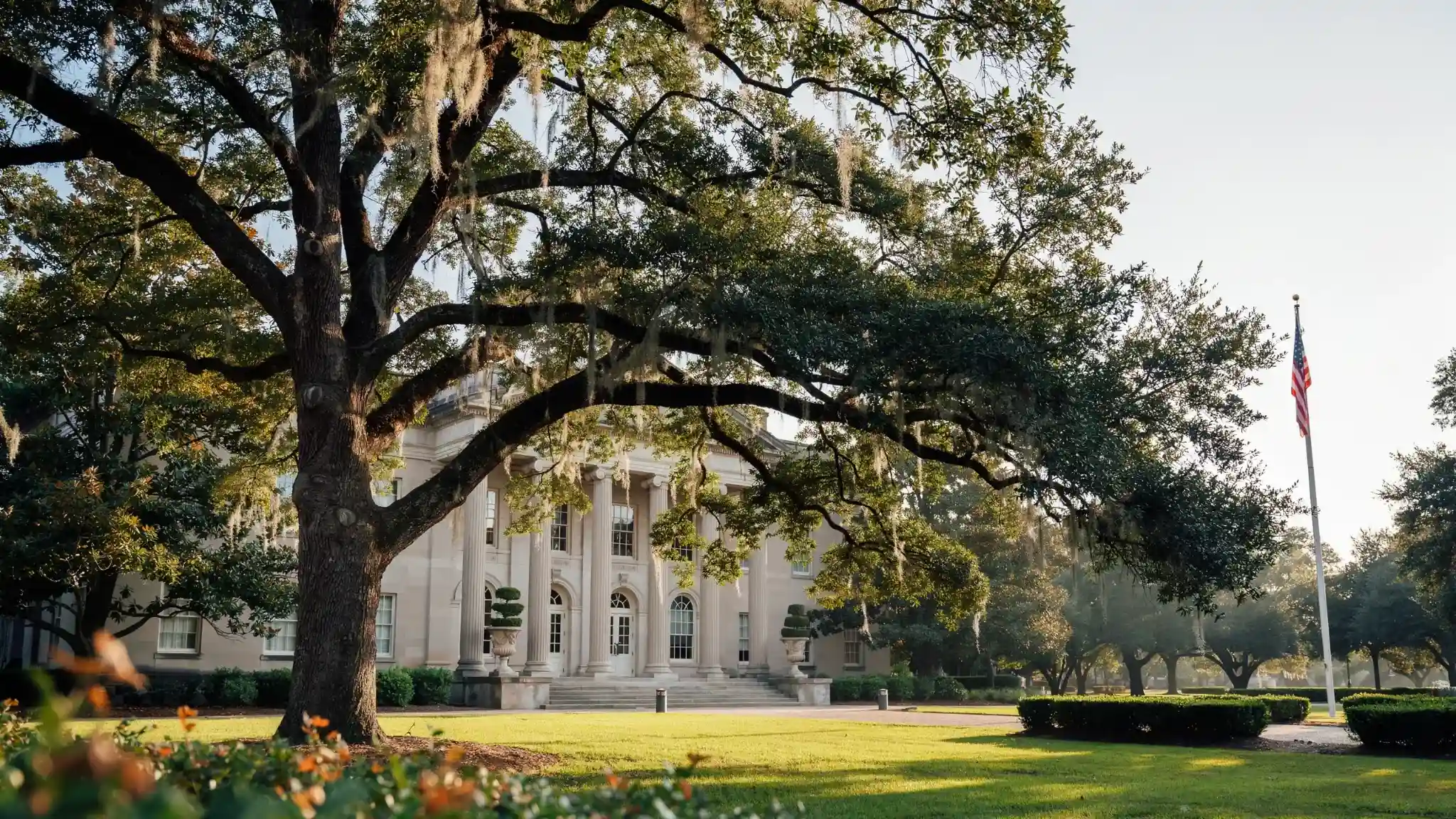
Georgia officially named the Live Oak as its state tree in 1937, making it one of the earlier state symbols to be formally recognized.
Official Designation
The Live Oak became Georgi’s official state tree in 1937 through a formal legislative process. This designation placed the Live Oak alongside other state symbols as an official representation of Georgi’s natural identity.
The decision reflected a recognition of the tree's importance to the state, both historically and ecologically. By making it official, Georgia acknowledged the Live Oak's place in the lives of its residents and in the broader landscape of the state.
Background of the State Symbol
Before the Live Oak was designated, Georgia did not have an official state tree.
The movement to establish state symbols gained momentum in the early twentieth century as states across the country began formally recognizing plants, animals, and other natural features that represented their identity.
The Live Oak was a strong and widely supported choice. Its presence across Georgia, its historical role, and its recognizable appearance made it stand out as the right tree to represent the state.
Since 1937, it has continued to serve as an important symbol of Georgi’s natural world.
Characteristics of the Live Oak Tree
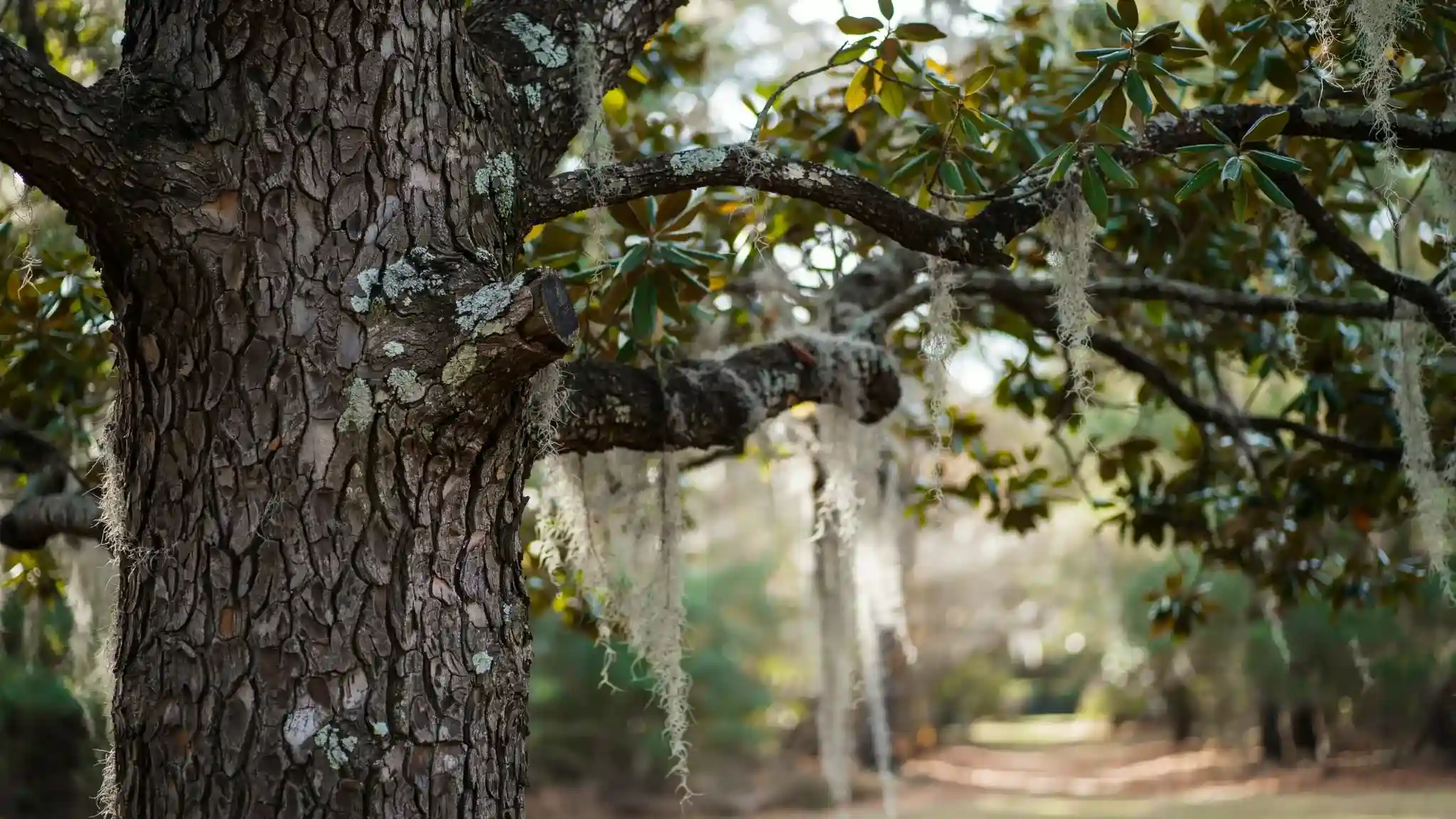
The Live Oak has several standout physical traits that make it easy to recognize and hard to forget once you have seen one up close.
Physical Appearance
The Live Oak has a broad, spreading shape that sets it apart from most other trees. Its branches grow outward rather than straight up, creating a wide, rounded canopy that provides a large area of shade. The bark is dark gray to dark brown and has a rough, ridged texture.
The leaves are small, oval, and leathery. They are dark green on top and lighter underneath. Because the Live Oak is evergreen, it holds onto its leaves through the winter, only dropping them briefly in early spring when new growth begins.
Size and Lifespan
Live Oaks are impressive in terms of both size and age. A mature tree can reach heights of 60 to 80 feet, but its spread is often what draws the most attention. The canopy can extend up to 100 feet wide in older trees, creating a large, shaded area beneath.
In terms of lifespan, the Live Oak is one of the longer-living trees in the region. Many Live Oaks live for 200 to 500 years, and some exceptional specimens are believed to be even older. This longevity is part of what makes the tree such a powerful symbol.
Distinctive Features
One of the most recognizable features of the Live Oak is its Spanish moss. While the moss does not grow on the tree itself, it hangs from the branches and gives older Live Oaks a dramatic, layered appearance that is closely associated with the landscape of the Deep South.
The tree's root system is also notable. Live Oaks develop deep, wide root systems that help anchor them during strong winds and storms. This structural strength is one reason they can survive for so long and withstand the severe weather that sometimes moves through Georgia.
Where Do Live Oak Trees Grow in Georgia?
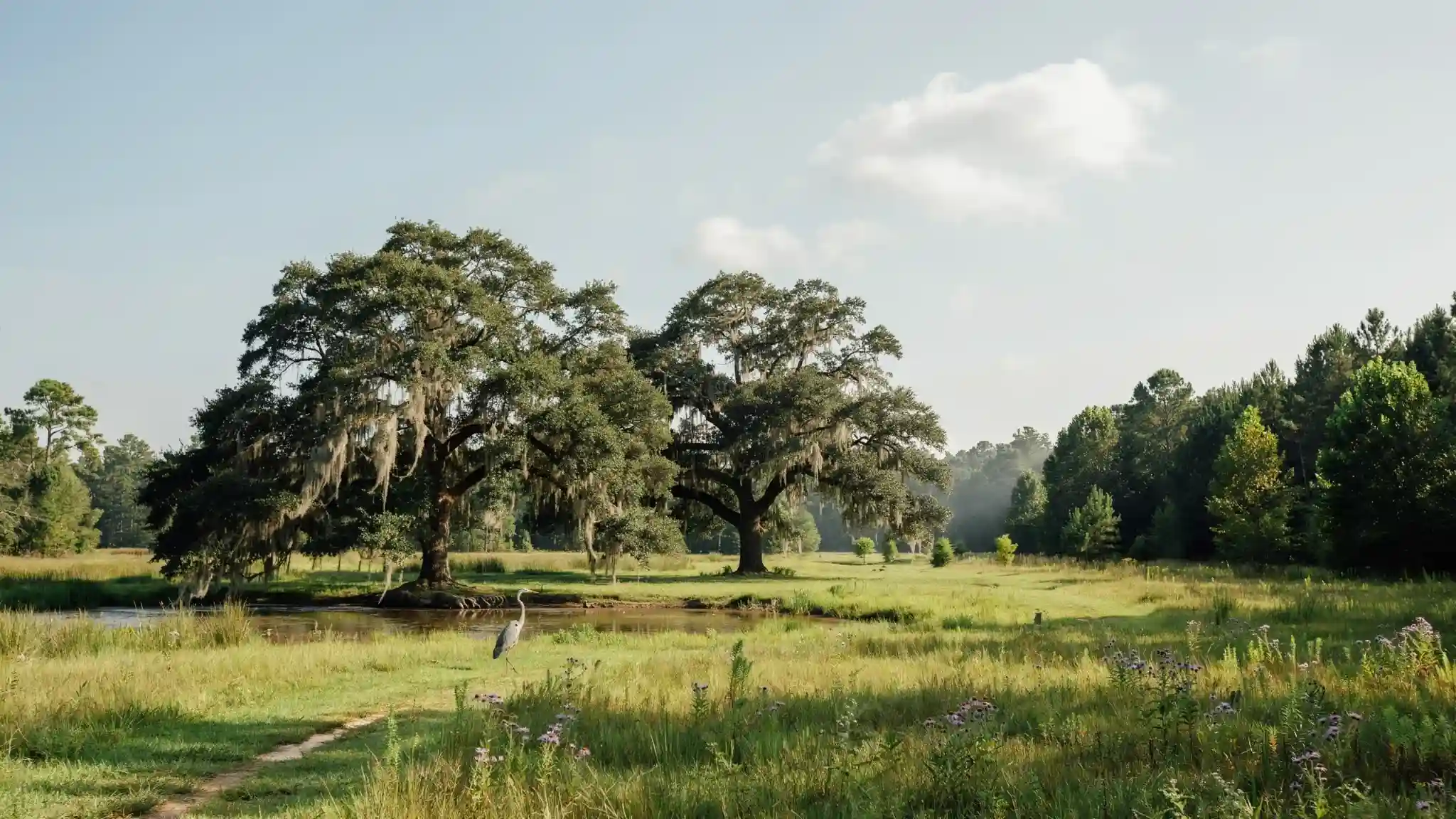
Live Oaks thrive across a wide range of environments in Georgia, from coastal areas to inland forests and urban spaces.
Native Range and Distribution
The Live Oak is native to the southeastern United States. Its range stretches from Virginia down through Florida and across to Texas. Georgia sits near the center of this range, making it one of the states where the Live Oak grows most abundantly and most naturally.
The tree is especially common along the Atlantic Coast, where the climate and soil conditions suit it well. It is one of the defining features of Georgi’s coastal landscape.
Common Habitats in Georgia
Live Oaks grow in a variety of settings across Georgia. They are common in coastal forests, along riverbanks, in public parks, and lining the streets of historic towns.
Some of the most well-known examples can be found on St. Simons Island and in Savannah, where rows of Live Oaks create shaded paths and open-air corridors.
The tree also grows inland, though it is most abundant in the coastal plain region of southern Georgia. It adapts well to sandy soils and can handle occasional flooding, which is common in low-lying coastal areas.
Climate and Growing Conditions
Live Oaks prefer a warm, humid climate with mild winters. They do not tolerate extreme cold well, which is why they are most common in the southern half of Georgia rather than the mountainous northern regions.
They grow best in well-drained soils but can handle a range of soil types, including sandy and clay-heavy soils. Once established, Live Oaks are relatively low-maintenance and highly resistant to drought and wind damage.
Ecological Importance of the Live Oak in Georgia
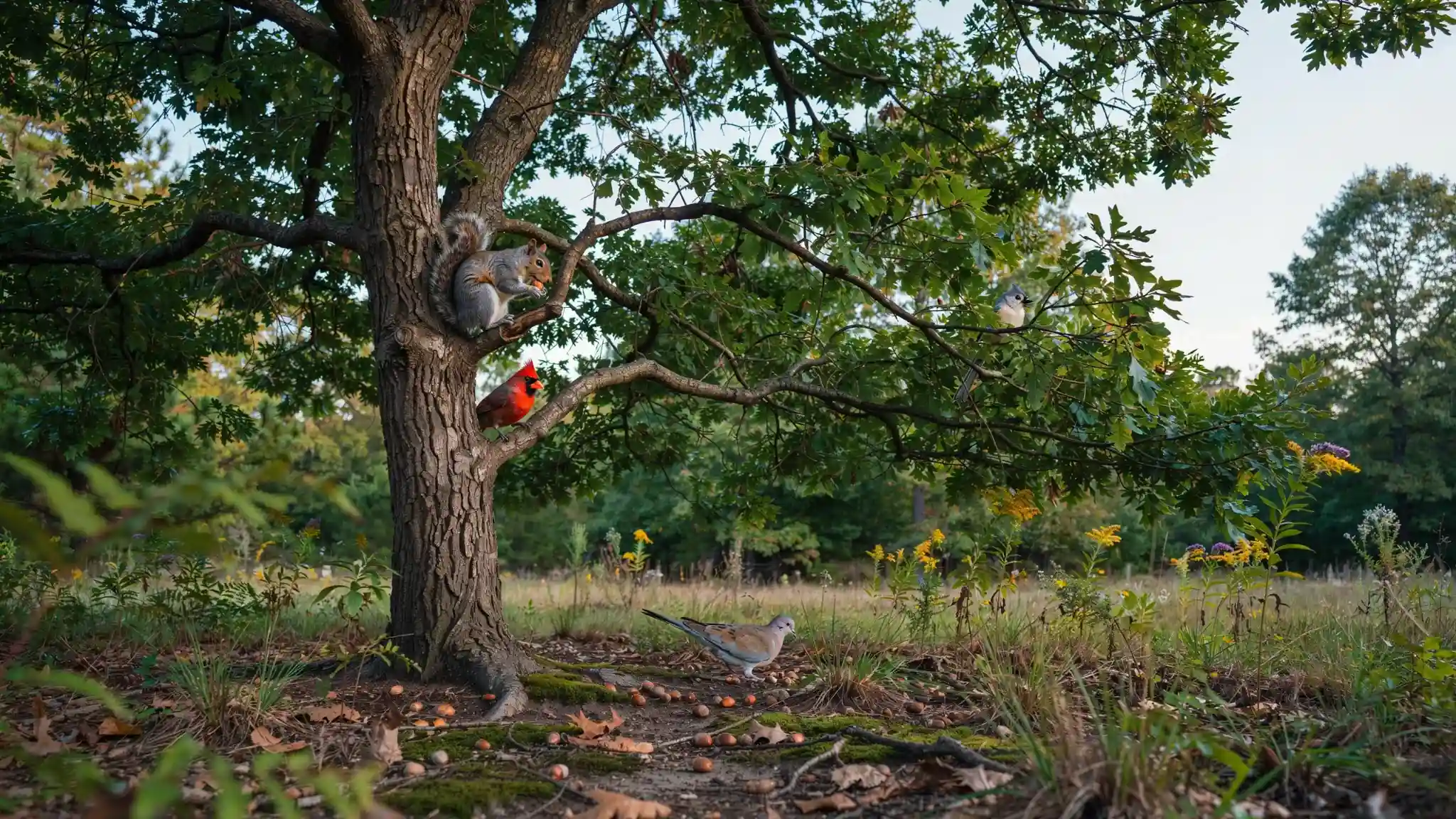
The Live Oak supports a wide range of wildlife and plays a meaningful role in keeping Georgi’s natural environment healthy.
Benefits to Wildlife
Live Oaks produce acorns that serve as a critical food source for many animals, including deer, squirrels, wild turkeys, and various bird species. A single mature Live Oak can produce thousands of acorns in a good year, making it a reliable food source for the wildlife that depend on it.
The tree's broad canopy and thick branches also provide nesting habitat for birds and shelter for small mammals. Older trees with hollow sections can house owls, bats, and other cavity-nesting species.
Role in Local Ecosystems
The Live Oak supports entire communities of organisms. Its bark and branches host mosses, lichens, and ferns. Its leaf litter breaks down to feed the soil. Its roots hold the ground in place, reducing erosion along riverbanks and coastal areas.
In urban settings, Live Oaks help manage stormwater, reduce heat, and improve air quality. Their size and density make them one of the more effective trees for providing environmental benefits in both natural and developed areas.
Environmental Value
Live Oaks store significant amounts of carbon over their long lifespans, making them valuable from a climate perspective as well. Their ability to live for centuries means they continue providing environmental benefits long after other, shorter-lived trees have come and gone.
Georgi’s efforts to protect and maintain its Live Oak populations reflect a broader commitment to preserving the natural environment that defines so much of the state's character.
Interesting Facts About the Georgia State Tree
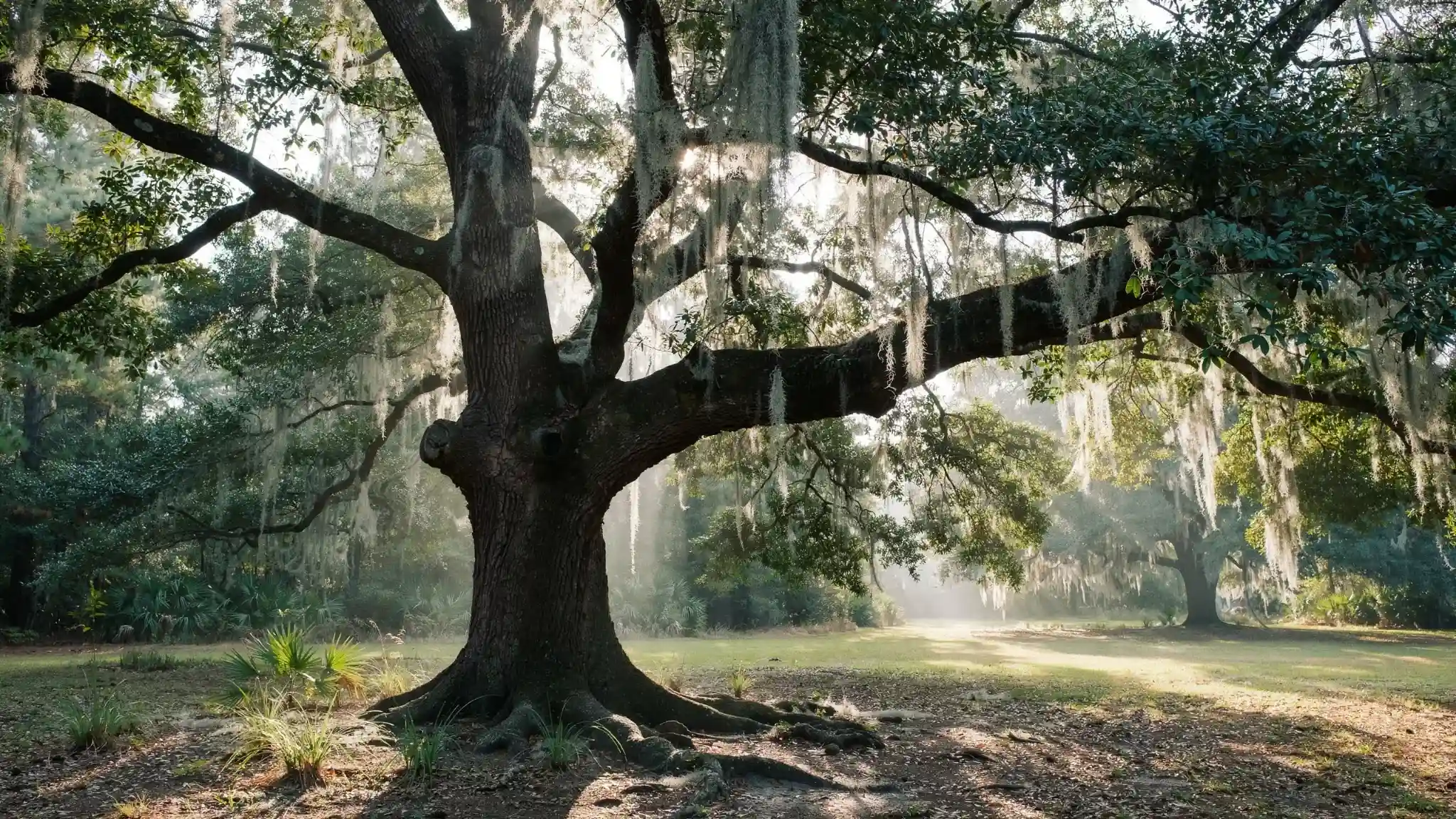
There is a lot more to the Live Oak than most people realize, and some of these details are genuinely surprising.
Unique Features of the Live Oak
Live Oak wood is so dense that it actually sinks in water, which is unusual for wood. This density made it one of the most sought-after materials for building naval ships in the 18th and 19th centuries.
The USS Constitution, one of the most famous ships in American history, was built using Live Oak timber.
Live Oaks are also resistant to most pests and diseases, which contributes to their long lifespan. They can survive hurricane-force winds better than most trees due to their low, spreading form and deep root systems.
Historical and Cultural Facts
Live Oaks appear throughout the history of the American South. They were used as landmarks, meeting places, and boundary markers in early settlements. Some trees that still stand today were already mature when the first European settlers arrived in Georgia.
The tree has a strong presence in Southern literature and art as well. It appears in paintings, photographs, and written descriptions of the Georgia landscape going back hundreds of years.
Famous Live Oak Trees in Georgia
Georgia is home to several well-known Live Oak trees. The Avenue of the Oaks on St. Simons Island is one of the most visited natural landmarks in the state.
Savannah's Forsyth Park and many of its historic squares are lined with mature Live Oaks that have become defining features of the city's character.
How to Identify a Live Oak Tree in Georgia
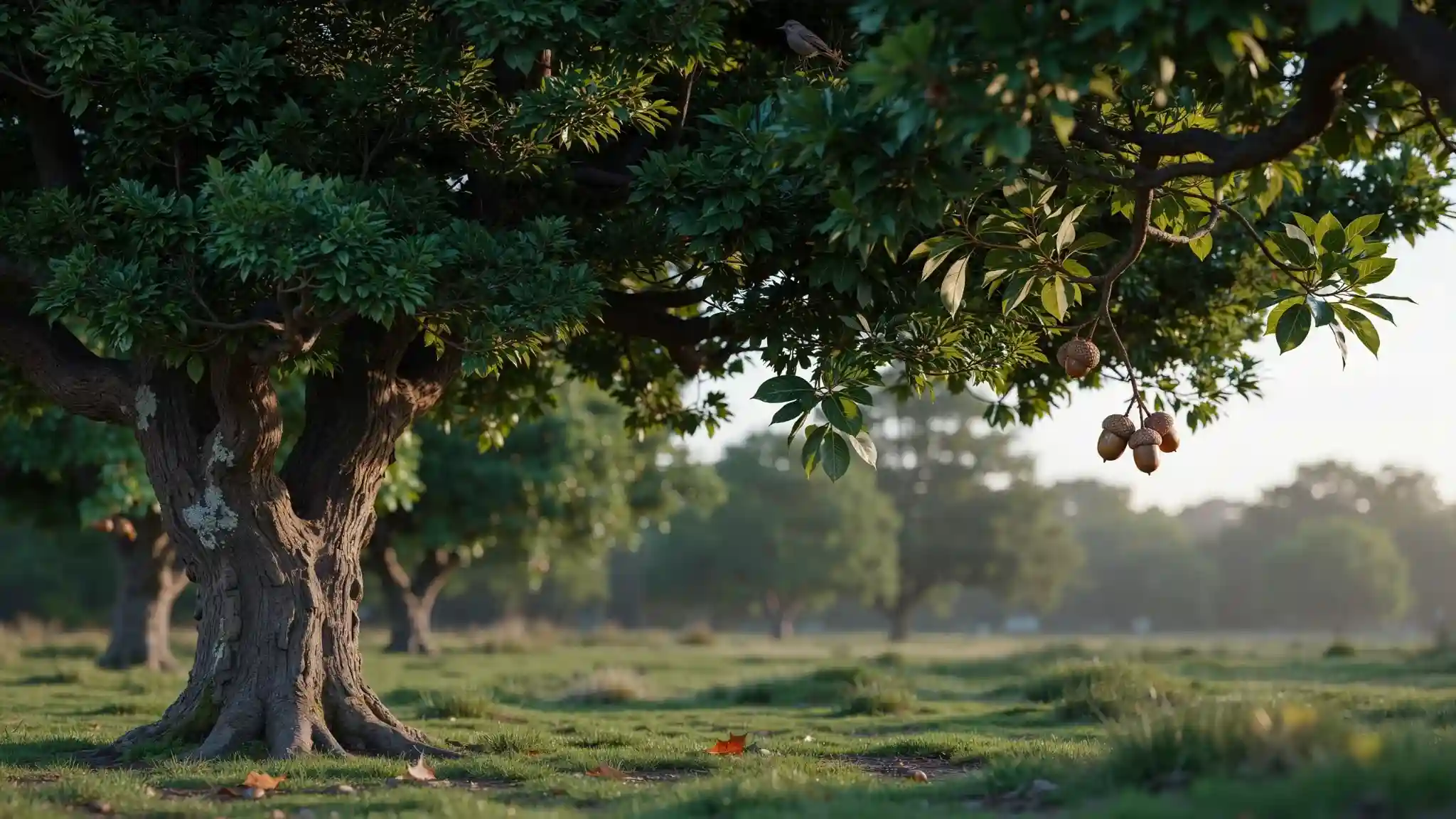
Knowing what to look for makes it easy to spot a Live Oak the next time you are out in Georgi’s landscape.
Leaves, Bark, and Acorns

Live Oak leaves are small, oval, and dark green with a leathery texture. They do not have the lobed edges you might associate with other oak species. The underside of the leaf is lighter and slightly fuzzy.
The bark is dark grayish-brown and deeply ridged. The acorns are small and dark, with a thin cap covering about a quarter of the nut. They grow in clusters and ripen in the fall.
Growth Pattern and Canopy Shape

The most reliable way to identify a Live Oak is by its shape. The branches spread outward in a wide, low arc rather than growing straight up.
This gives the tree a rounded, sprawling appearance that is hard to miss. Older trees often have branches that dip toward the ground before curving back up, creating a dramatic silhouette.
Tips for Spotting and Appreciating Georgi’s State Tree
Knowing what to look for makes it much easier to notice and appreciate Live Oaks when you are out and about in Georgia.
- Look for the wide, spreading canopy first. Live Oaks grow outward more than upward, so their broad, low shape is usually the first thing you notice from a distance.
- Check the leaves closely. Live Oak leaves are small, oval, and dark green with a leathery feel. Unlike most oaks, they do not have lobed edges, which makes them easier to identify.
- Visit Savannah or St. Simons Island. These are two of the best places in Georgia to see large, mature Live Oaks up close, especially along historic streets and public squares.
- Look for Spanish moss hanging from the branches. While it does not grow on the tree itself, it is a strong sign that you are looking at a Live Oak in a coastal area.
- Spot the acorns in fall. Live Oaks produce small, dark acorns in clusters during the fall season, and finding them on the ground beneath a tree is a reliable way to confirm what you are looking at.
- Visit in any season. Since Live Oaks are evergreen, they look full and green year-round, making them a great tree to observe no matter what time of year you are in Georgia.
Conclusion
Learning about the Georgia state tree makes you see the Live Oak a little differently the next time you pass one. I have always found it meaningful how a single tree can carry so much history, strength, and connection to a place.
The Live Oak is not just a state symbol on paper; it is woven into the everyday life and memory of Georgia in a way that few things are.
If this post was helpful, share it with someone who loves Georgia or enjoys learning about nature. Drop a comment below and let me know what you think about the Georgia state tree.
Frequently Asked Questions
What is the Georgia state tree?
The Live Oak is the official state tree of Georgia. It was formally designated in 1937 and is one of the most recognized and widely distributed trees across the state.
Why was the Live Oak chosen as Georgi’s state tree?
The Live Oak was chosen because of its strong historical ties to Georgia, its widespread presence across the state, and its role in the region's natural and cultural life going back centuries.
When did Georgia adopt the Live Oak as its state tree?
Georgia officially adopted the Live Oak as its state tree in 1937 through a formal act of the state legislature, making it one of the earlier state symbols to receive official recognition.
Where can you see Live Oak trees in Georgia?
Live Oaks are found throughout Georgia, but they are most prominent along the coast. Savannah and St. Simons Island are two of the best places to see large, mature Live Oaks in a historic setting.
How long do Live Oak trees live?
Live Oaks typically live between 200 and 500 years, and some specimens are believed to be even older. Their long lifespan is one of the reasons they are considered such a lasting and meaningful symbol for Georgia.