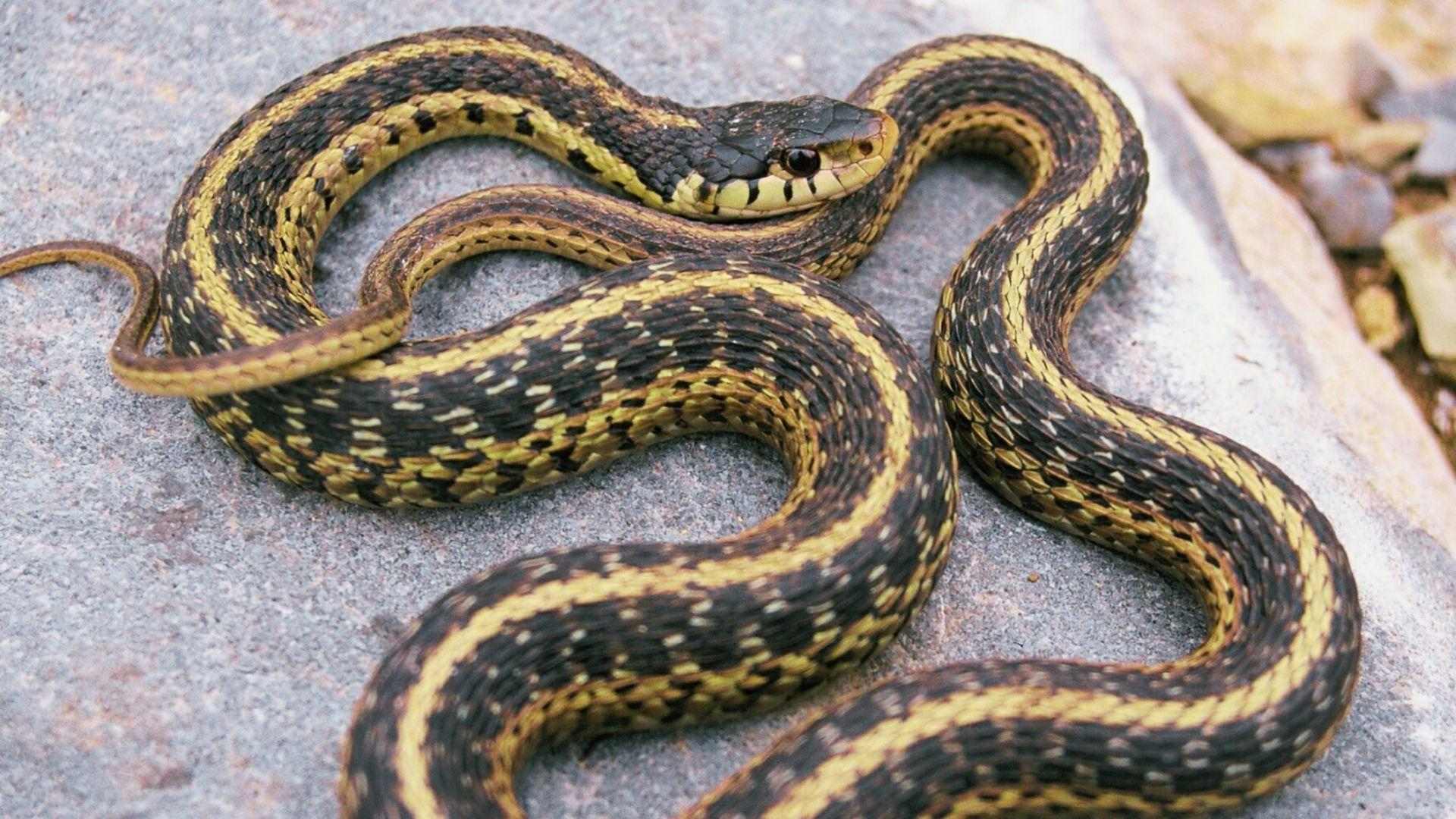
Georgia is home to 47 native snake species, including seven venomous species. Most snakes found around homes, gardens, forests, and waterways are non-venomous and play an important role by eating rodents and other pests.
Georgia’s venomous snakes include the copperhead, cottonmouth, eastern coral snake, eastern diamondback rattlesnake, pygmy rattlesnake, and timber rattlesnake, with cottonmouths represented by northern and Florida forms in current Georgia DNR listings.
Knowing which snakes live in Georgia can help you respond safely when you see one.
This guide explains the state’s venomous and common non-venomous snakes, where they live, when they are most active, how to identify them from a safe distance, and what to do after a snake encounter or bite.
How Many Snake Species Live in Georgia?
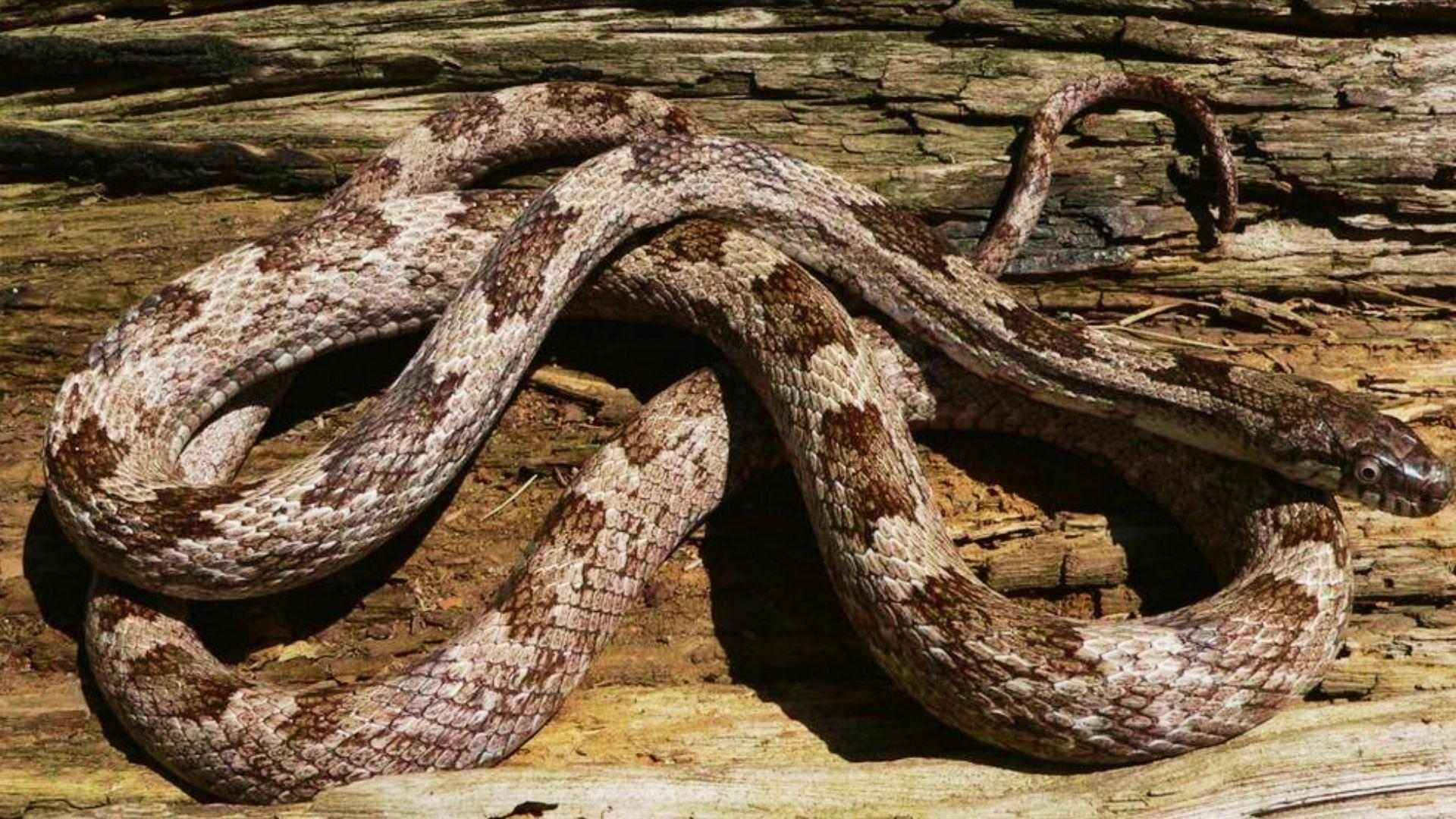
Georgia has 47 native snake species, according to the Georgia Department of Natural Resources. Seven are venomous, while the remaining native species are non-venomous.
Snakes occur throughout the state, from the mountains of north Georgia to the coastal plain and barrier islands.
They also live in suburban and urban areas, where species such as copperheads may encounter people more often. Most snakes avoid people and provide ecological benefits by feeding on rats, mice, insects, amphibians, and other animals.
Venomous Snakes in Georgia
Georgia’s current DNR information lists seven venomous snakes:copperhead, northern cottonmouth, Florida cottonmouth, eastern coral snake, eastern diamondback rattlesnake, pygmy rattlesnake, and timber rattlesnake.
The five pit-viper groups have heat-sensing pits between the eyes and nostrils, while the eastern coral snake belongs to a different snake family.
Eastern Diamondback Rattlesnake
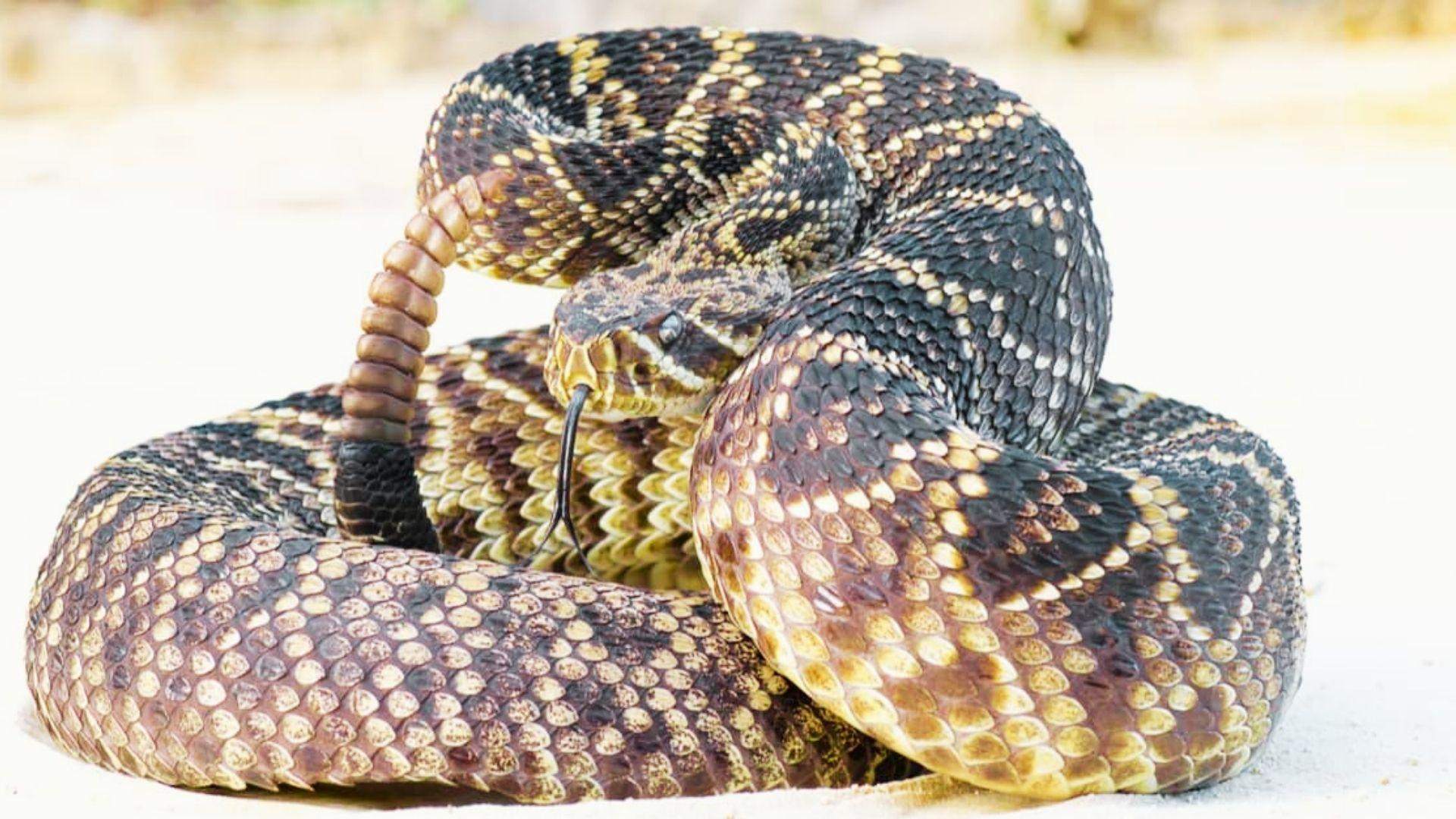
The eastern diamondback rattlesnake is the largest venomous snake found in Georgia and the largest of the state’s venomous species. It is a heavy-bodied pit viper with dark diamond-shaped markings bordered by yellow and can reach about 6.5 feet in length.
In Georgia, eastern diamondbacks are associated mainly with suitable habitats in the Coastal Plain. Their rattle can provide an important warning, but you should never approach a rattlesnake to confirm its identity.
If you encounter one, back away slowly and give it plenty of space.
Timber Rattlesnake
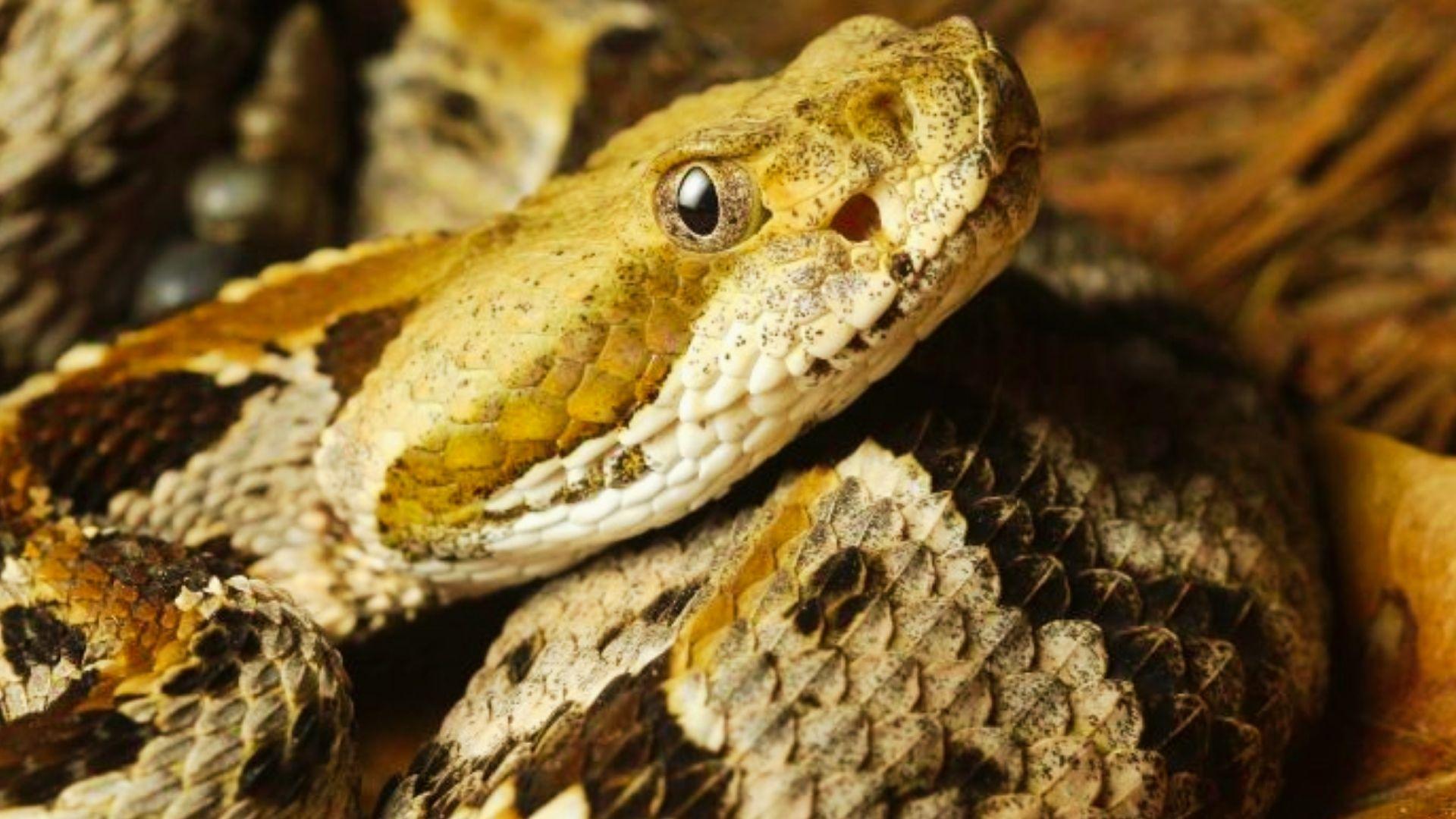
The timber rattlesnake, also called the canebrake rattlesnake in parts of Georgia, is a large pit viper with dark crossbands against a gray, brown, or yellowish background. It occurs in forested areas and suitable habitats across parts of the state.
This species has potent venom, so a bite requires prompt medical attention. A timber rattlesnake may remain still when approached, which makes it especially important to watch where you step and avoid reaching into places you cannot see clearly.
Pygmy Rattlesnake
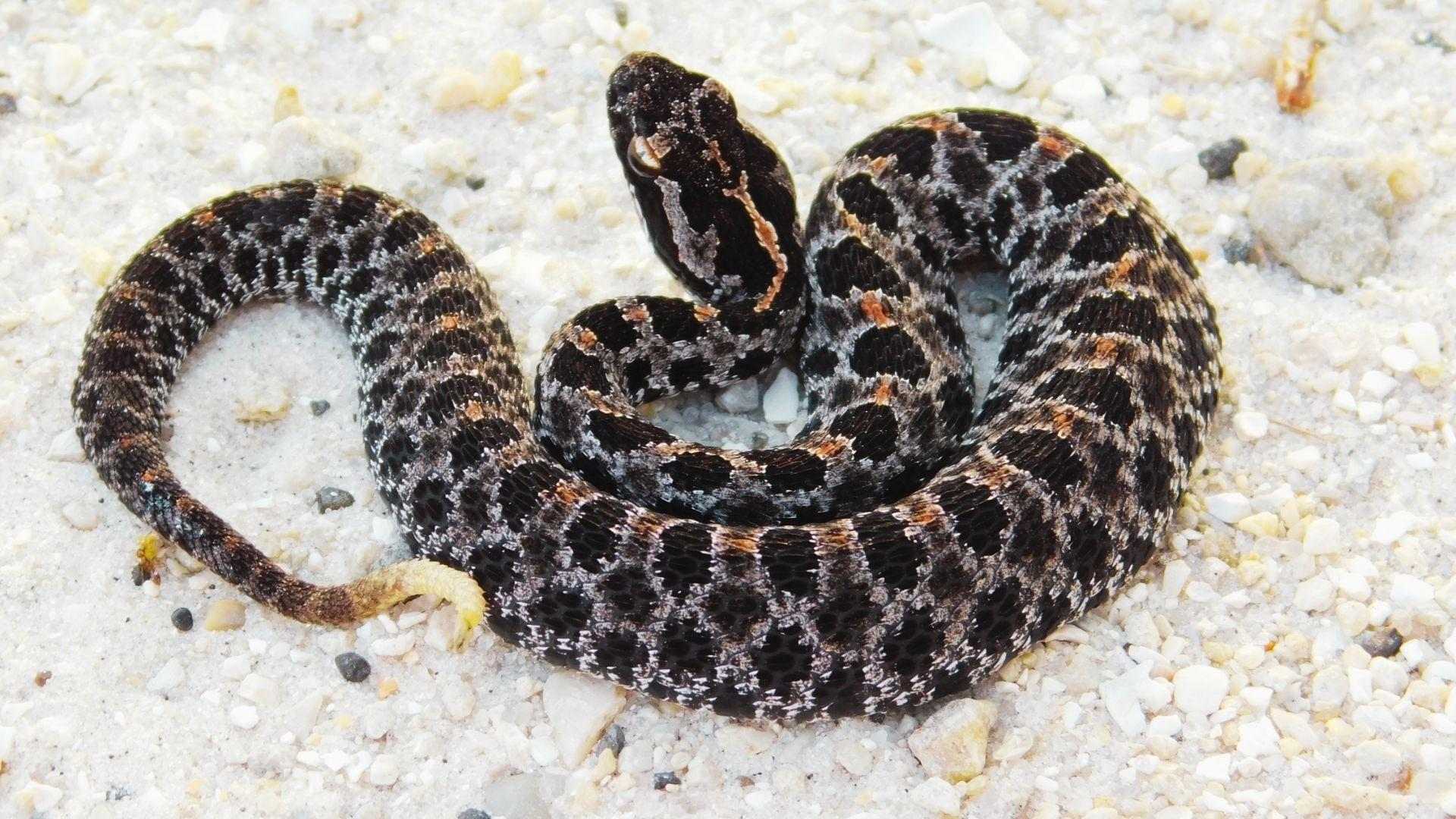
The pygmy rattlesnake is much smaller than Georgia’s larger rattlesnakes and generally reaches less than two feet in length. It has a grayish body with dark spots or blotches and a small rattle that may be difficult to hear.
Pygmy rattlesnakes can occur in a variety of habitats, including areas near wetlands and other suitable cover. Their small size does not make them harmless. Treat any rattlesnake as venomous and keep a safe distance.
Copperhead
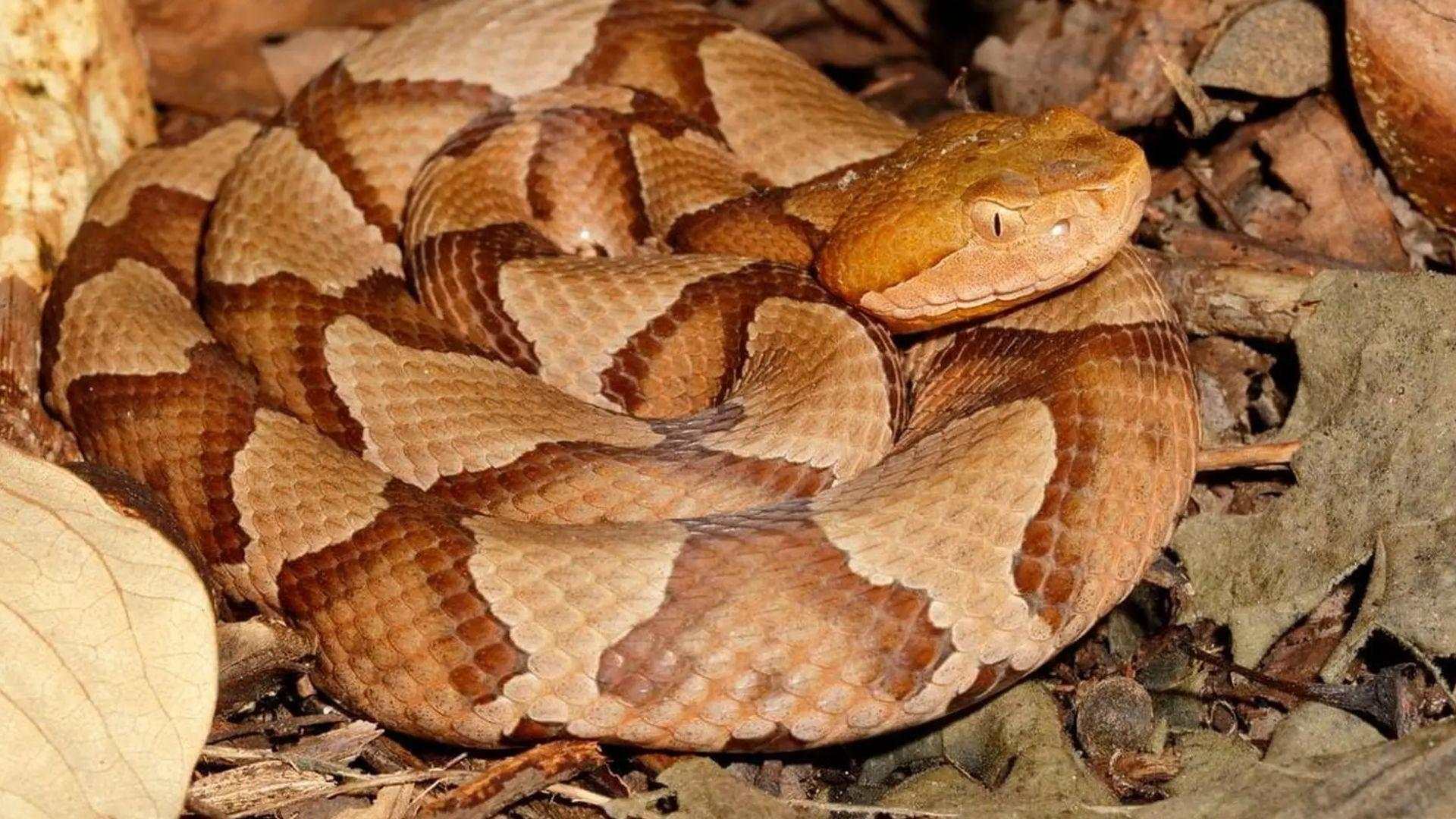
The copperhead is one of the venomous snakes people are most likely to encounter around developed areas in Georgia. Georgia DNR notes that the copperhead is the state’s venomous snake that usually thrives in suburban areas.
Copperheads have copper or reddish-brown heads and dark hourglass-shaped bands along their bodies.
They can blend into leaves and other ground cover, so look carefully when walking through wooded areas, gardens, or piles of natural debris.
Cottonmouth
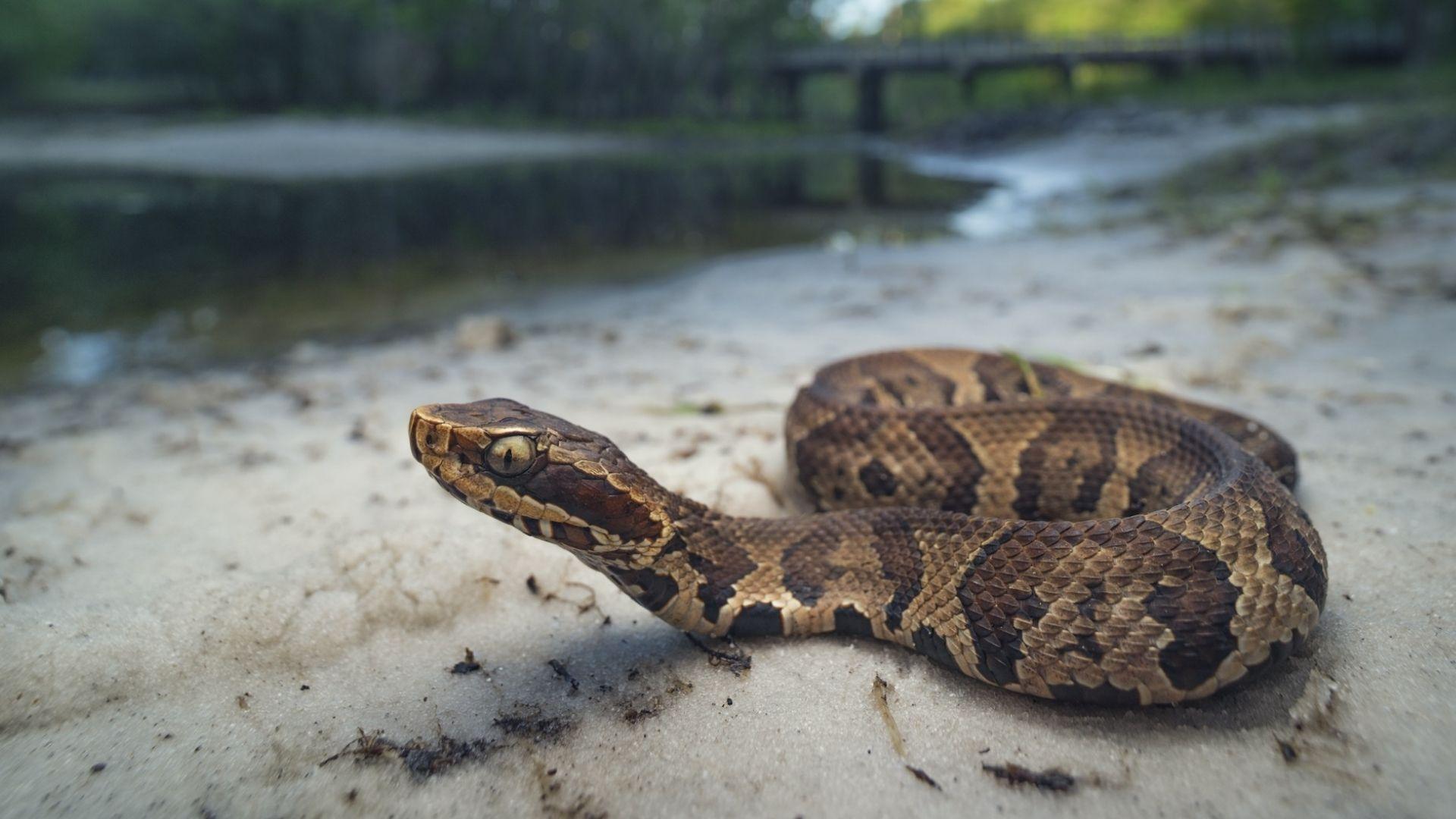
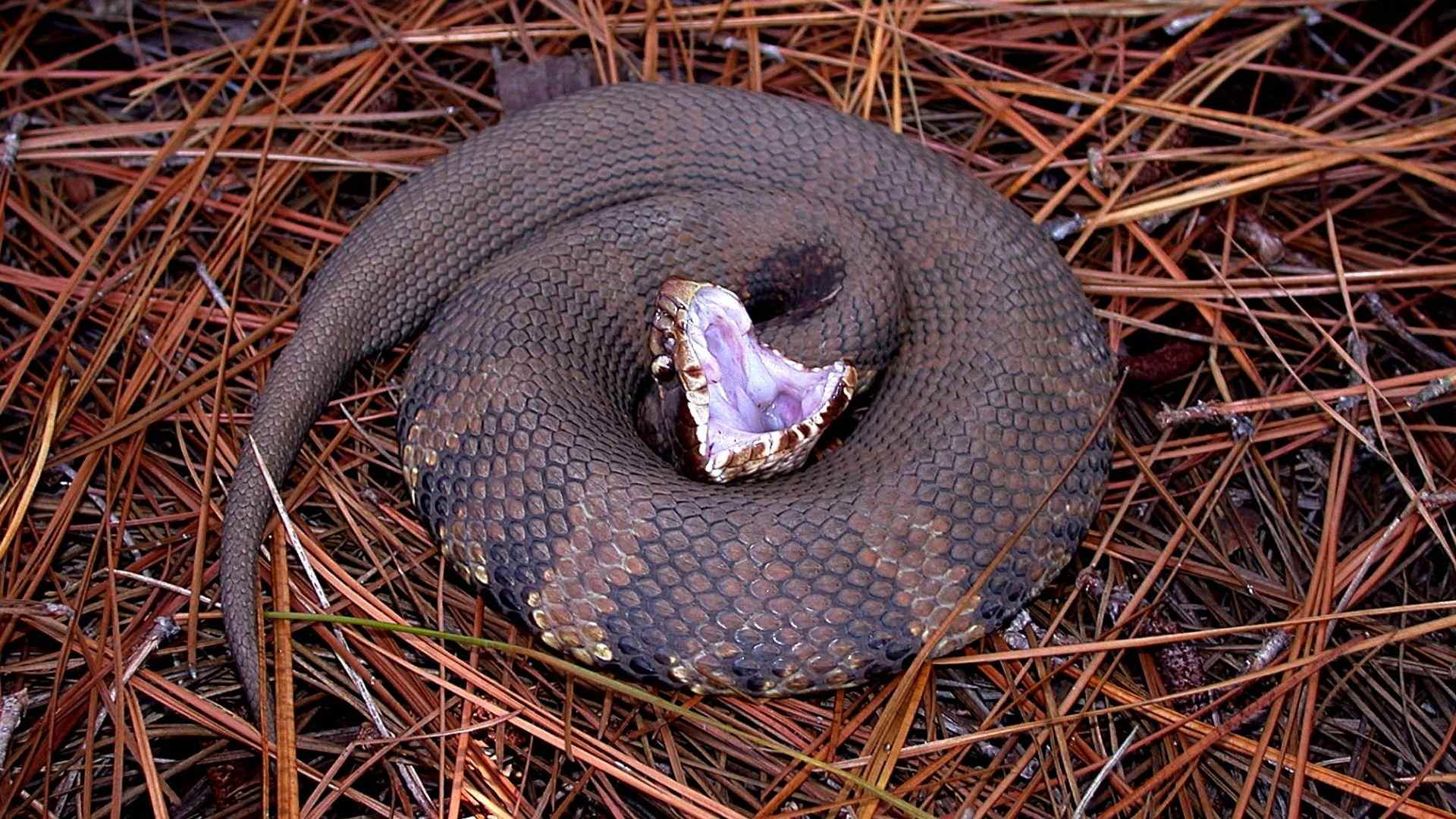
Georgia DNR currently lists northern cottonmouth and Florida cottonmouth among the state’s venomous snakes. Cottonmouths are associated with aquatic and wetland habitats, including areas around rivers, lakes, swamps, ponds, and marshes.
Cottonmouths get their common name from the pale lining inside the mouth, which they may display when threatened.
They can swim well, but seeing a snake in or near water does not automatically mean it is a cottonmouth because several non-venomous water snakes share the same habitats.
Eastern Coral Snake
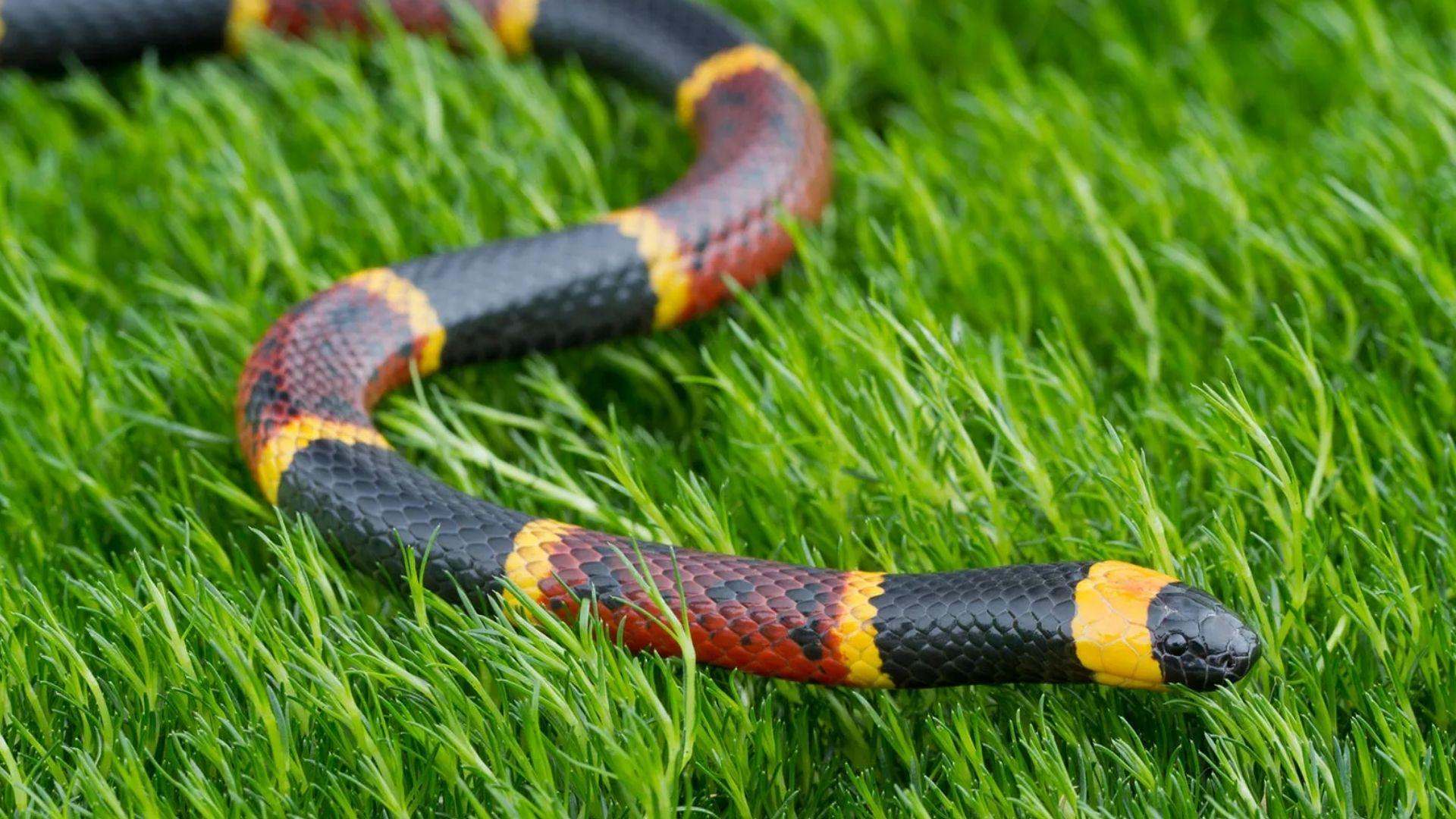
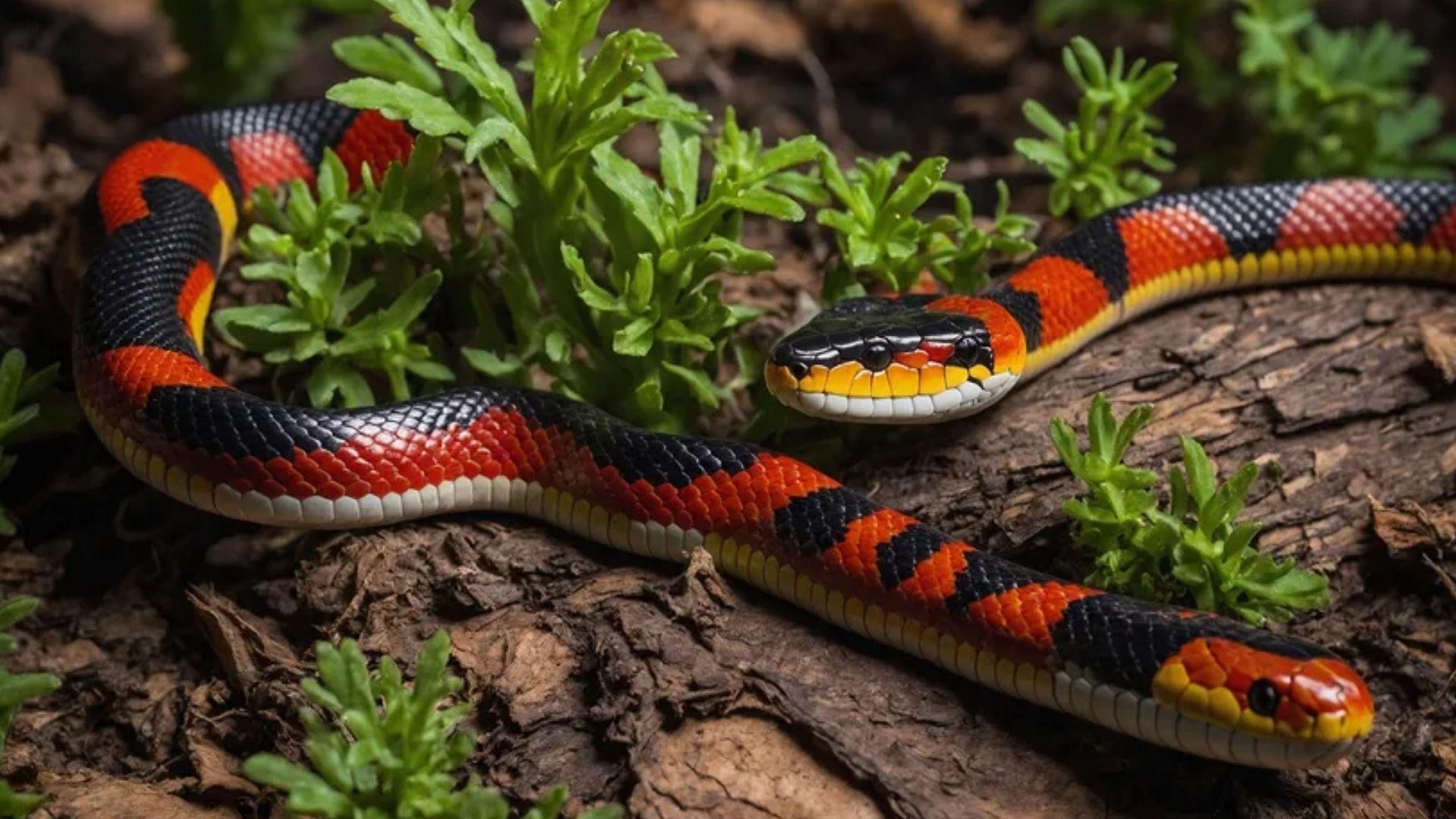
The eastern coral snake is Georgia’s venomous snake that does not belong to the pit-viper group. It has distinctive red, yellow, and black bands and is generally secretive rather than confrontational.
Because coral snakes can be confused with harmless species that have similar banding, color patterns should be considered carefully.
Do not handle a snake to confirm its identity. A suspected coral snake bite requires immediate medical evaluation because coral snake venom can affect the nervous system and breathing.
Non-Venomous Snakes in Georgia
Most Georgia snakes are non-venomous. They occupy habitats ranging from forests and fields to wetlands and suburban yards, and many help control rodents, insects, and other animals.
Georgia DNR lists dozens of non-venomous species, including rat snakes, kingsnakes, racers, hognose snakes, water snakes, garter snakes, and several smaller species.
Eastern Rat Snake
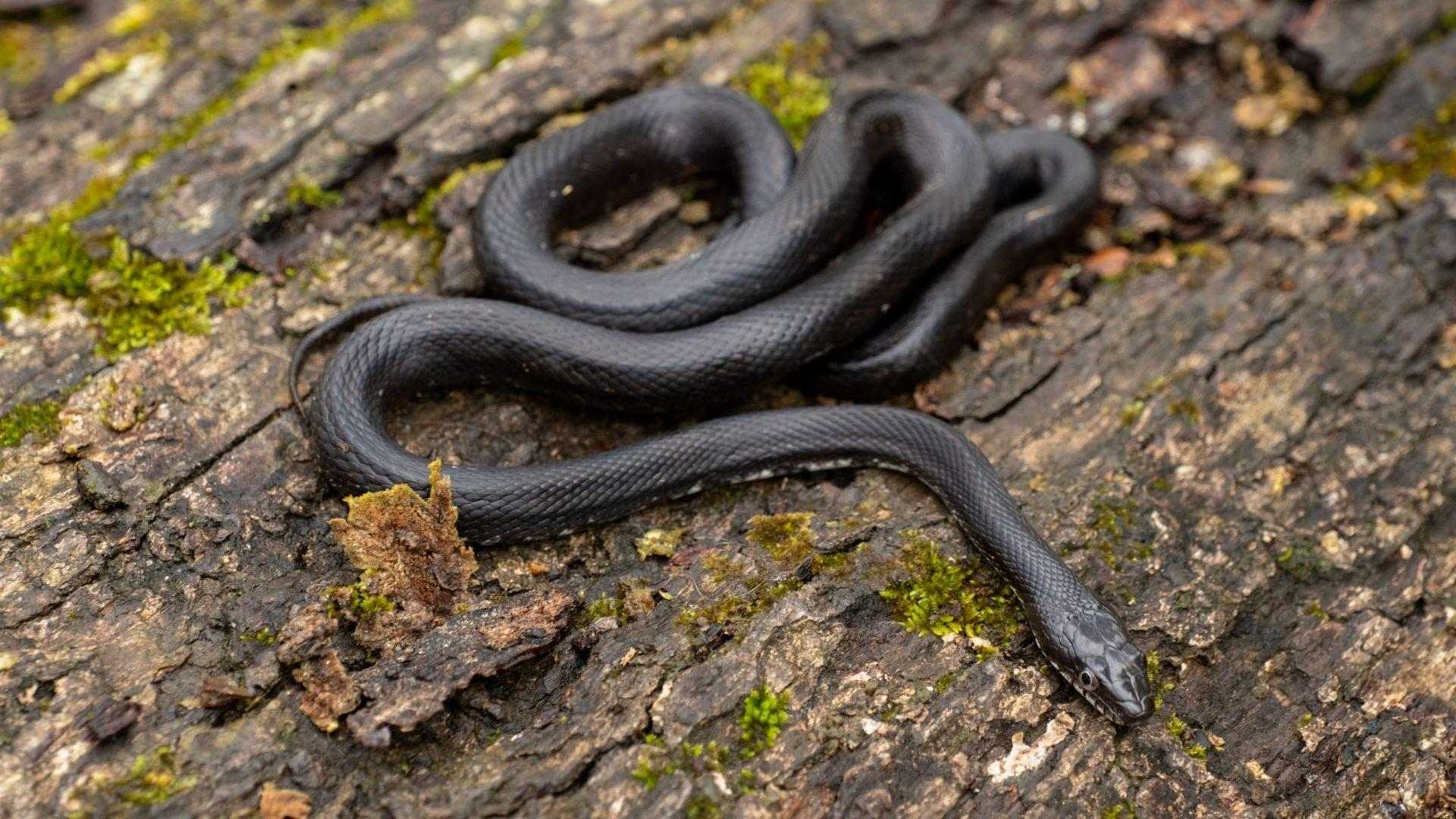
The eastern rat snake is a common non-venomous snake that can be found in many parts of Georgia.
It is a capable climber and may occur around barns, gardens, wooded areas, and other places where rodents are available.
Adult coloration can vary, while younger snakes often have more noticeable blotches. Rat snakes are useful predators because they feed on rodents and other small animals.
Eastern Kingsnake
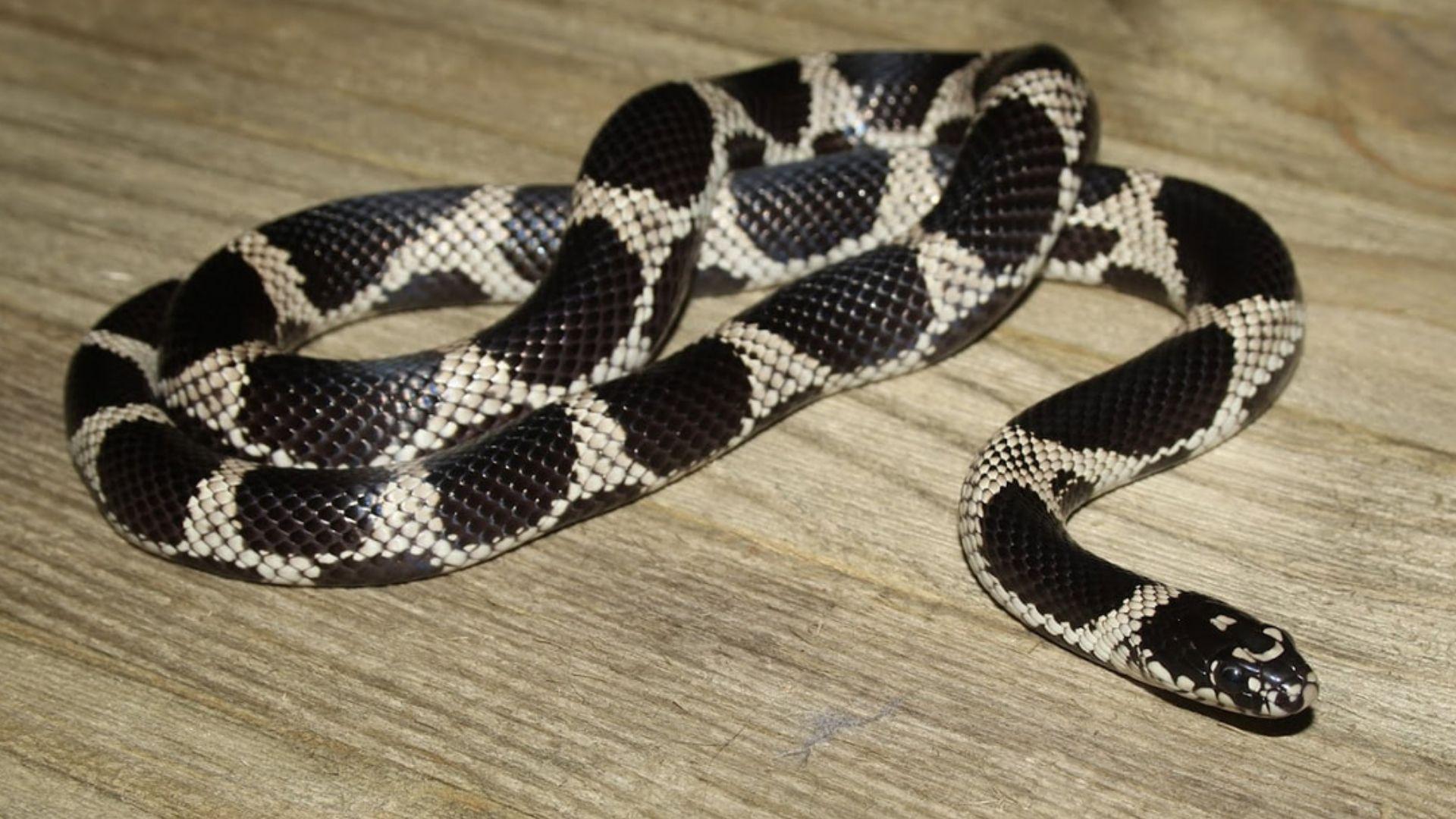
The eastern kingsnake has dark scales with light chain-like markings along its body. It is known for feeding on other snakes, including some venomous species, as well as rodents and other prey.
Although kingsnakes can help control other snake populations, they should still be left alone. A harmless species can bite if handled or restrained.
Black Racer
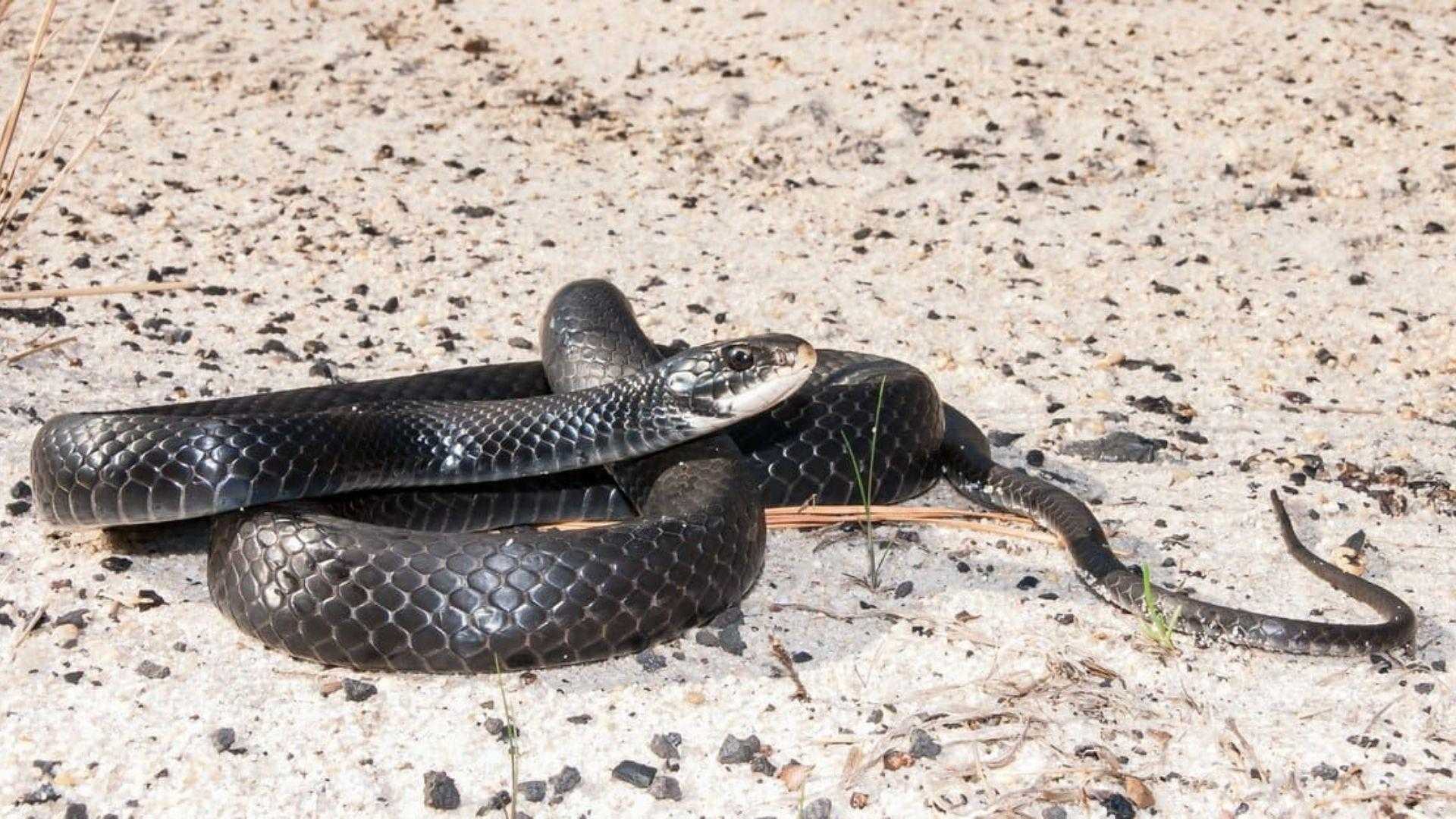
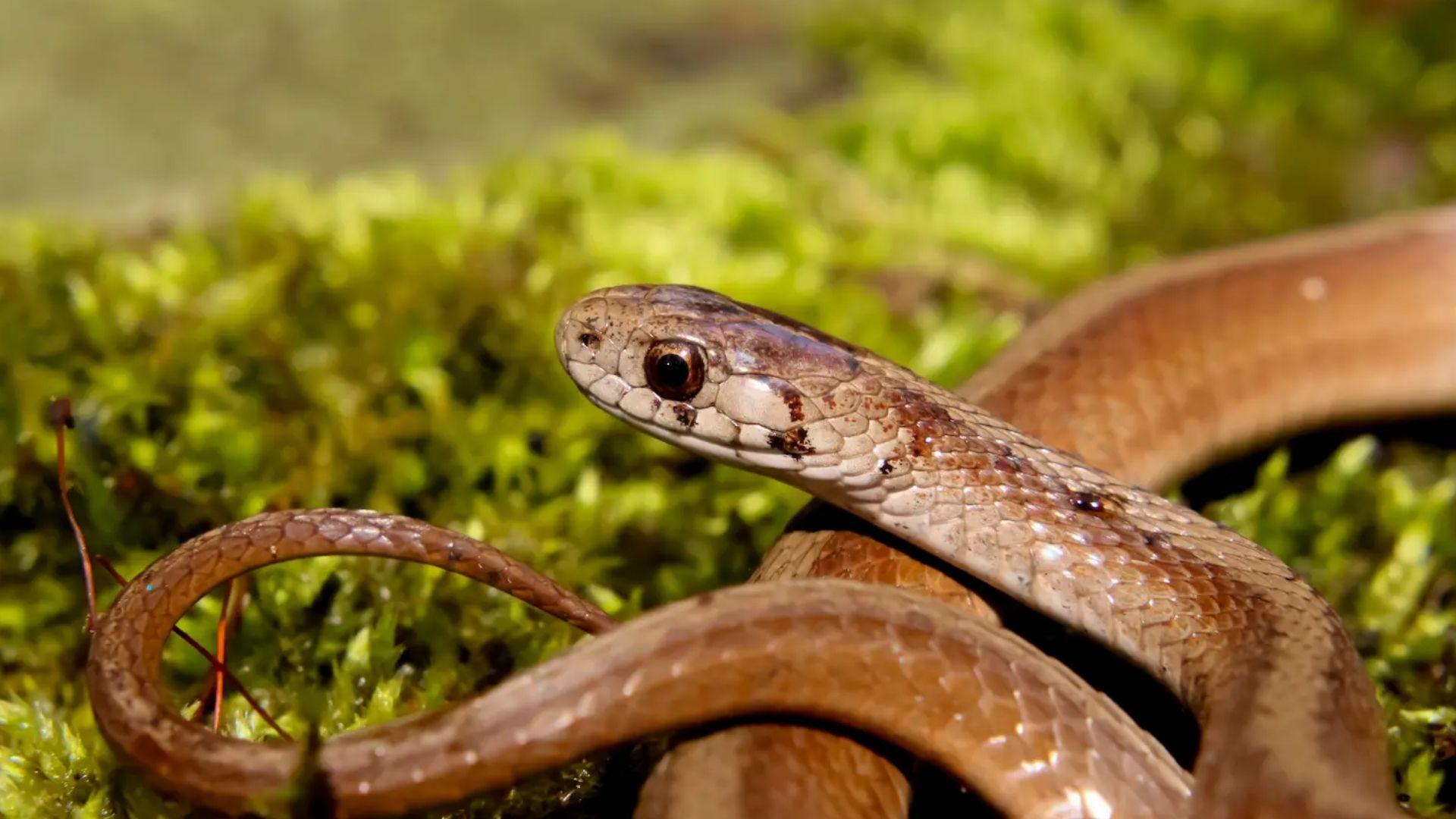
The black racer is a fast-moving, slender snake commonly seen in open areas, yards, fields, and woodland edges. Adults are generally dark or black, with a lighter chin.
Racers often flee when approached. Their speed can make them difficult to observe, but their quick movement does not mean they are chasing people.
Eastern Hognose Snake
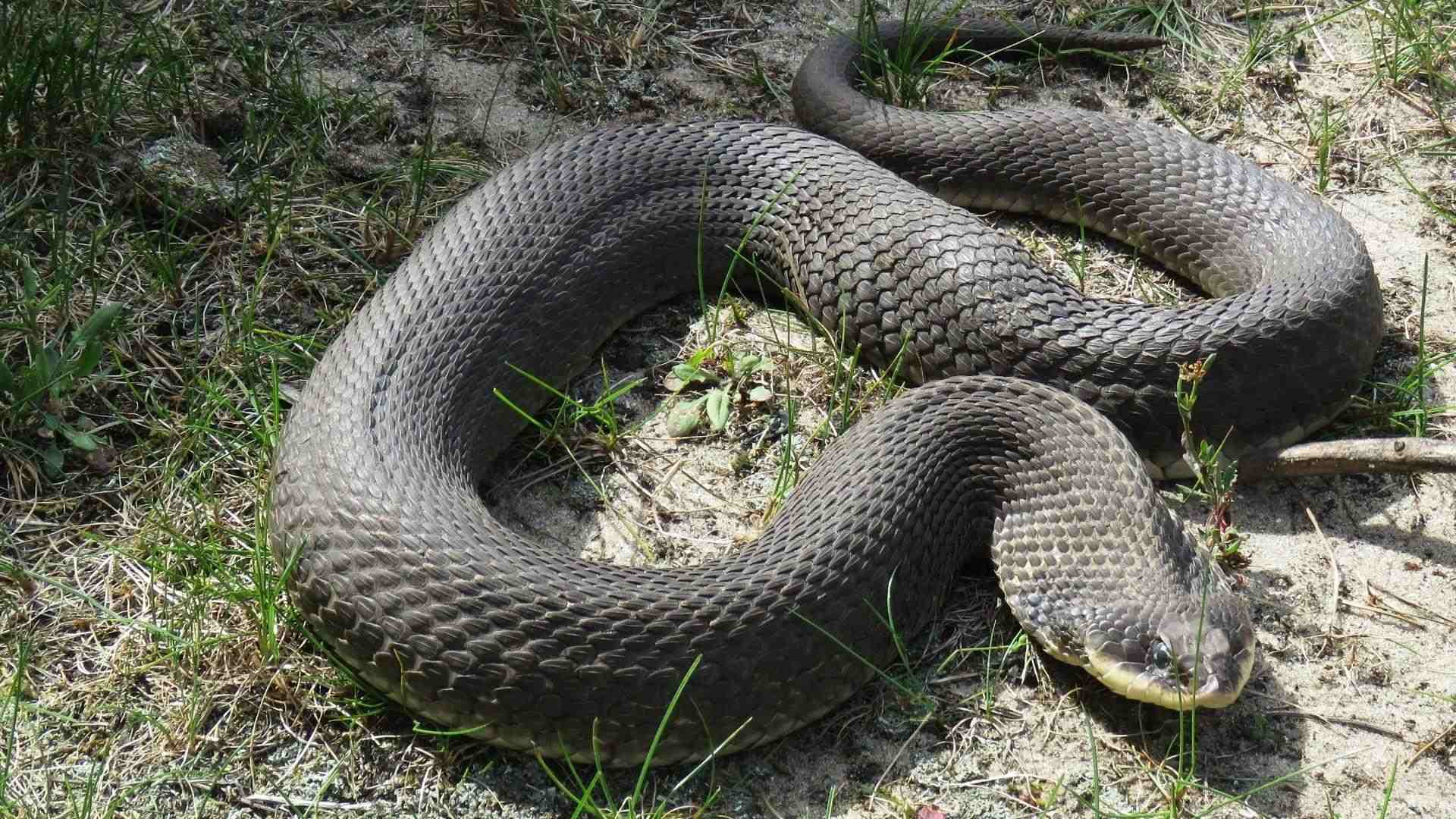
The eastern hognose snake is known for its unusual defensive behavior. When threatened, it may flatten its neck, hiss, strike without venom injection, or roll onto its back and remain still.
Its upturned snout helps it dig through loose soil while searching for prey such as toads. Despite its dramatic display, the eastern hognose snake is non-venomous to humans.
Corn Snake
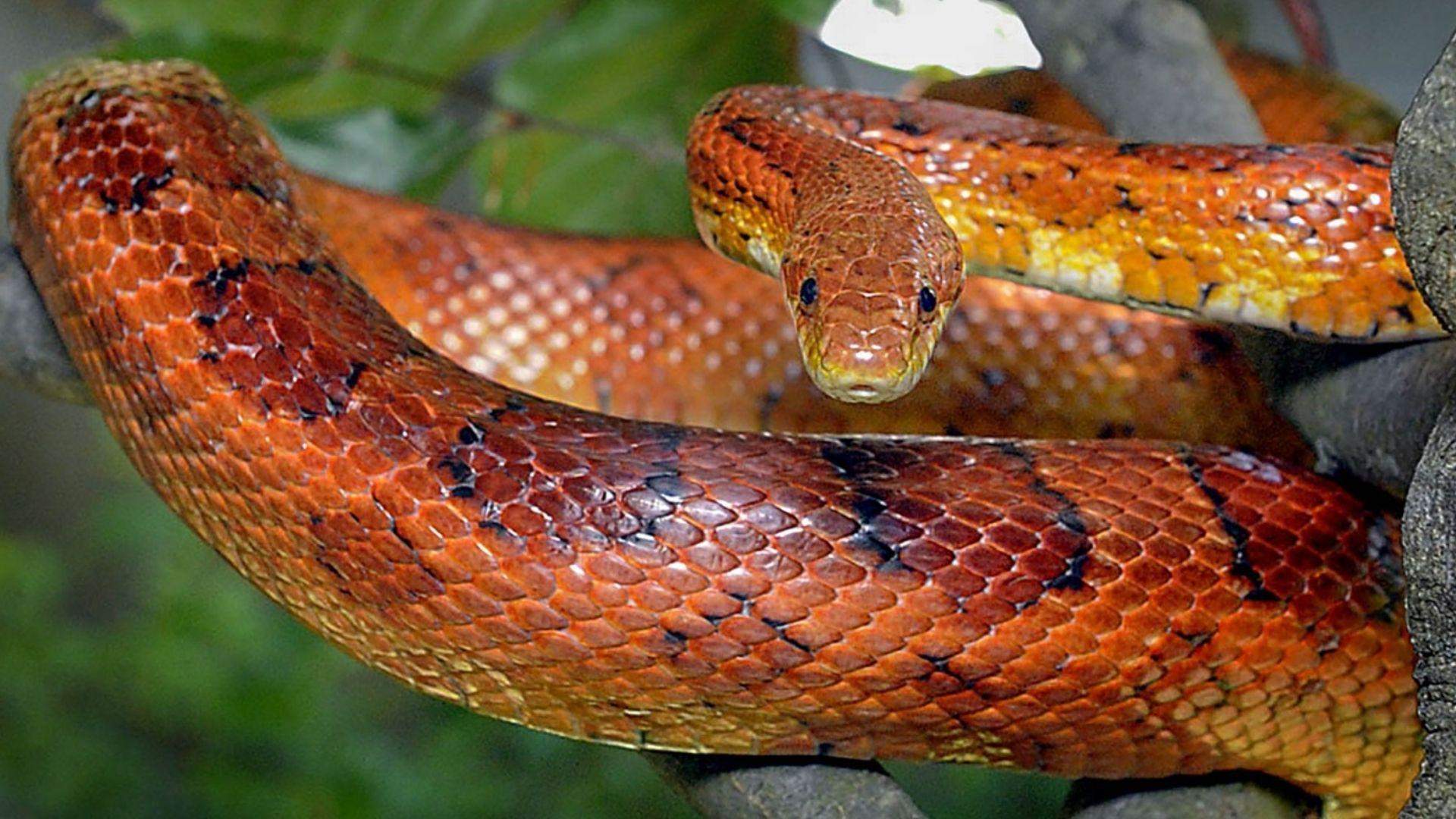
Corn snakes are slender, non-venomous snakes with reddish or orange blotches bordered by darker markings. Their patterns can sometimes cause confusion with copperheads, especially when seen quickly.
They occur in fields, woodland edges, farms, and other areas where small mammals are available. Corn snakes can climb and may enter structures while searching for prey or shelter.
Common Garter Snake
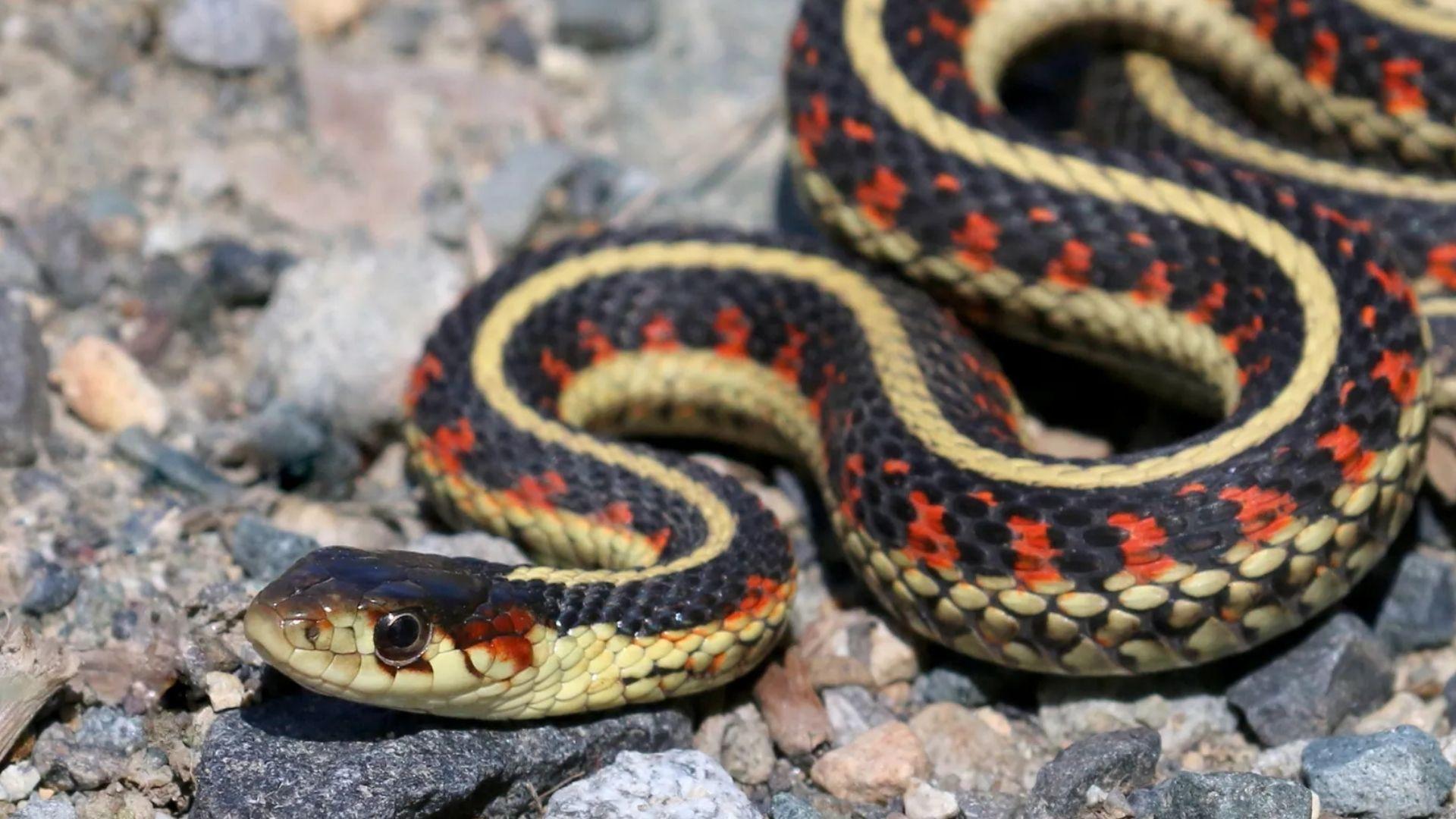
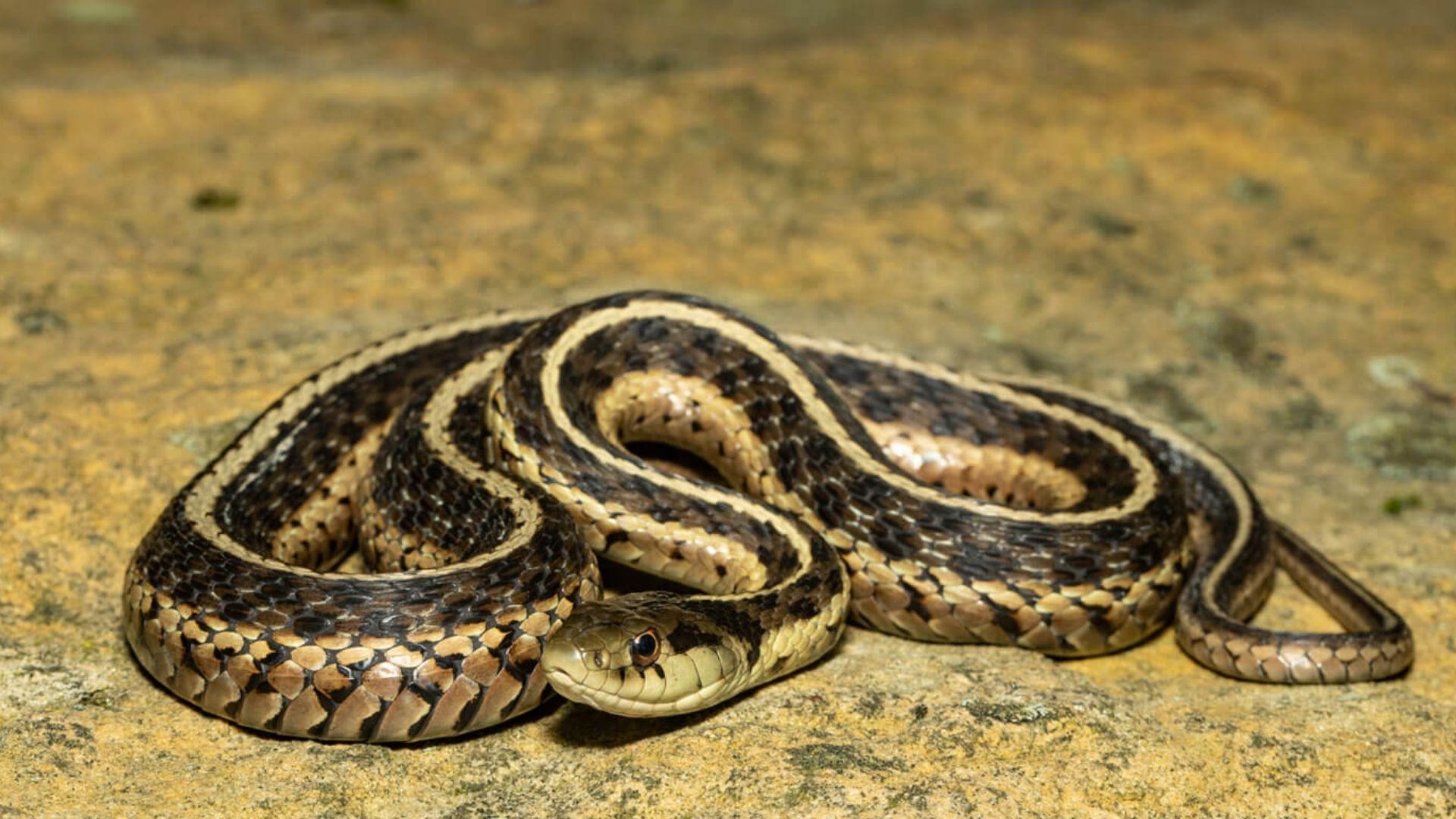
The common garter snake is a small, slender species with light stripes running along a darker body. It is often found around gardens, grassy areas, ponds, and other places with suitable moisture and prey.
Garter snakes eat small animals such as worms and amphibians. They are not venomous, but like other wild snakes, they should not be handled unnecessarily.
Common Water Snakes
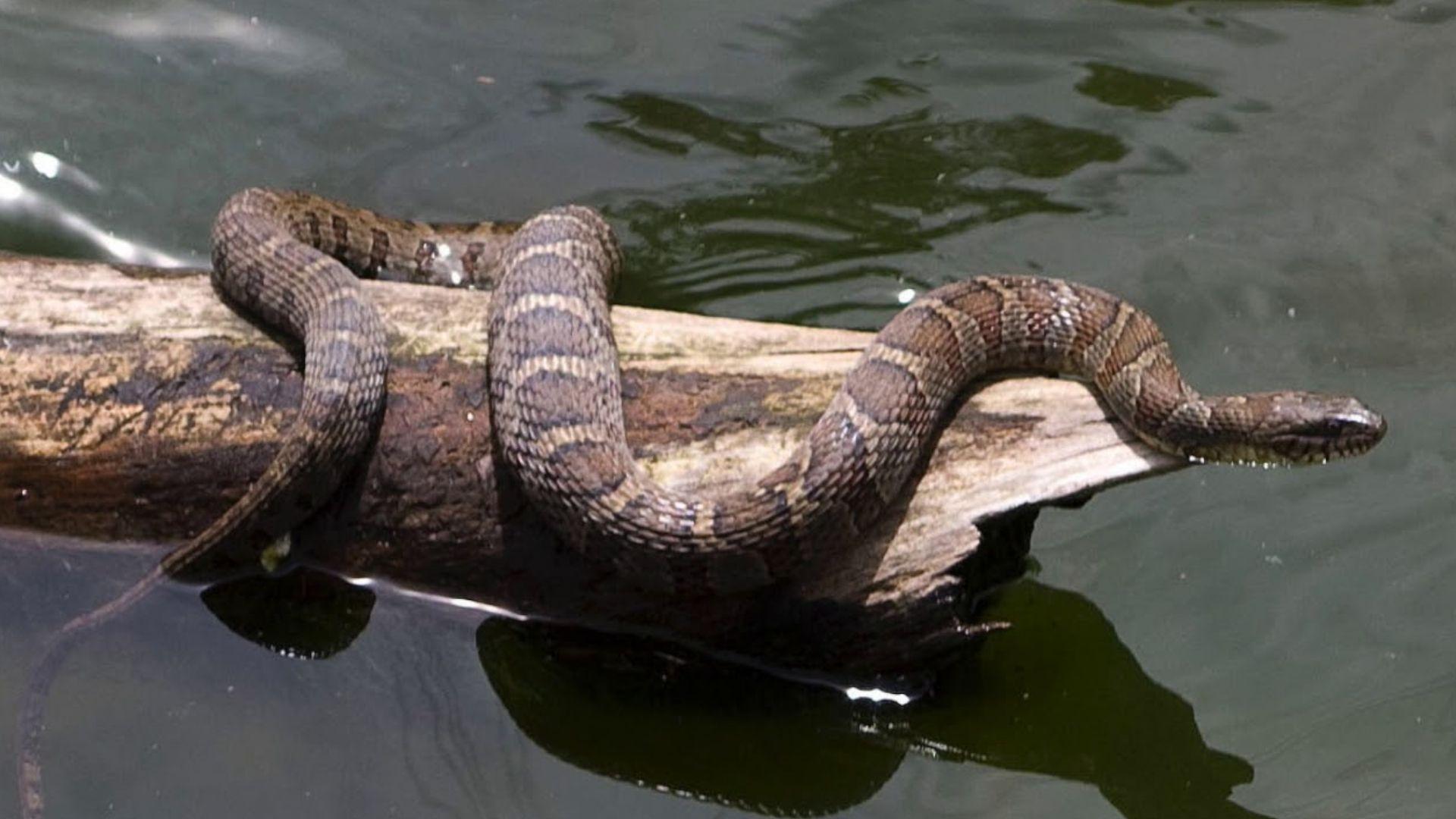
Water snakes are often mistaken for cottonmouths because they can share the same aquatic habitats. Georgia has several non-venomous water snake species, including banded, brown, Florida green, northern, and red-bellied water snakes.
Water snakes may become defensive when captured or handled. Their defensive behavior does not mean they are venomous, so the safest response is to leave them alone rather than attempting to pick them up.
How to Identify Georgia's Venomous Snakes
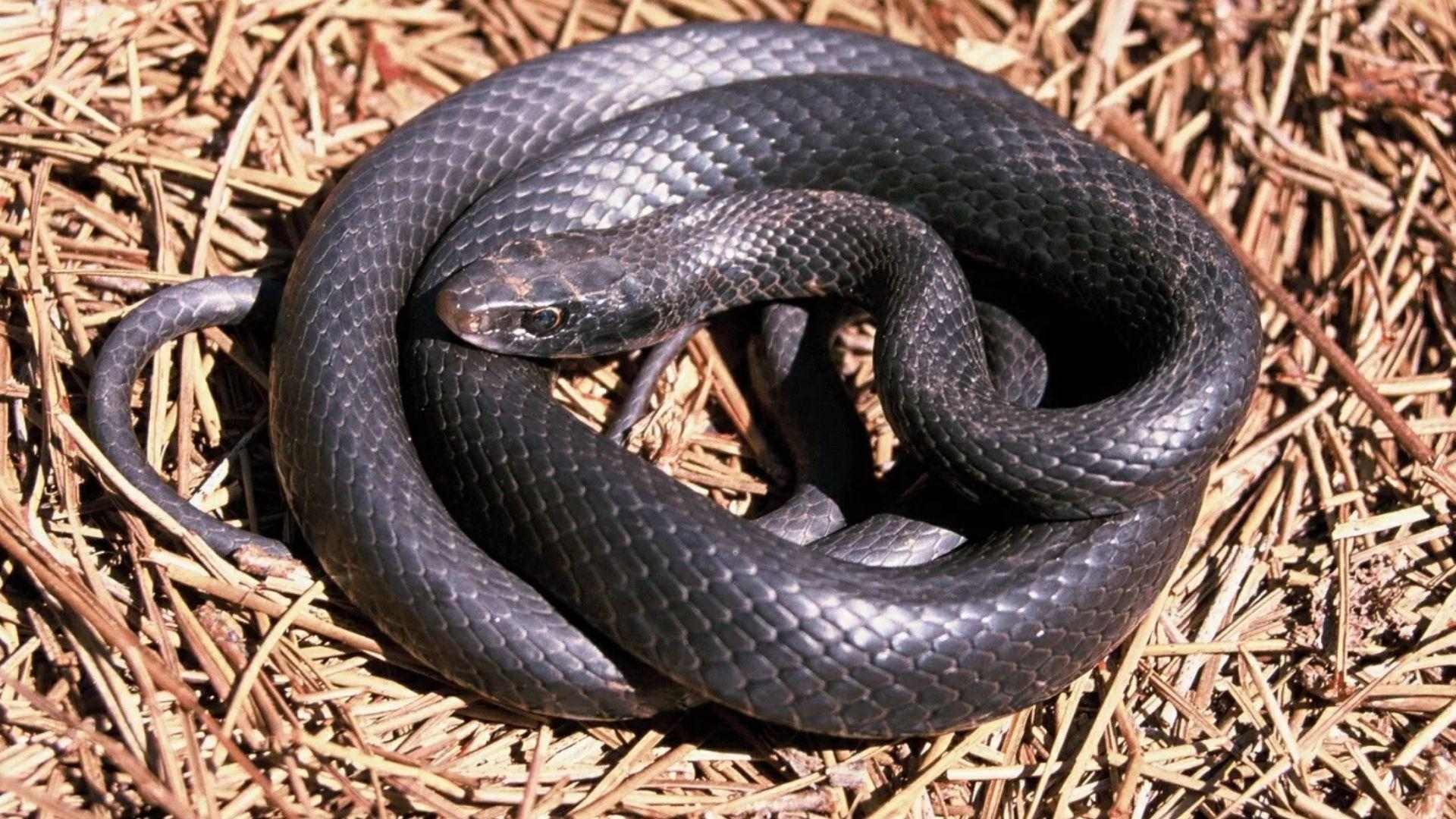
Identification should never depend on one feature alone. Pit vipers generally have a heat-sensing pit between each eye and nostril, but getting close enough to inspect a snake's face is unsafe and unnecessary.
Head shape, body pattern, coloration, habitat, and behavior can provide clues, but they should be considered together.
The eastern coral snake has a different body pattern from Georgia’s pit vipers. Because harmless snakes can resemble venomous species, the safest approach is to identify a snake from a distance and avoid handling it.
Georgia DNR specifically recommends trying to identify snakes without approaching them.
What Should You Do If You See a Snake?
If you see a snake, stay calm and move away from it. Do not corner, handle, chase, or attempt to kill the animal.
Georgia DNR recommends identifying a snake from a safe distance and giving it room to move away.
If a snake enters a home, keep people and pets away from the area and close doors that can contain the animal without putting yourself at risk.
A qualified wildlife professional can help when a snake cannot safely leave on its own.
What to Do After a Snake Bite in Georgia
Treat a suspected venomous snakebite as a medical emergency and seek immediate medical care.
Keep the person calm and still, remove rings, watches, or tight clothing near the bite before swelling develops, and avoid trying to capture the snake.
A photo taken safely from a distance may help with identification, but it is not worth risking another bite.
Do not cut the wound, suck out venom, apply ice, or use a tourniquet. These outdated first-aid methods can cause additional harm. Follow instructions from emergency medical professionals or a poison center instead.
Venomous vs. Non-Venomous Snakes in Georgia
| Feature | Venomous Snakes | Non-Venomous Snakes |
| Heat-sensing pits | Present in Georgia's pit vipers | Absent |
| Head shape | Pit vipers often have a wider head than neck | Often narrower, but shapes vary |
| Body build | Many pit vipers are heavy-bodied | Many species are more slender |
| Warning behavior | Some may rattle, gape, or posture | Often retreat, although behavior varies |
| Identification | Requires multiple traits | Requires multiple traits |
| Safe approach | Keep your distance | Keep your distance |
No single physical feature provides a guaranteed identification. A non-venomous snake can flatten its head when threatened, and color patterns can overlap between harmless and venomous species.
When you are unsure, treat the snake as potentially venomous and do not approach it.
How to Identify a Snake in Georgia
Identifying a snake safely means observing it without getting close. Use its overall appearance, pattern, size, location, and behavior as supporting clues rather than relying on one characteristic.
- Keep your distance and observe the snake without approaching, touching, or trying to move it.
- Check its color and pattern, including bands, blotches, and stripes, but do not rely on color alone.
- Look at the head and body shape from a safe distance. Pit vipers often have broad heads that are wider than their necks.
- Avoid getting close to inspect pupils, facial pits, or other features. Non-venomous snakes may flatten their heads when threatened.
- Consider where you found the snake. Water snakes and cottonmouths may occur near water, while rat snakes can appear around buildings, farms, and wooded areas.
- Watch its behavior from a safe distance, but remember that behavior alone cannot confirm whether a snake is dangerous.
- Compare several features together, including appearance, pattern, size, habitat, and behavior, before attempting an identification.
Where Do Georgia Snakes Live?
Georgia's snake species occupy a wide range of habitats. You may encounter them in natural areas as well as around homes, farms, gardens, and other developed locations.
Pine forests and sandy areas: Suitable habitat for several Coastal Plain species.
Wooded hills and forests: Home to species such as timber rattlesnakes and many non-venomous snakes.
Rivers, ponds, lakes, and swamps: Water snakes and cottonmouths may occur in wet habitats.
Suburban yards and gardens: Copperheads and non-venomous species may occasionally appear where food and shelter are available.
Fields and woodland edges: Corn snakes, racers, and other species use these areas for hunting.
Barns and outbuildings: Rat snakes may enter structures where rodents provide an easy food source.
When Are Snakes Most Active in Georgia?
Snake activity in Georgia changes with temperature, weather, habitat, and species. Snakes generally become more active as temperatures rise in spring and remain active through the warmer months before activity declines in autumn.
During very hot periods, some species may shift their activity to cooler parts of the day, while colder weather causes snakes to become less active and seek protected shelter.
Snakes may enter homes while looking for food, shelter, or suitable temperatures through open doors, foundation gaps, crawl spaces, and garages.
Warm weather can also lead to more snake sightings because both snakes and people spend more time outdoors. An increase in sightings does not necessarily mean there are more snakes, it may simply reflect increased activity and outdoor movement.
How to Keep Snakes Away From Your Property
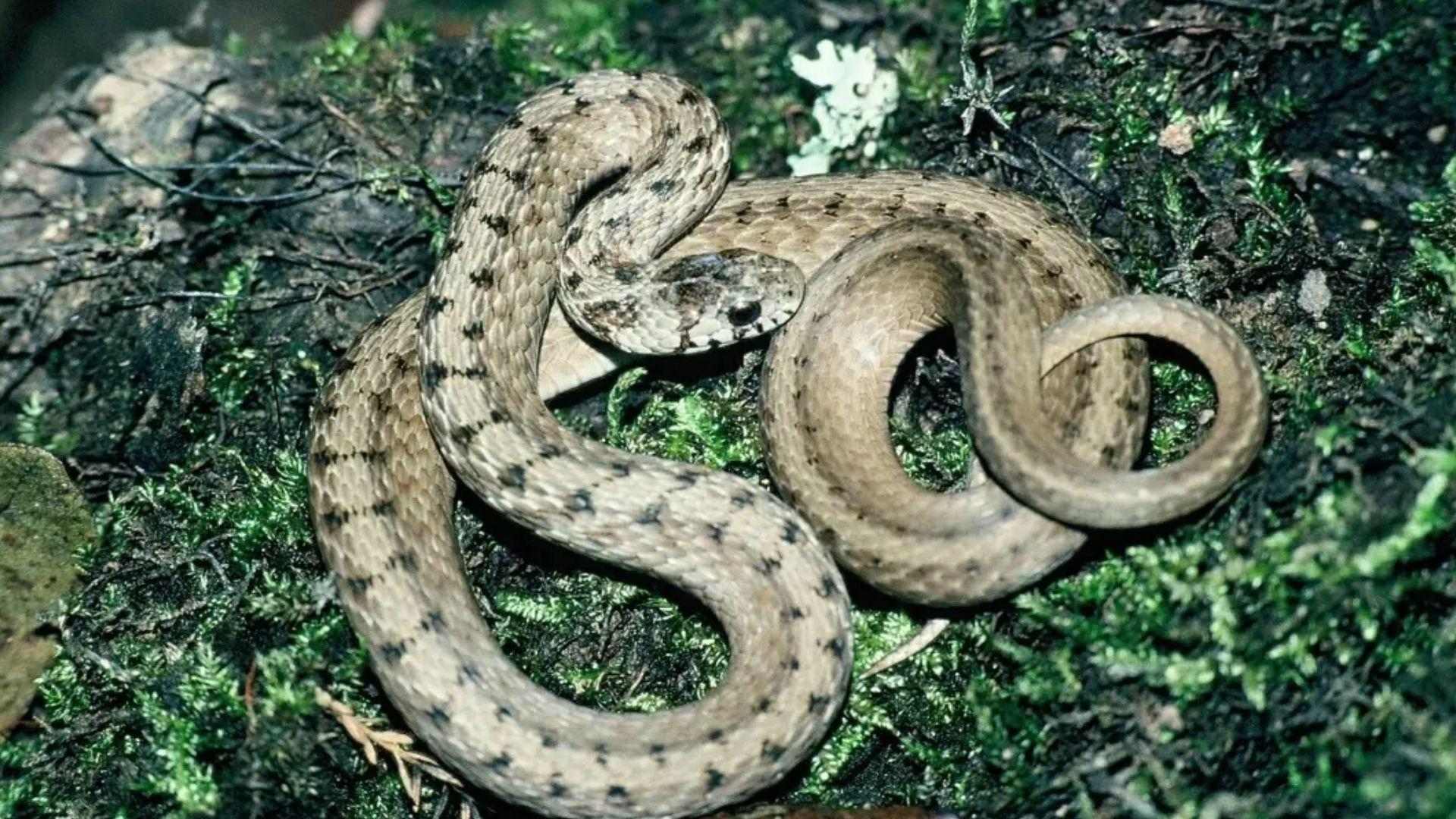
You cannot completely prevent snakes from passing through a property, but you can make your yard and home less attractive to them.
The most useful approach is to reduce food and shelter sources while blocking easy access to buildings.
Remove Food and Shelter Sources
Rodents can attract snakes because they provide an available food source. Keep garbage and animal feed secured, address rodent problems, and avoid leaving pet food outdoors.
Remove unnecessary brush piles, debris, and other areas that can provide shelter. Store firewood neatly and keep it away from the home's exterior when possible.
Seal Common Entry Points
Inspect foundations, doors, vents, crawl spaces, and utility openings for gaps that could allow snakes to enter. Repair damaged screens and install appropriate barriers around accessible openings.
Pay particular attention to garages, sheds, and crawl spaces. Keeping doors closed when they are not in use can also reduce opportunities for wildlife to enter.
Keep Yards and Outdoor Areas Maintained
Keep grass and vegetation maintained around commonly used areas. Trim dense vegetation near buildings and remove unnecessary piles of lumber, debris, or other materials that create hiding places.
These steps do not guarantee that snakes will stay away. They simply reduce the shelter and prey opportunities that can make a property more attractive to wildlife.
Georgia Snakes: Safety Tips for Hikers and Homeowners
A few simple habits can reduce the chance of surprising a snake while you are outdoors. The goal is not to fear snakes but to give them enough space to avoid an encounter.
- Wear sturdy footwear when walking through tall grass, wooded areas, or rough terrain.
- Stay on established paths when possible.
- Look carefully before stepping over logs, rocks, or other obstacles.
- Use a flashlight when walking outdoors after dark.
- Keep children from touching, poking, or picking up snakes.
- Keep pets under control in areas where snakes may be present.
- Never place your hands into holes, rock piles, brush, or other hidden spaces.
- If you see a snake, move away and allow it an escape route.
Common Mistakes People Make About Georgia Snakes
Assuming every rattlesnake will warn you: A warning sound should never be required before you treat a rattlesnake as dangerous. Keep your distance whenever you see one.
Using color as the only identification clue: Several non-venomous snakes resemble venomous species. Consider the entire pattern and overall appearance instead.
Trying to kill a snake: Approaching or handling a snake increases your chance of being bitten. Walking away is safer than attempting to remove it yourself.
Assuming a small snake cannot be dangerous: Size alone does not determine whether a snake is venomous. Treat an unfamiliar snake cautiously.
Believing snakes chase people: Most snakes prefer to escape when given a clear route. A rapidly moving snake is usually trying to get away, not pursue someone.
Relying on home remedies as snake repellents: Focus on reducing food and shelter sources and closing entry points instead of relying on unproven deterrents.
Conclusion
Georgia has a wide range of snake species, but only seven of its 47 native species are venomous under the current Georgia DNR classification.
Most snakes are non-venomous and contribute to the ecosystem by controlling rodents and other prey.
The safest response to any unfamiliar snake is to keep your distance rather than handle or kill it. Learn the common species, understand the habitats where they occur, keep outdoor areas maintained, and know what to do after a bite.
These steps can help homeowners, hikers, and families share outdoor spaces with Georgia’s snakes safely.
Frequently Asked Questions About Georgia Snakes
How many snake species are native to Georgia?
Georgia DNR currently lists 47 native snake species. Seven are venomous, while the others are non-venomous.
What is the most common venomous snake around Georgia homes?
The copperhead is the venomous species most associated with suburban areas, according to Georgia DNR.
Can non-venomous snakes still bite?
Yes. A non-venomous snake can bite when it feels threatened or is handled. The bite may cause pain or minor injury, so the safest approach is to leave the snake alone.
How can I tell a cottonmouth from a water snake?
Habitat and appearance can provide clues, but these snakes can be difficult to distinguish quickly. Do not approach a snake to inspect its head or mouth. If you cannot identify it confidently from a safe distance, give it space.
Do snake repellents work?
There is no need to rely on a product as the main prevention method. Reducing rodents and other prey, removing unnecessary shelter, and sealing building openings are more practical ways to reduce unwanted snake encounters.