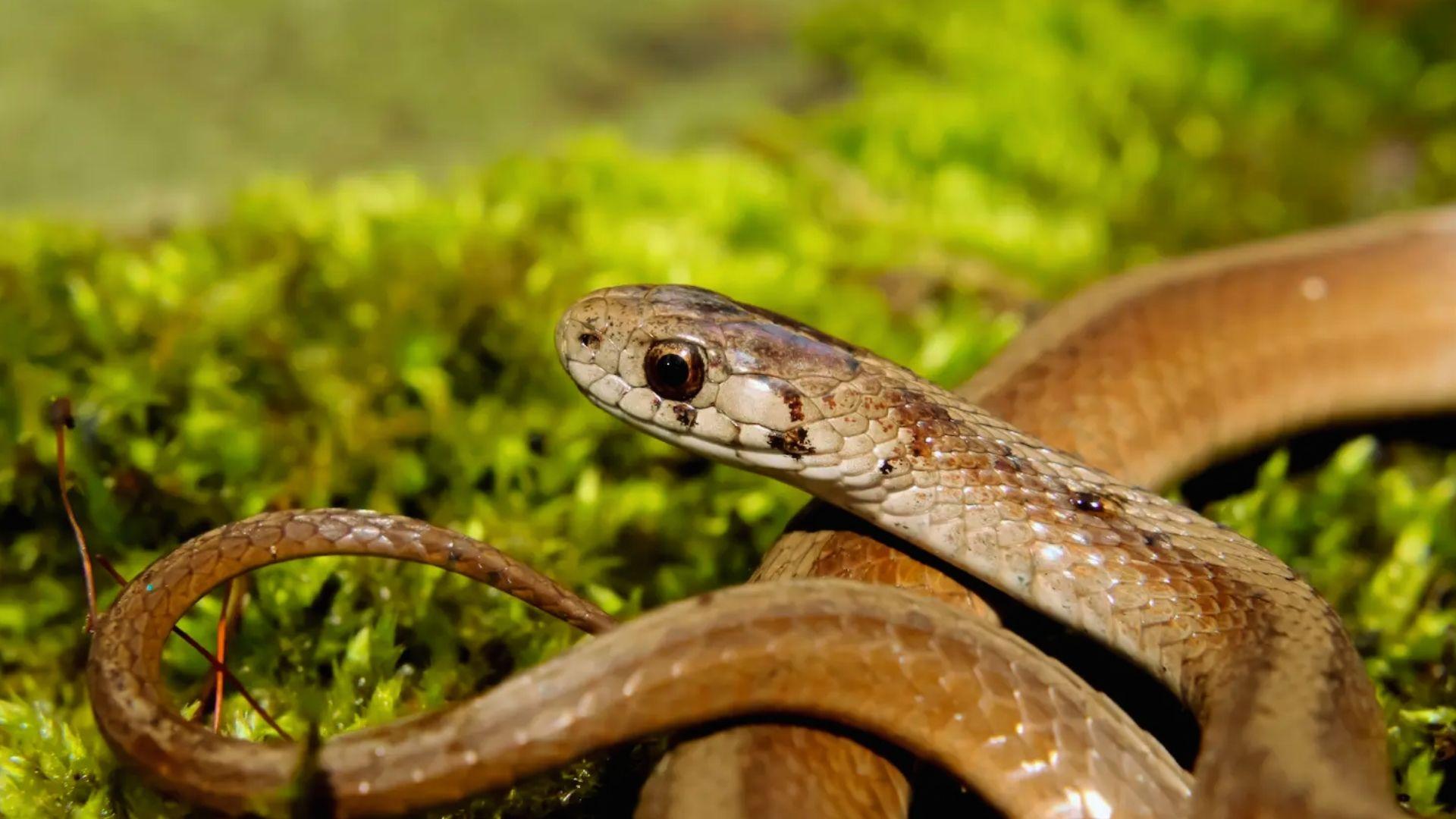
Seeing a small brown snake cross your yard can raise an immediate question: What kind of snake is it, and is it dangerous?
In Georgia, "brown snake" is not the name of one species. Several native snakes can appear brown, tan, gray, or reddish, and most are nonvenomous.
Georgia has 47 native snake species, including seven venomous species. The Georgia Department of Natural Resources notes that brown and red-bellied snakes are common examples of small snakes found around yards and gardens.
Learning the snake's pattern, size, habitat, and other features can help you narrow down what you saw without getting close.
What Does "Brown Snake" Mean in Georgia?
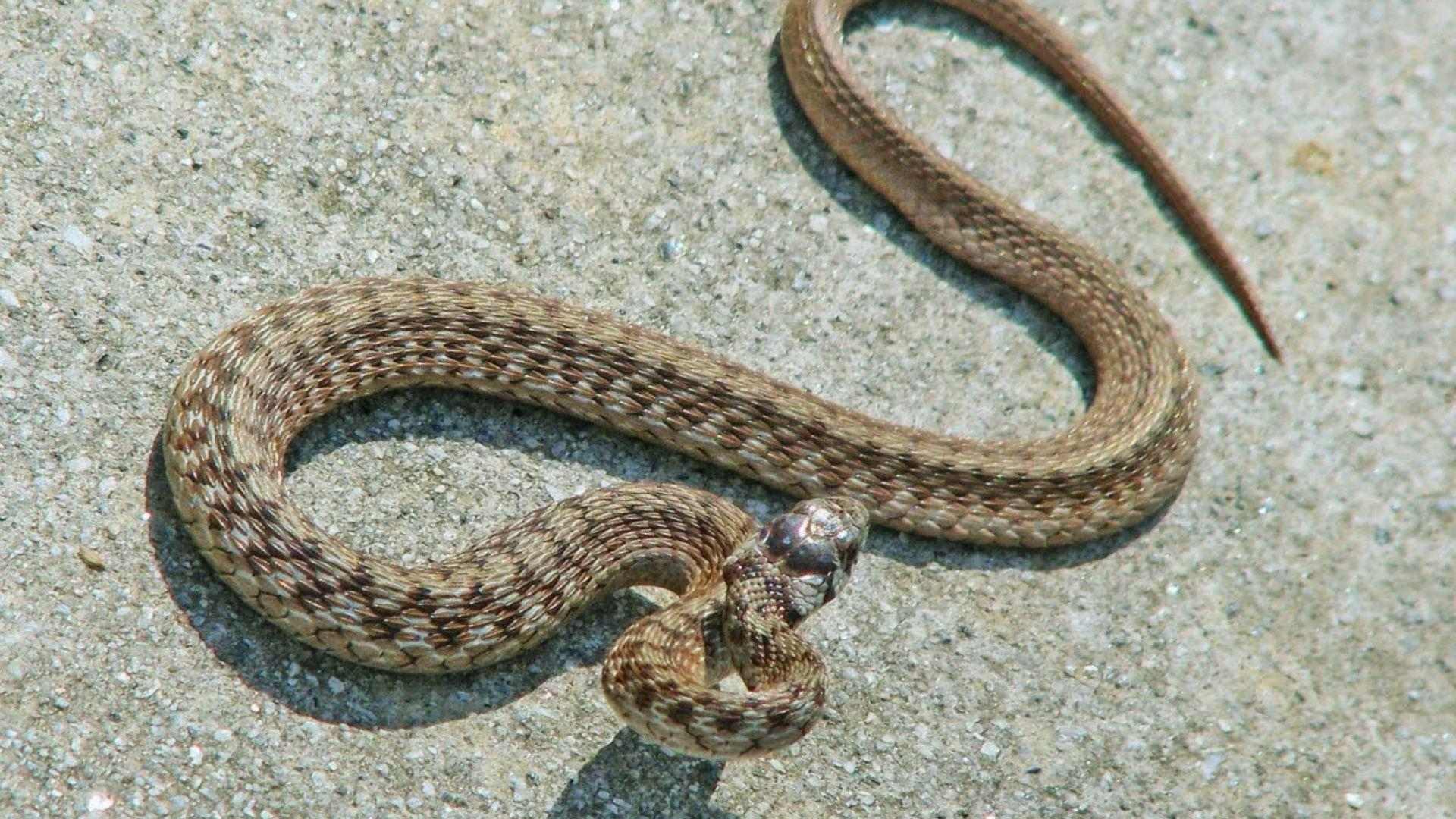
"Brown snake" is a general description, not a single species. People often use the term for small snakes with brown, tan, gray, or reddish coloring.
Georgia has several species that can fit that description, including the Brown Snake, Florida Brown Snake, Red-bellied Snake, earth snakes, worm snakes, crowned snakes, and others.
Most of the small brown snakes found around Georgia homes are nonvenomous. Many stay beneath leaf litter, logs, mulch, rocks, or other ground cover where they hunt worms, slugs, snails, insects, and other small prey.
11 Brown-Colored Snakes You May See in Georgia
Georgia is home to several brown-colored snakes, ranging from tiny, harmless garden species to the venomous Eastern Copperhead, so accurate identification matters.
1. Brown Snake
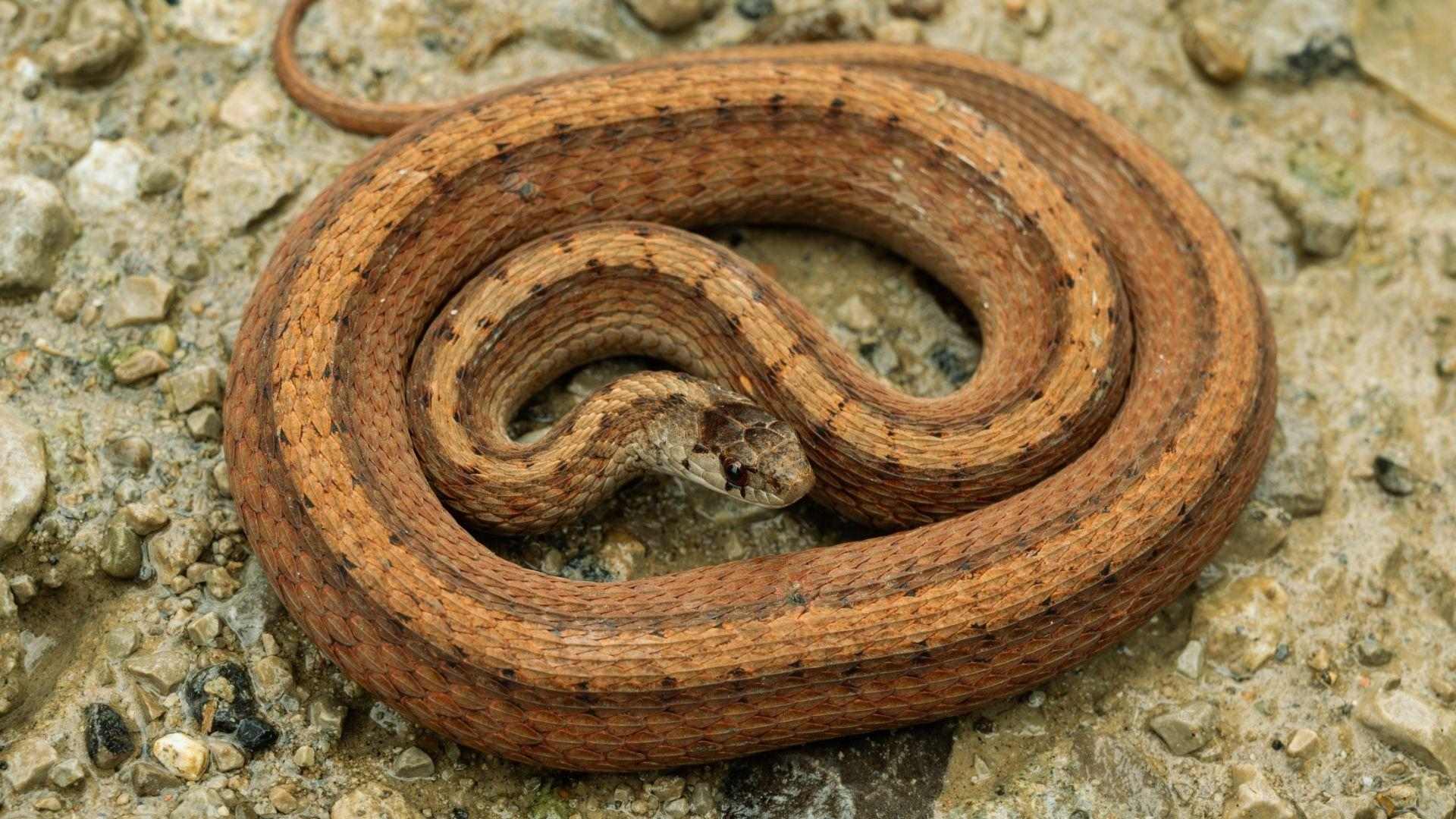
The Brown Snake, also called DeKay's Brownsnake, is one of the small snakes people commonly notice around gardens and developed areas. It is usually brown or grayish brown and may have a lighter stripe running down the back with darker markings along the sides.
Adults are generally small, often around a foot long. They spend much of their time beneath leaves, mulch, logs, rocks, or other ground cover.
Their diet includes soft-bodied prey such as slugs and snails, making them useful predators around gardens. Georgia DNR specifically identifies brown snakes as small, nonvenomous snakes that homeowners may encounter.
2. Florida Brown Snake
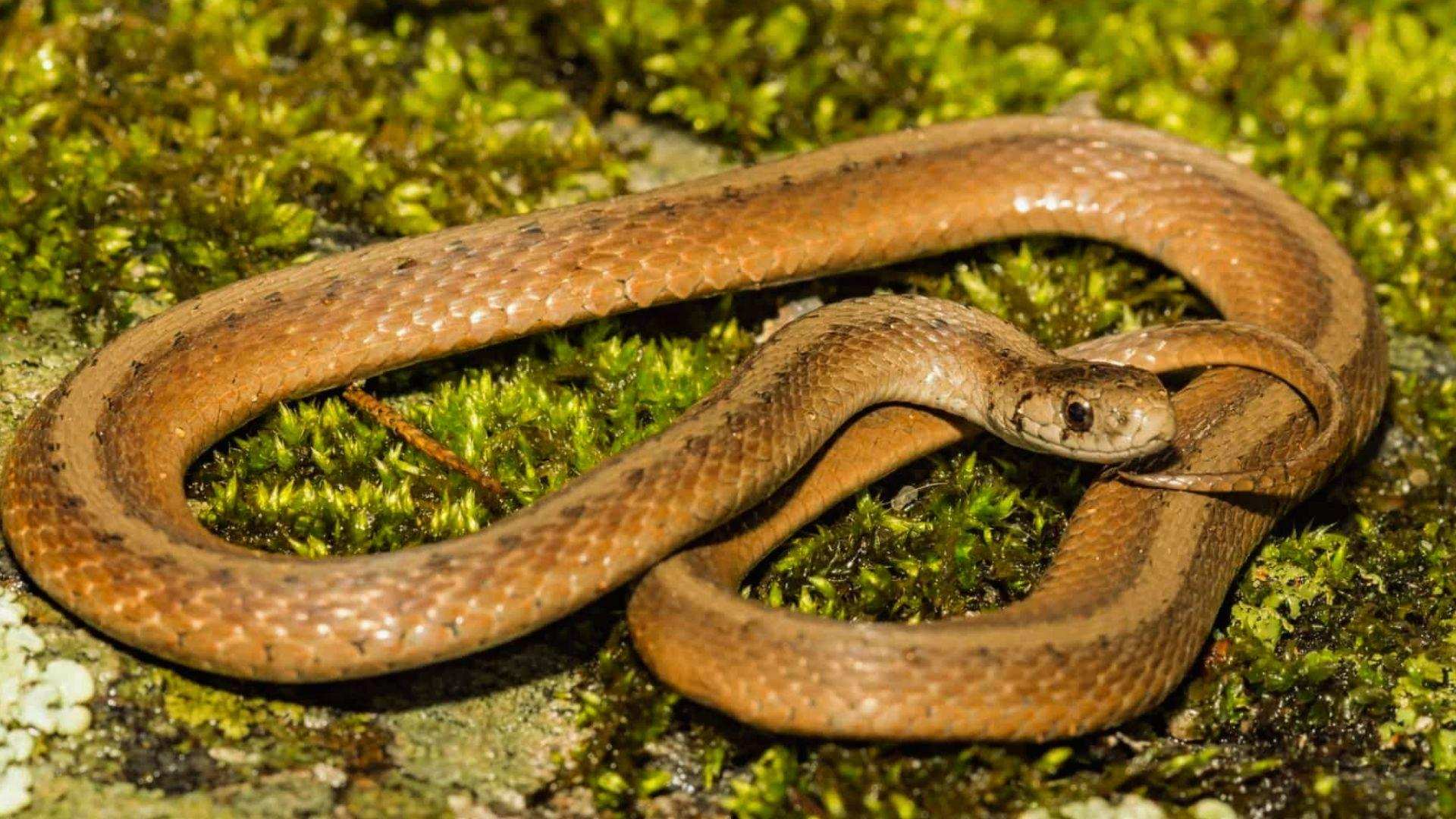
The Florida Brown Snake is another small, nonvenomous species included on Georgia's official snake list. It is generally brown and secretive, making it easy to overlook in leaf litter and other ground cover.
Its distribution in Georgia is more limited than that of some widespread species, so not every brown snake seen in the state will be a Florida Brown Snake.
If you are trying to identify one, use its overall pattern, location, and other physical characteristics together rather than relying only on its brown color.
3. Red-Bellied Snake
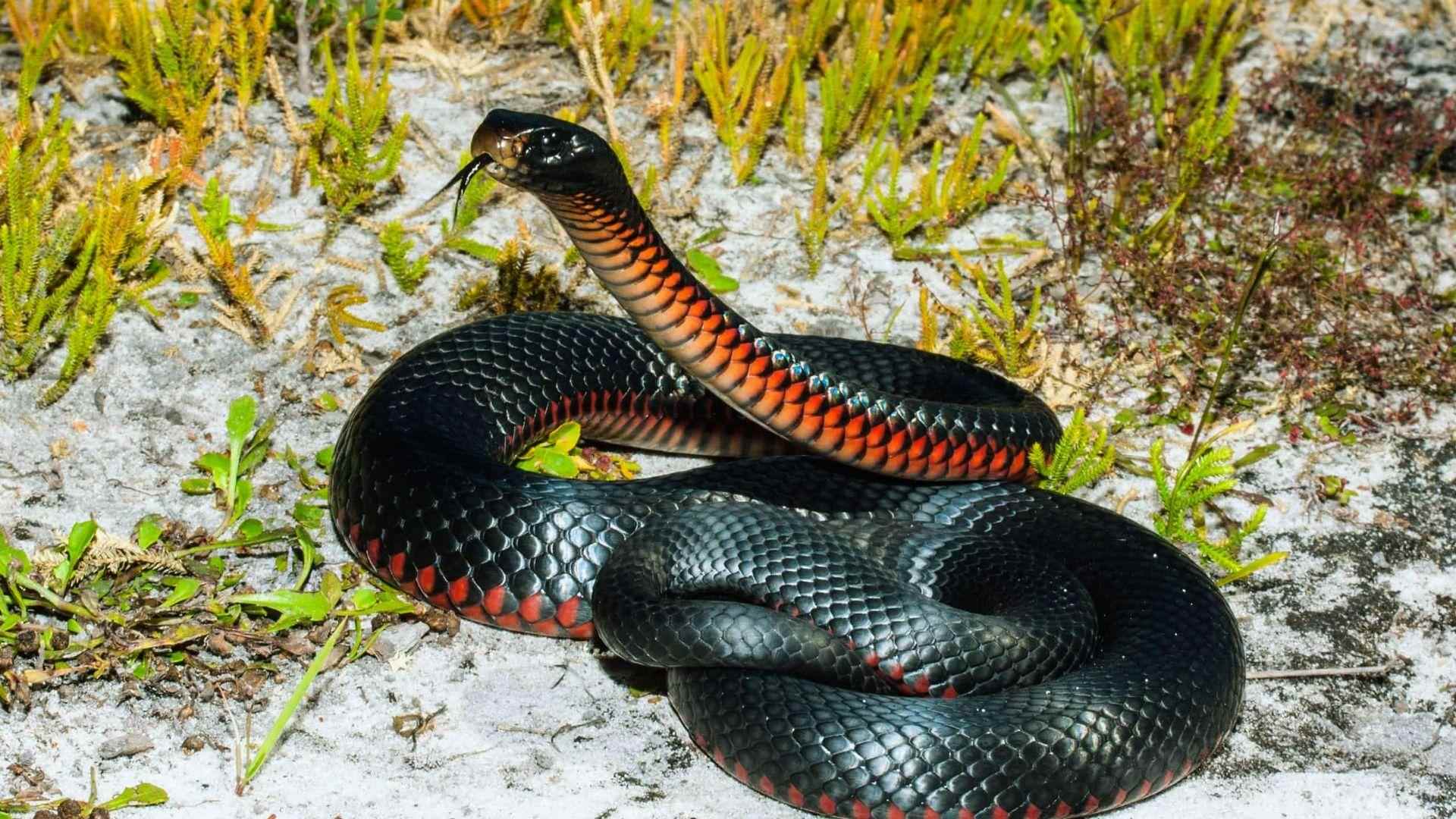
The Red-bellied Snake is a small, nonvenomous species with a darker back and a red, orange, or reddish underside. The belly is one of its most noticeable features, although you should never handle a snake simply to check its underside.
These snakes commonly remain under leaf litter, logs, rocks, and other cover. They feed on soft-bodied prey such as slugs and snails.
Georgia DNR specifically notes that red-bellied snakes help control creatures that gardeners may consider pests.
4. Rough Earth Snake
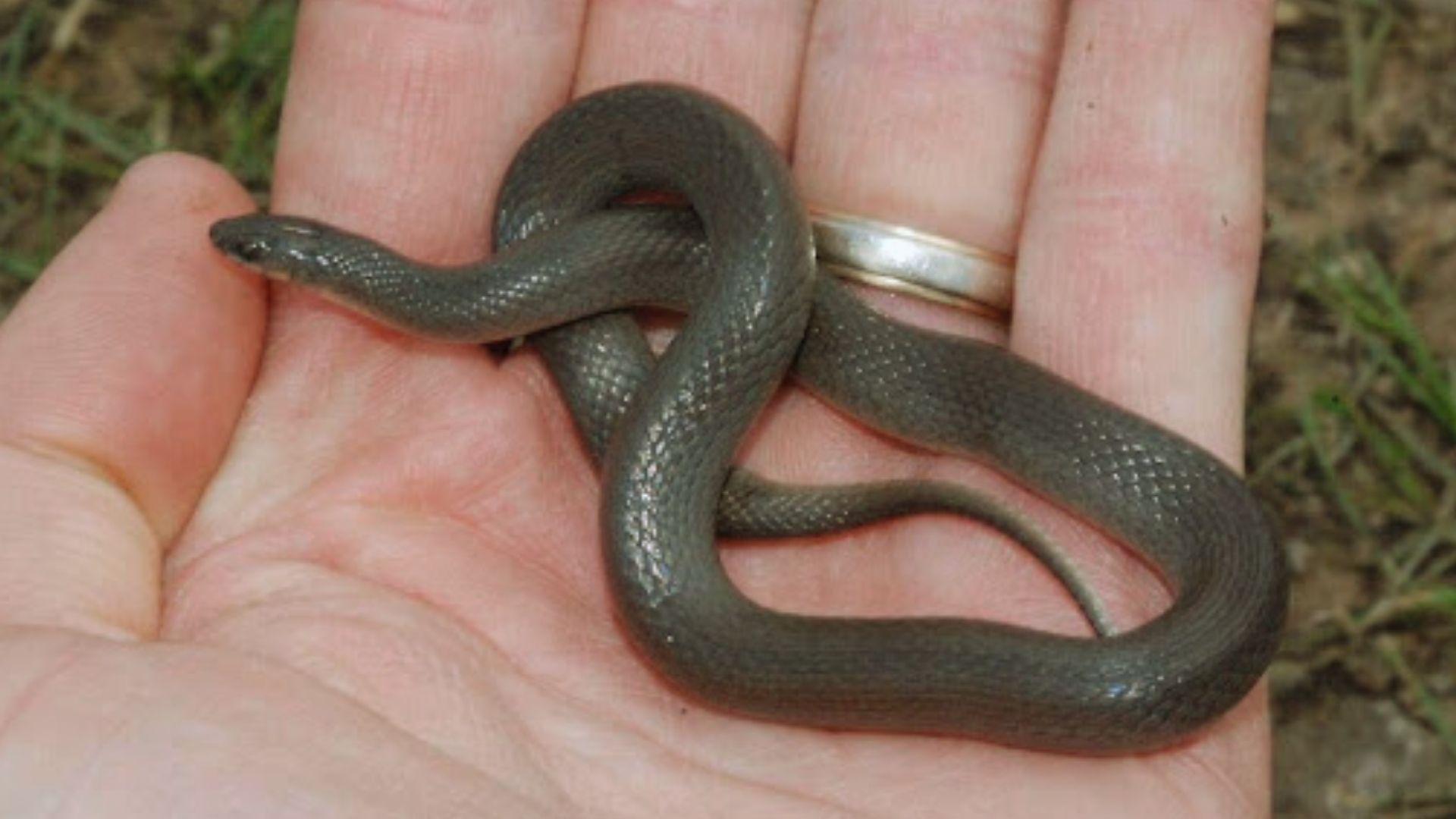
The Rough Earth Snake is a small, nonvenomous species associated with loose soil, leaf litter, and other ground cover. Its keeled scales give the body a rougher appearance and texture than the smooth scales of the Smooth Earth Snake.
These snakes are secretive and spend much of their time close to the ground beneath natural cover.
Their small size and earth-toned coloring can make them difficult to notice until they move across an exposed patch of soil or pavement. Georgia DNR lists the Rough Earth Snake among Georgia's nonvenomous snake species.
5. Smooth Earth Snake
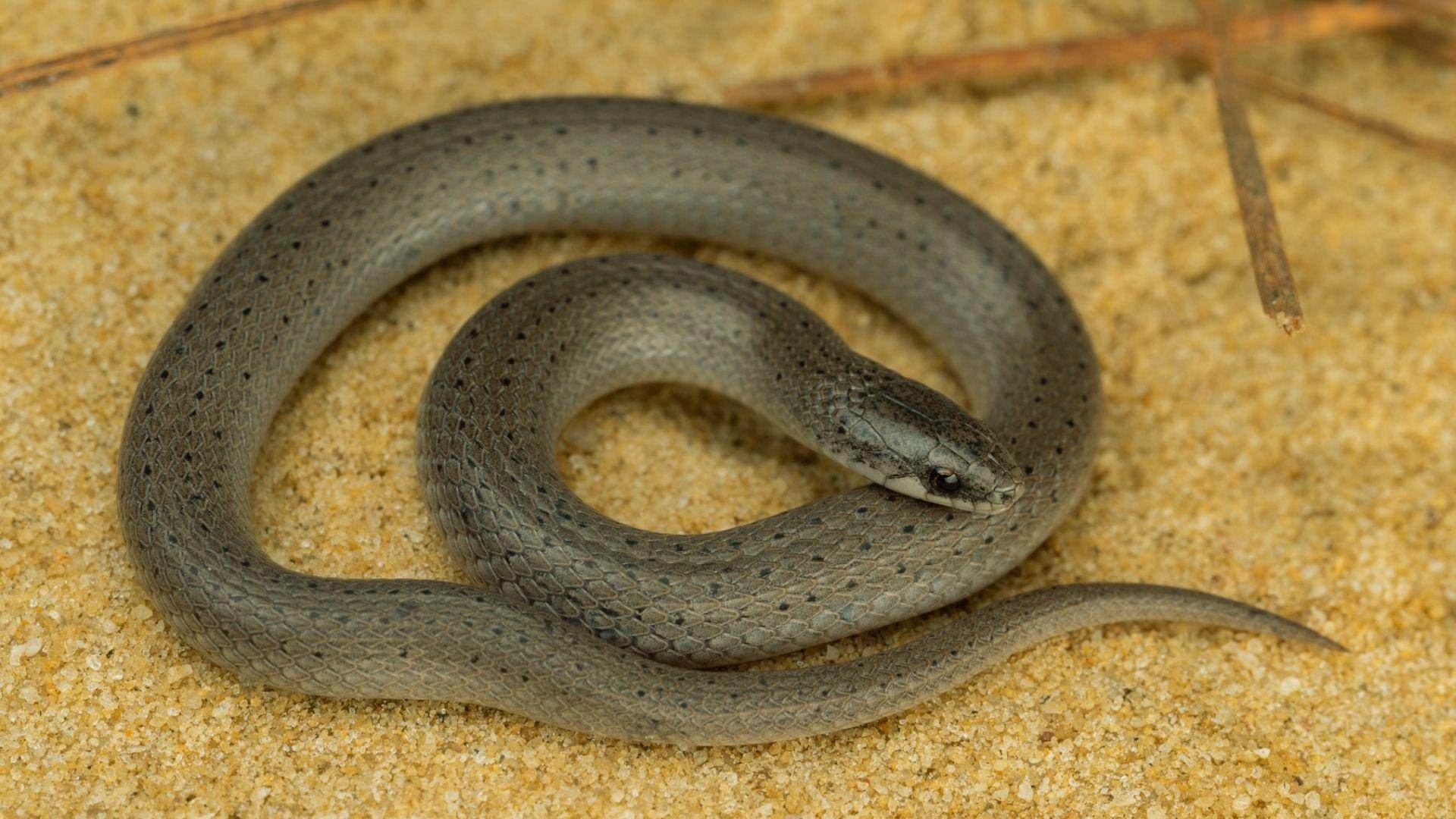
The Smooth Earth Snake is another small, nonvenomous species that can be mistaken for a worm or young snake. Its smooth scales and subdued brown, gray, or reddish coloring help it blend into soil and leaf litter.
Like other small ground-dwelling snakes, it spends much of its time under cover rather than openly moving through yards.
A sighting does not usually indicate a problem. If one appears in a garden or flower bed, giving it space is safer than trying to catch or relocate it.
6. Eastern Hognose Snake
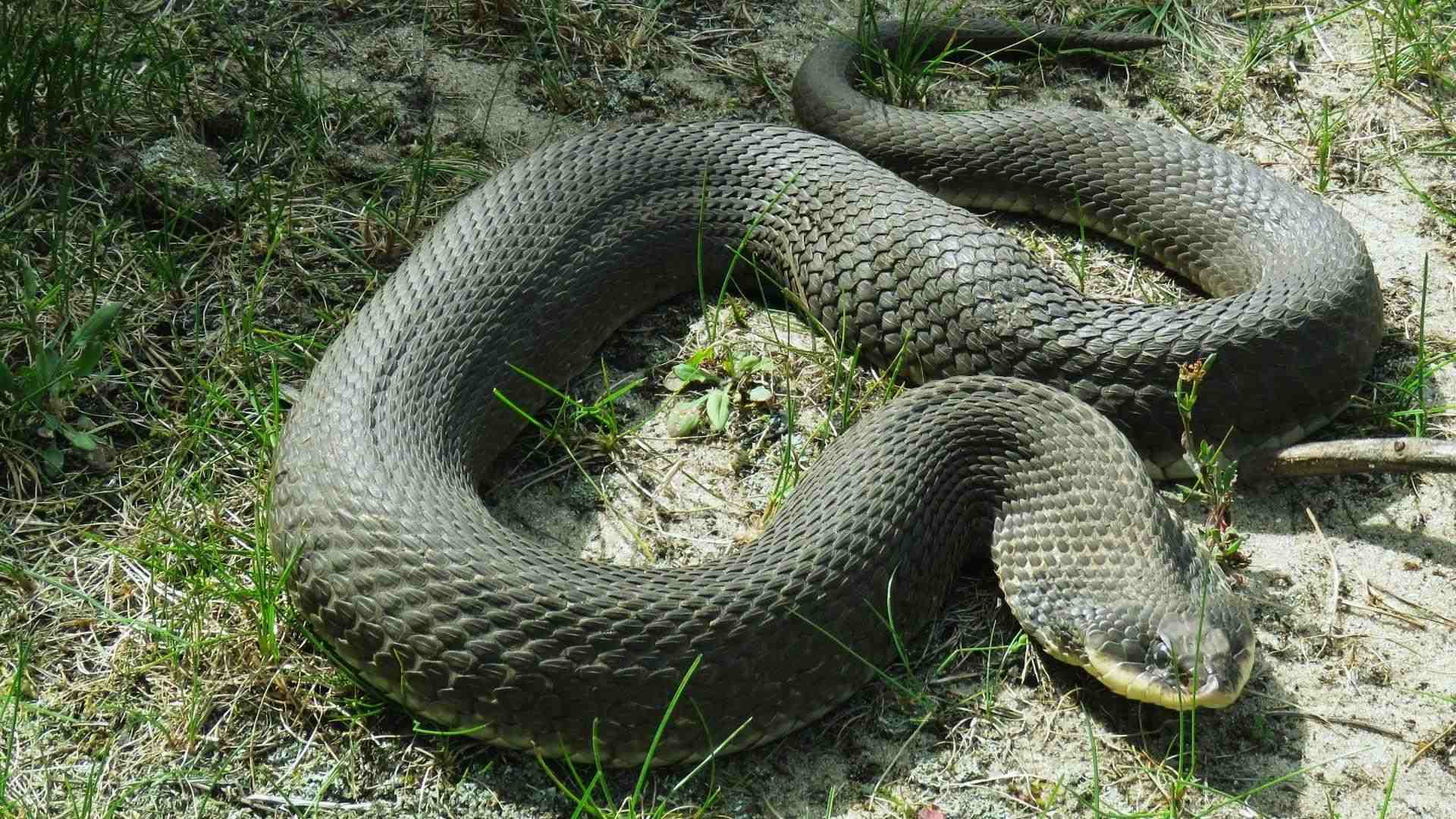
The Eastern Hognose Snake is larger and more heavily built than the small earth and brown snakes. Its color can range from brown and gray to olive, with darker blotches or other patterns. Its upturned snout is one of its most recognizable features.
When threatened, an Eastern Hognose Snake may flatten its neck, hiss, strike defensively, or play dead.
These behaviors can look dramatic, but the species is nonvenomous. It should still be left alone because any snake may bite when cornered or handled. Georgia DNR lists the Eastern Hognose Snake among Georgia's nonvenomous species and advises against handling snakes.
7. Eastern Worm Snake
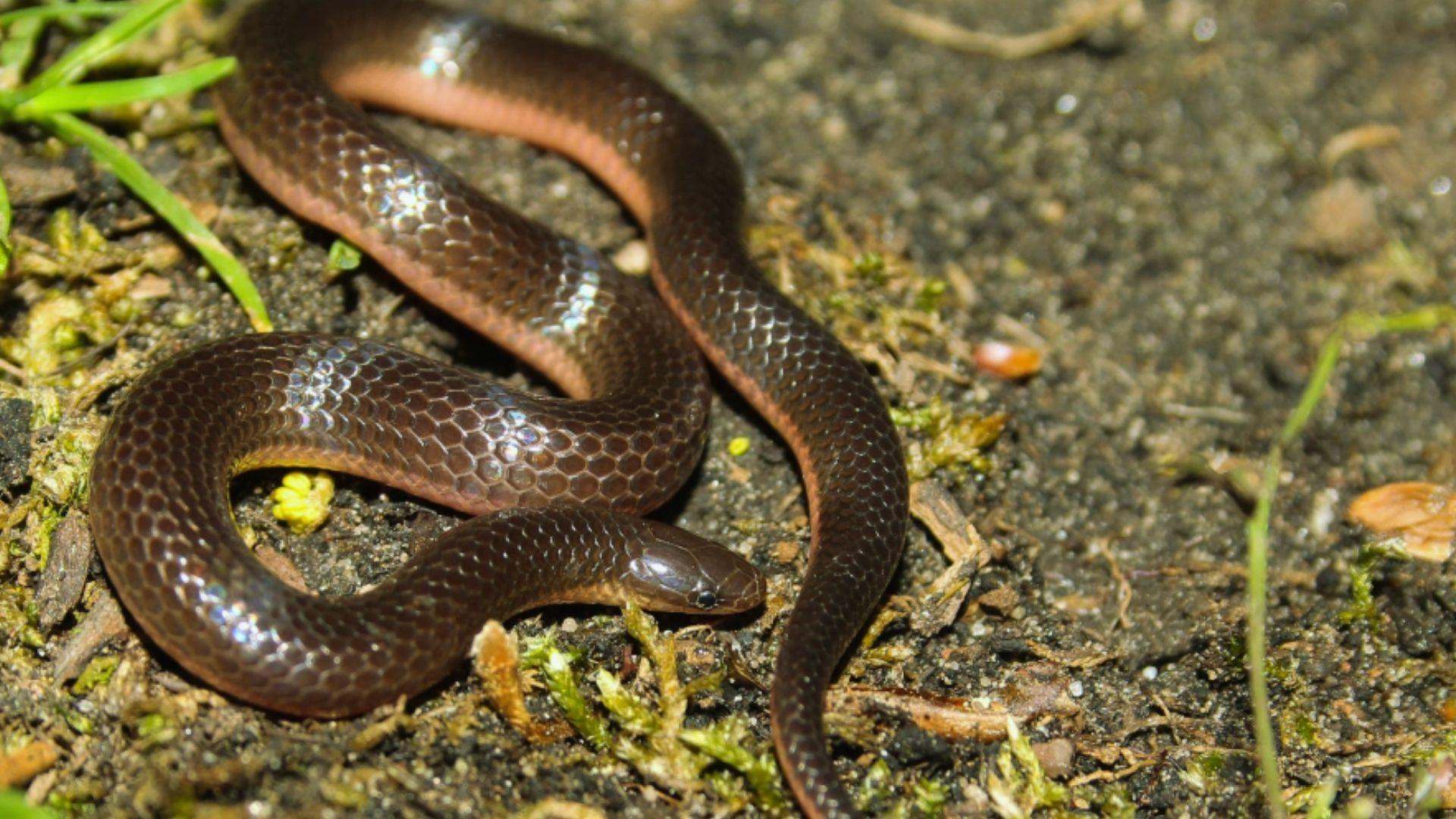
The Eastern Worm Snake is a small, slender snake that can look surprisingly similar to an earthworm. Its body is typically dark brown, purplish brown, or nearly black on top, with a lighter pinkish or reddish underside.
It spends much of its time underground or beneath rotting logs, leaf litter, and other moist cover. Its secretive lifestyle means people often see it only when moving soil, gardening, or disturbing natural debris.
The Eastern Worm Snake is nonvenomous and is included among Georgia's native snake species.
8. Southeastern Crowned Snake
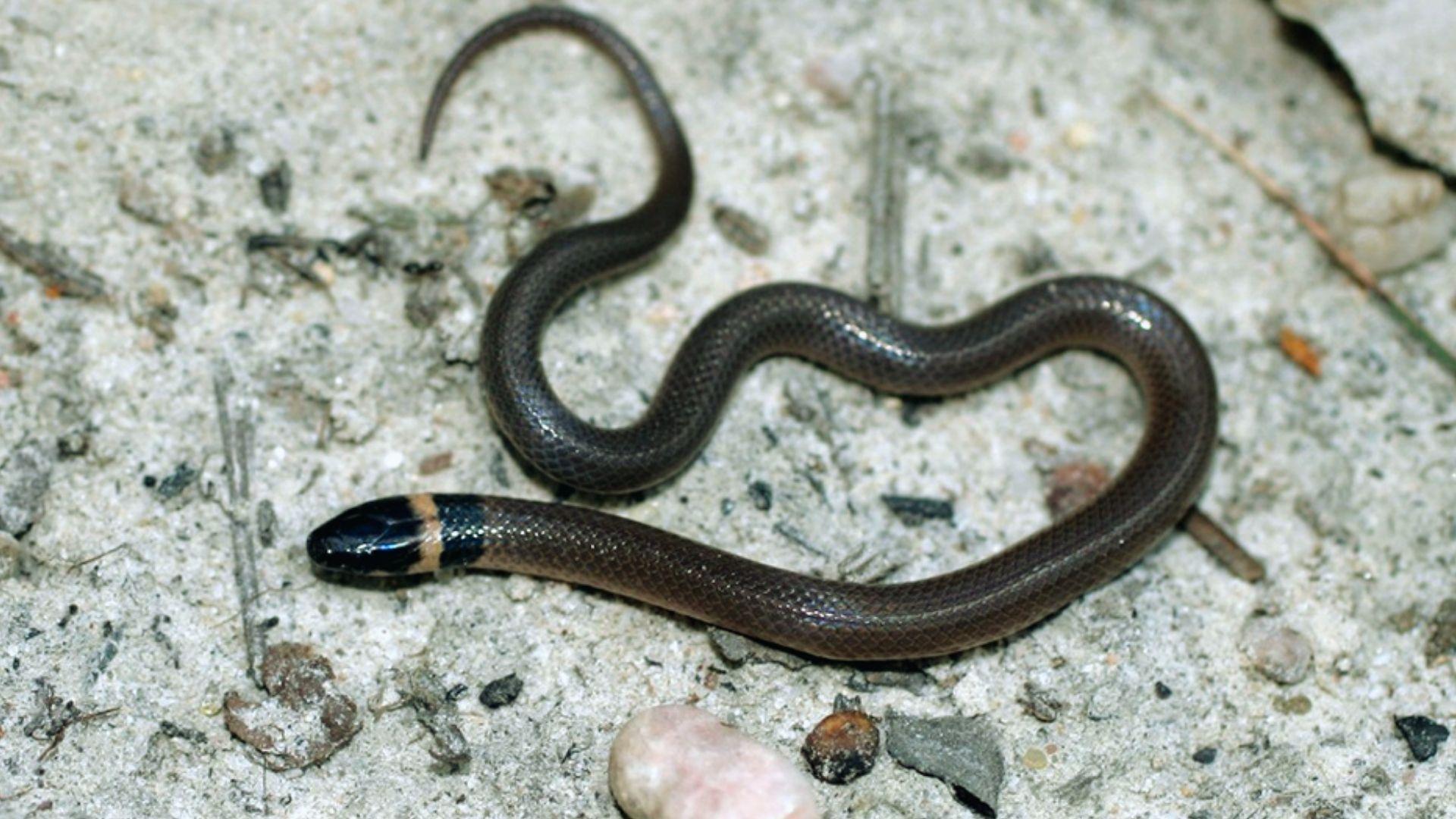
The Southeastern Crowned Snake is a small, nonvenomous species with a light brown or grayish body and a darker marking around the head and neck. Its small size and ground-dwelling habits make it easy to mistake for another earth-toned snake.
It usually remains beneath leaf litter, logs, rocks, and other cover. Crowned snakes primarily feed on small invertebrates, including centipedes.
Georgia DNR identifies crowned snakes as among the small snakes that may occur around homes and gardens.
9. Ringneck Snake
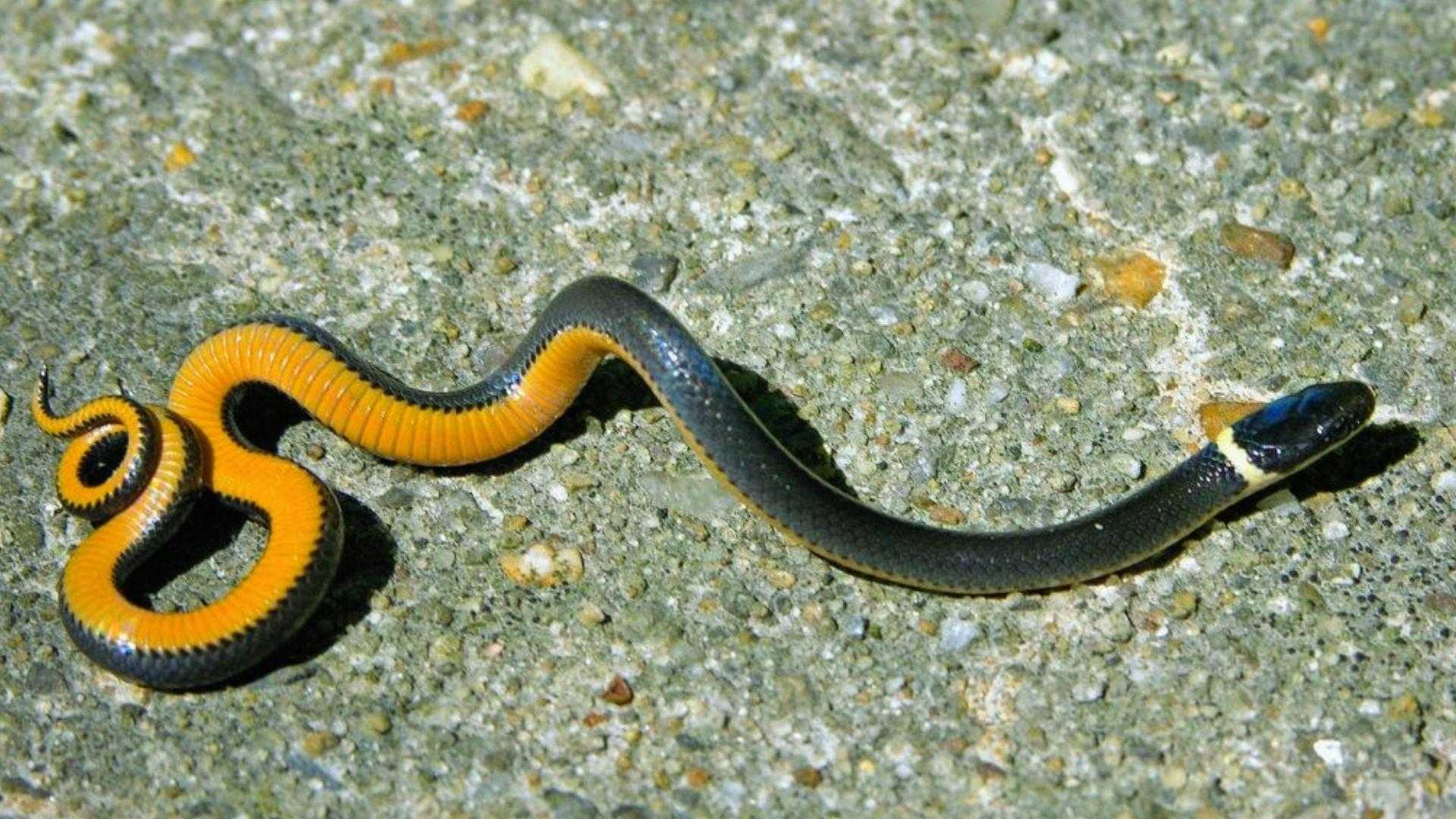
The Ringneck Snake is usually dark on top with a distinct yellow, orange, or cream-colored ring around its neck. Its underside may also contain bright yellow, orange, or red coloring, depending on the individual.
Although its pattern can make it easy to recognize, the snake may still be mistaken for another small brown or dark snake when viewed briefly.
Ringneck snakes are nonvenomous and spend much of their time beneath rocks, logs, leaf litter, and other cover.
10. Common Garter Snake
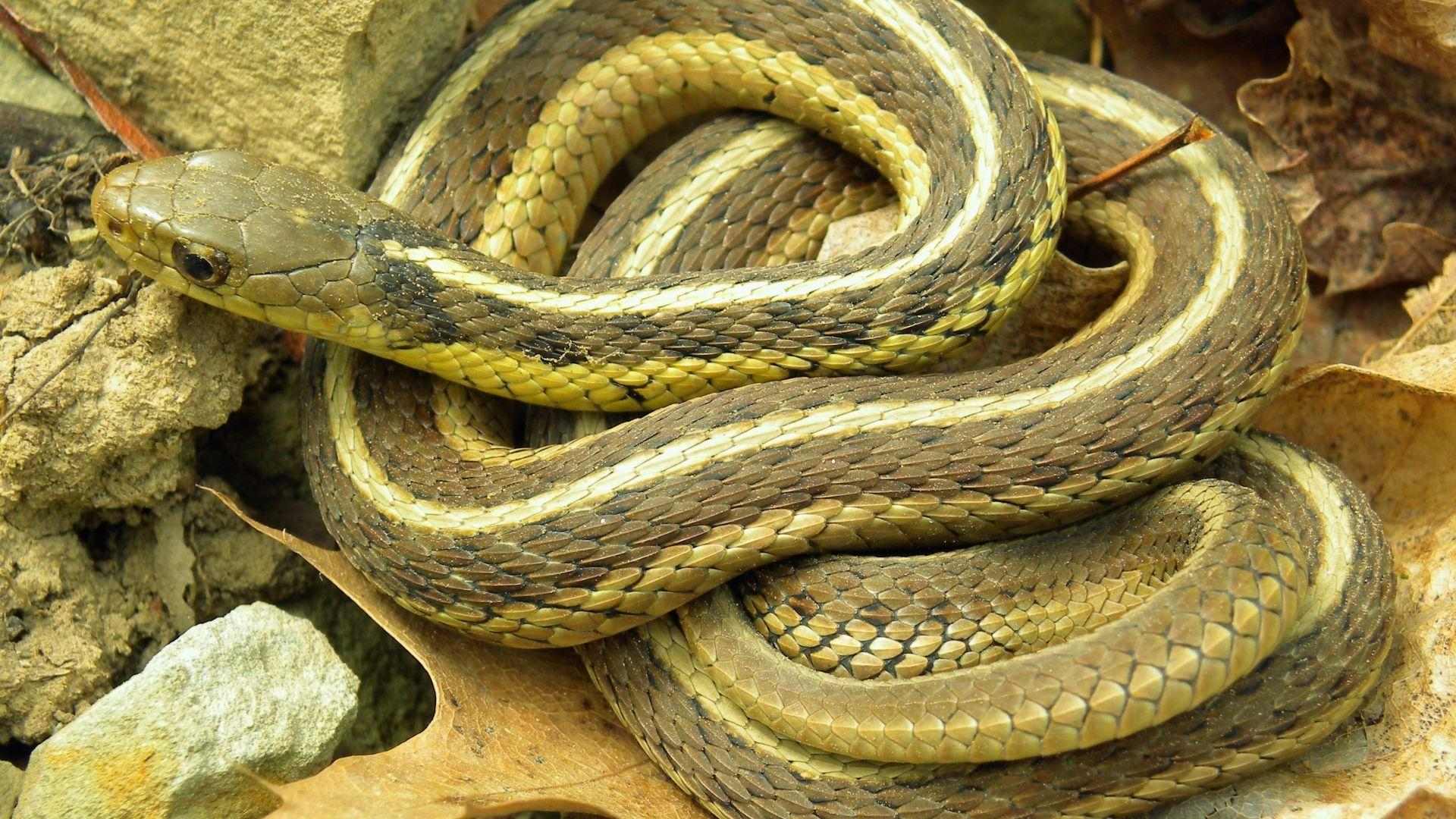
The Common Garter Snake can appear brown, olive, gray, or darker in color, often with light stripes running along the body. It is more active and adaptable than many of the tiny ground-dwelling snakes on this list.
Garter snakes can occur around yards, gardens, wetlands, and other areas with suitable cover and prey. They are nonvenomous, although any snake may bite defensively if someone attempts to catch or handle it.
Georgia DNR lists the Common Garter Snake among Georgia's nonvenomous species.
11. Eastern Copperhead
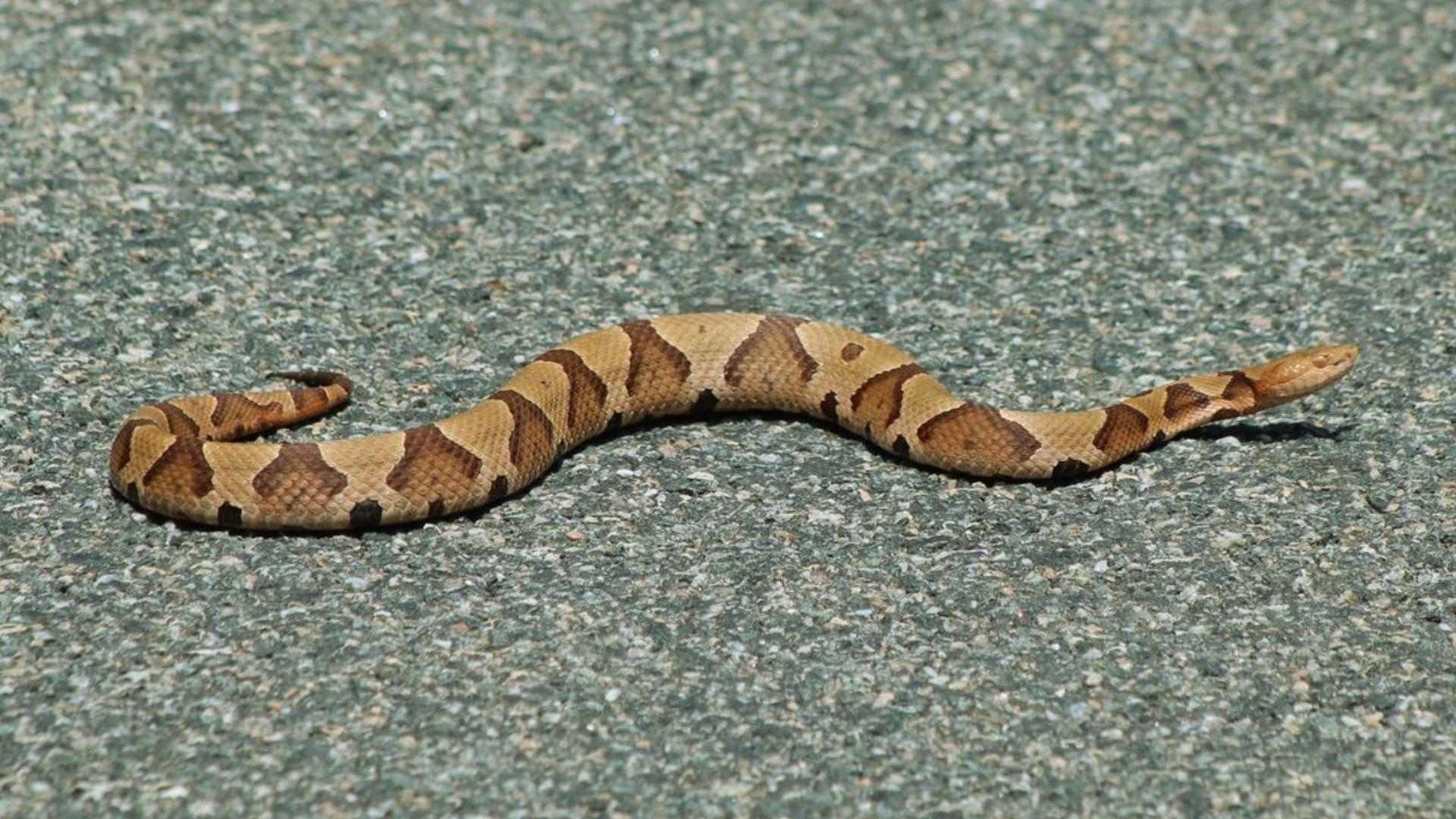
The Eastern Copperhead is the one venomous species included in this brown-snake guide. It can have a tan, brown, or copper-colored background with darker hourglass-shaped bands across the body. Unlike many small brown snakes, it is a heavier-bodied pit viper.
Copperheads are especially important to recognize because the Georgia DNR notes that the species commonly occurs in suburban areas.
However, head shape alone is not a reliable identification method, because nonvenomous snakes can flatten their heads when threatened. If you cannot confidently identify a snake, keep your distance and do not attempt to catch or kill it.
Where Do Brown Snakes Live in Georgia?
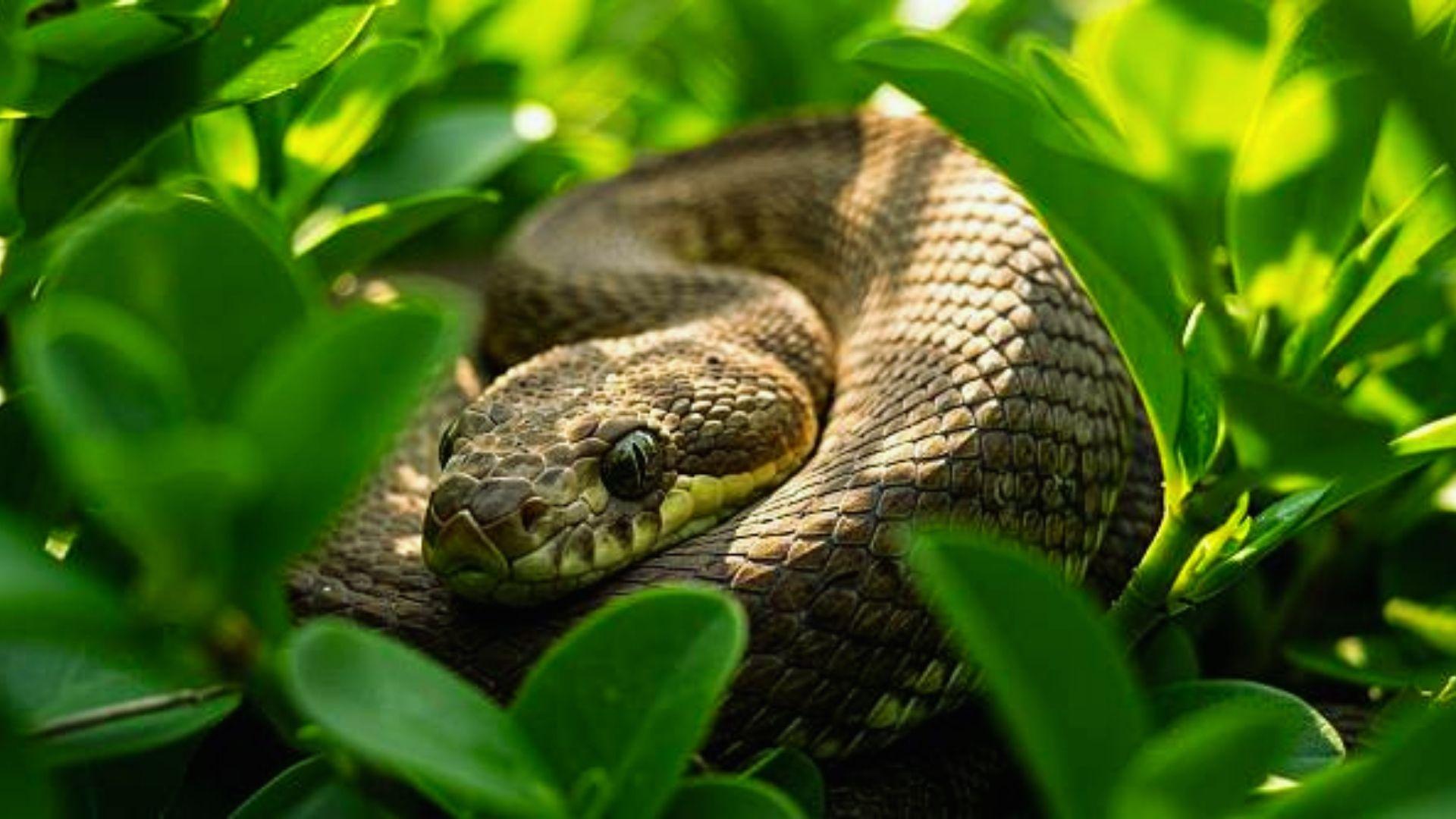
Brown-colored snakes can occur in many Georgia habitats, including forests, gardens, yards, wetlands, and areas with natural ground cover. The exact species you encounter depends on habitat, geography, and local conditions.
Common places to look include:
Leaf litter and mulch: These areas provide moisture, shelter, and access to worms, slugs, and insects.
Logs and brush piles: Fallen wood and brush create protected spaces where snakes and their prey can hide.
Rock piles and stone walls: Small gaps provide shelter from predators and extreme temperatures.
Gardens and flower beds: Moist soil and abundant invertebrates can attract small snakes.
Streams, ponds, and wetlands: Watersnakes and other moisture-loving species are associated with aquatic habitats.
Crawl spaces and building gaps: Snakes may enter structures while looking for prey, shelter, or a place to shed.
Georgia DNR notes that snakes may take refuge in brush and firewood piles and that water snakes can occur near streams, lakes, swamps, and farm ponds.
What Should You Do If You Find a Brown Snake?
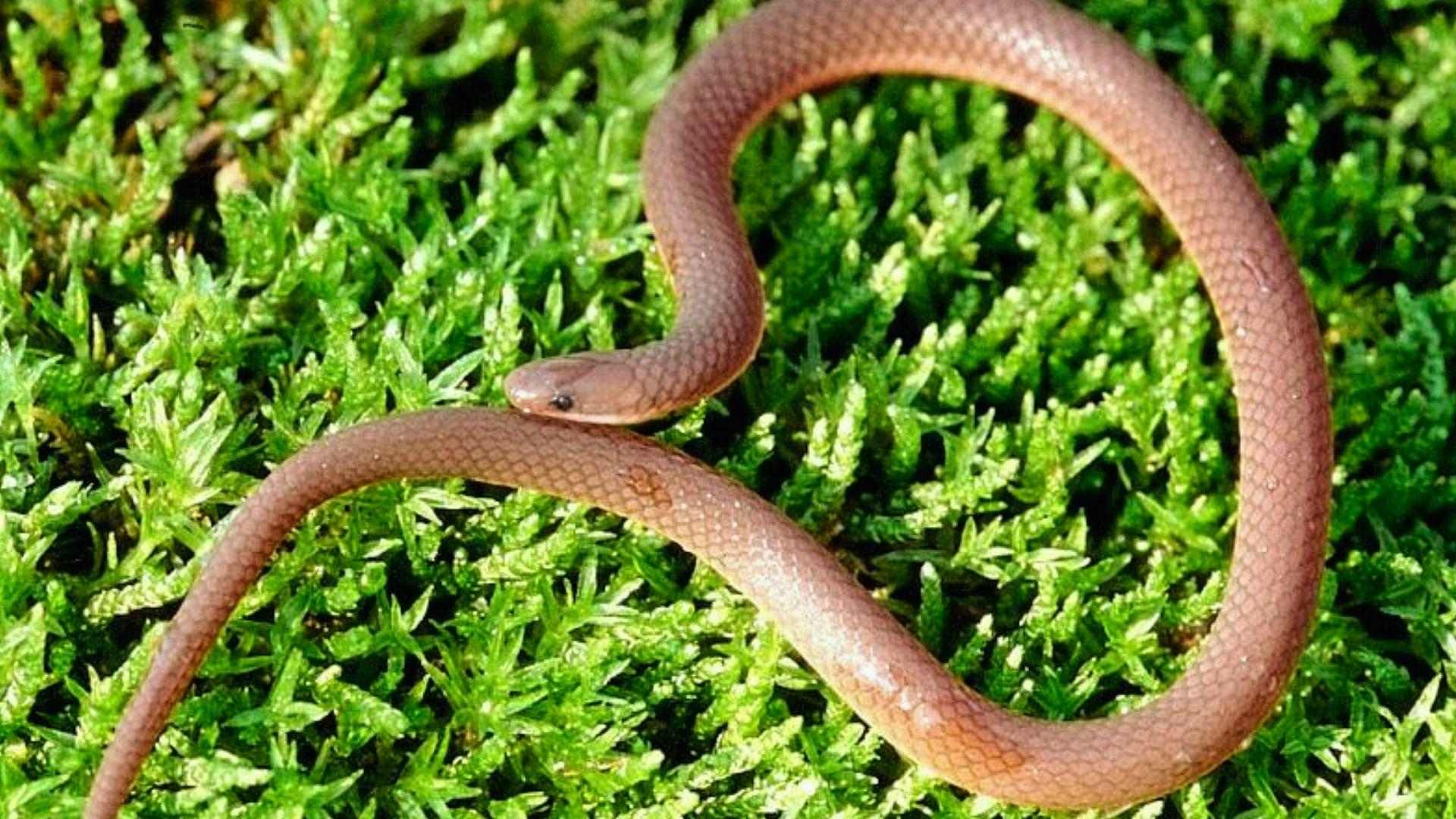
The safest response is to keep your distance and let the snake move away. Most snakes are more interested in escaping than confronting people, and trying to catch one creates unnecessary bite risk.
Identify the Snake From a Distance
Stay several feet away and observe its color, markings, body shape, and location. If you want a photograph for identification, take it without approaching the snake. Do not corner the animal to obtain a clearer picture.
Georgia DNR specifically recommends identifying snakes from a distance and says people should not attempt to handle them.
Keep Children and Pets Away
Move children and pets indoors or to another part of the property until the snake has moved away. Do not allow a dog or cat to chase, bite, or corner the snake.
This is especially important when the species has not been positively identified. A harmless snake can still defend itself when trapped, while a venomous species should never be approached.
When Should You Leave the Snake Alone?
If the snake is outside, has room to move, and is not creating an immediate hazard, the best option is usually to leave it alone. Nonvenomous snakes can provide useful pest control by feeding on rodents, insects, slugs, snails, and other animals.
Georgia DNR also notes that native nonvenomous snakes are protected by state law. Avoid attempting to kill or collect a snake simply because it is in your yard.
When Should You Call a Wildlife Professional?
Contact a qualified wildlife removal professional if a clearly identified venomous snake is in an area where it could endanger people or pets. Professional removal is also reasonable when a snake is inside a building and cannot safely leave.
Do not attempt to grab, pin, trap, or kill an unidentified snake. Georgia DNR reports that many bites occur when snakes are cornered or captured and defending themselves.
What If a Brown Snake Gets Inside Your Home?
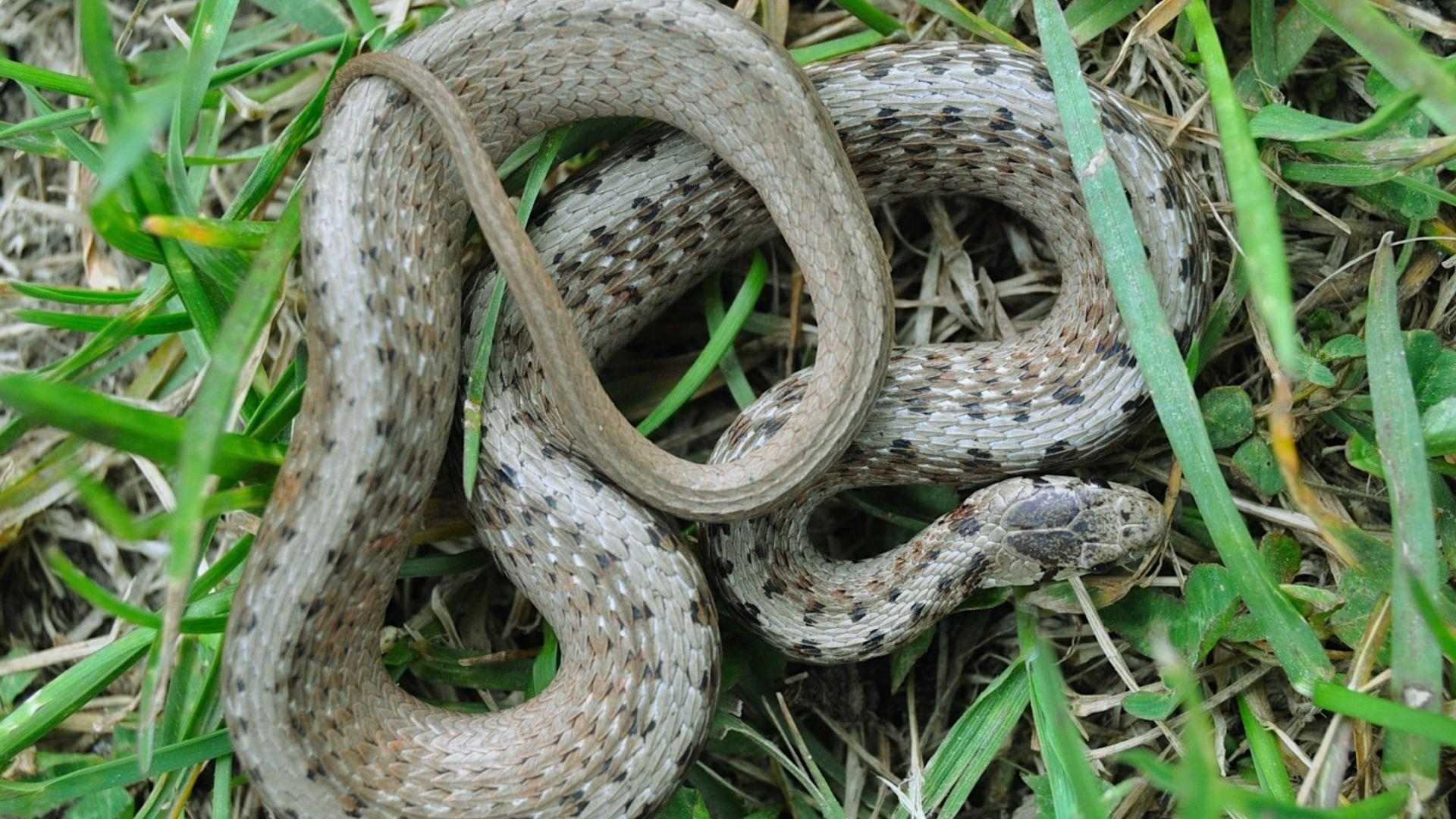
Keep people and pets away from the room and give the snake a clear opportunity to leave if it can do so safely. Do not chase it around the house or try to catch it with your hands.
If the snake is near an exterior door and you can safely create an exit without approaching it, give it space to leave. If it disappears behind furniture or into an inaccessible area, close off the room and contact a qualified wildlife professional rather than searching for it yourself.
After the snake is gone, inspect likely entry points. Check gaps around doors, damaged screens, foundation openings, crawl-space access points, and other openings.
Georgia DNR recommends closing possible entry locations and controlling rodents because reducing both access and available prey can help prevent snakes from entering buildings.
Brown Snakes by Georgia Region
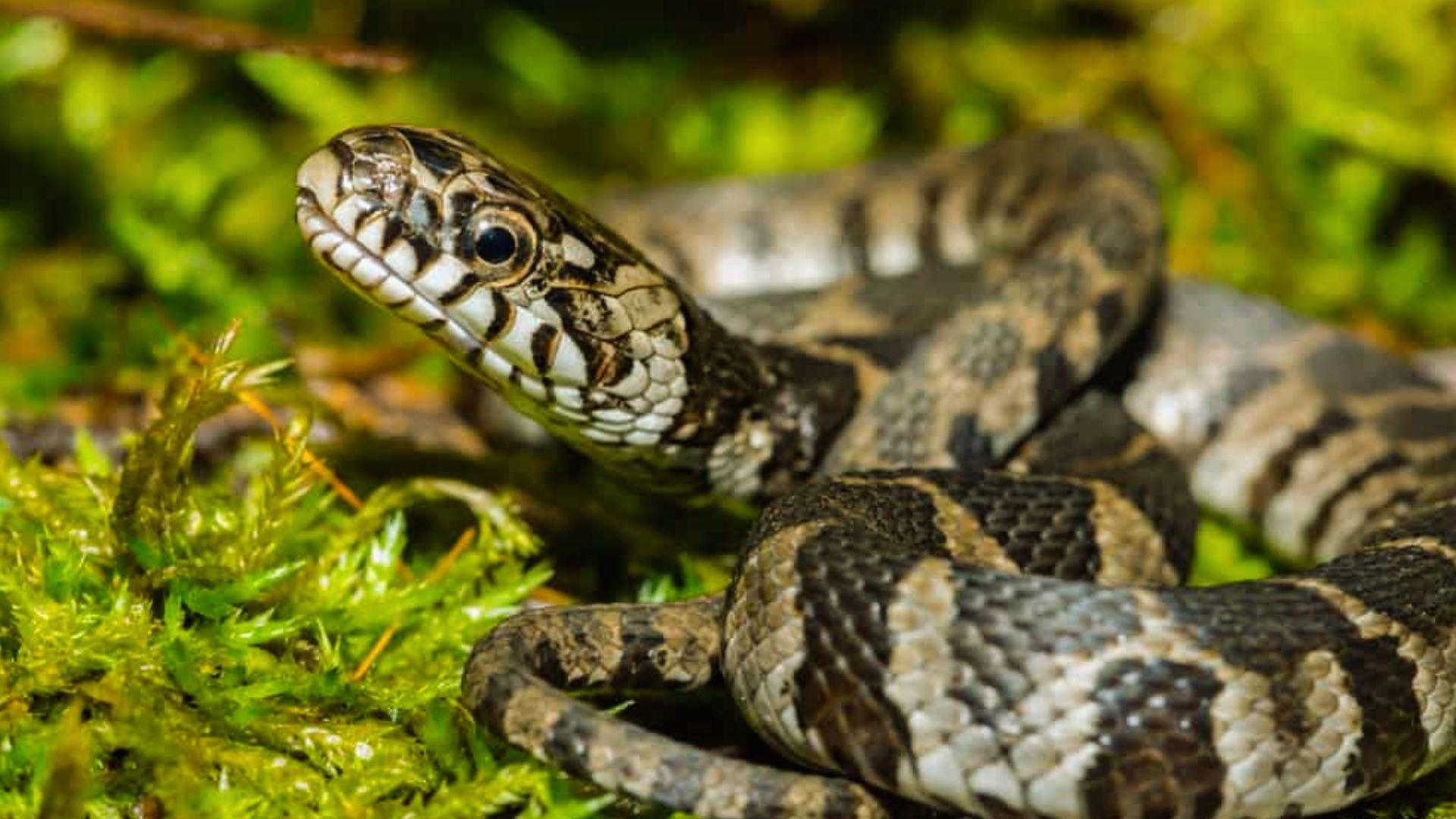
The species you see can vary by habitat and location across Georgia. Northern forests, central farmland and suburbs, and southern wetlands all provide different conditions for snakes.
North Georgia
North Georgia's mountains, forests, rocky areas, and cooler conditions provide habitat for several small woodland and ground-dwelling snakes. Ringneck snakes, earth snakes, worm snakes, and brown snakes may occur in suitable areas.
A snake found beneath a log or in leaf litter in the mountains may look very different from a watersnake seen near a pond. Habitat is therefore useful as a supporting clue, but it should not replace physical identification.
Central Georgia
Central Georgia contains a mixture of suburbs, farms, forests, gardens, and open land. This variety creates suitable habitat for several nonvenomous snakes, including brown snakes, earth snakes, garter snakes, and hognose snakes.
Yards with mulch, dense vegetation, wood piles, or other ground cover can attract both snakes and the prey they eat. Keeping these areas managed can reduce encounters around frequently used parts of a property.
South and Coastal Georgia
South Georgia and the Coastal Plain contain wetlands, forests, agricultural areas, sandy soils, and other habitats that support a wide range of reptiles.
Watersnakes are particularly associated with aquatic environments, while several small ground-dwelling snakes use leaf litter and soil cover.
A brown-colored snake near water should not automatically be assumed to be a copperhead. Several nonvenomous watersnake species occur in Georgia and are sometimes confused with venomous snakes.
Urban and Suburban Areas
Snakes can occur in cities and suburbs as well as rural areas. Gardens, wooded lots, drainage areas, mulch beds, sheds, crawl spaces, and other features can provide shelter or access to prey.
Georgia DNR notes that only the copperhead among Georgia's venomous snakes usually thrives in suburban areas. That does not mean every brown snake in a neighborhood is a copperhead, most snakes encountered around homes are nonvenomous.
How Can You Keep Brown Snakes Away?
The best prevention strategy is to reduce shelter, prey, and entry points around the home. You do not need to eliminate every snake from your property. Instead, focus on keeping them away from doors, play areas, garages, and other high-use spaces.
Remove brush and debris: Clear unnecessary piles of leaves, brush, logs, and other ground cover near the home.
Manage firewood: Keep firewood organized and away from the immediate foundation area.
Seal building gaps: Inspect doors, screens, crawl spaces, foundations, and utility openings for possible entry points.
Reduce rodent activity: Snakes may enter areas where mice and other prey are readily available.
Keep vegetation maintained: Trim dense growth around frequently used areas while preserving natural habitat farther from the home.
Limit unnecessary rock piles: Rocks can provide shelter for snakes and the animals they hunt.
Address damp areas: Correct drainage problems and avoid creating unnecessary standing water close to buildings.
What Are the Best Brown Snake Identification Tips?
Do not identify a snake from color or head shape alone. Instead, compare several characteristics from a safe distance.
- Check the snake's pattern for stripes, bands, blotches, rings, or a plain back.
- Note its body shape and size, such as whether it is thin and small or thick and heavy-bodied.
- Look at scale texture, belly markings, and other visible features from a safe distance.
- An upturned snout may help identify an Eastern Hognose Snake, while habitat can provide another useful clue.
- Consider behavior only as supporting evidence, and never approach, handle, or corner the snake.
Conclusion
Seeing a brown snake in Georgia does not automatically mean you have encountered a dangerous species. The term can describe several nonvenomous snakes, including Brown Snakes, earth snakes, worm snakes, crowned snakes, garter snakes, and others.
The Eastern Copperhead is the venomous species in this guide, so an unidentified snake should always be given space.
The safest approach is simple: observe from a distance, keep children and pets away, and avoid handling the snake.
If one repeatedly appears near your home, reduce ground cover and prey sources while sealing possible entry points. When identification is uncertain or a venomous snake creates a safety concern, contact a qualified wildlife professional rather than trying to remove it yourself.
Frequently Asked Questions
Are brown snakes in Georgia dangerous to dogs?
Most brown-colored snakes are nonvenomous, but copperheads can appear brown and are venomous. Keep pets away from unidentified snakes and contact a veterinarian promptly after a suspected venomous bite.
Do brown snakes come out at night?
Some brown snakes are more active during the evening or at night, while others move during daylight. Activity depends on the species, temperature, season, and moisture.
Can brown snakes climb walls or fences?
Some snakes can climb or move through small openings, while others mainly stay on the ground. Seal gaps around doors, screens, foundations, and crawl spaces to reduce entry points.
How long do brown snakes live in Georgia?
Lifespan varies by species, so there is no single figure for all brown-colored snakes. Identification should focus on appearance, habitat, markings, and other visible features.
Do brown snakes lay eggs or give live birth?
Both reproduction methods occur among Georgia's snakes, depending on the species. Some lay eggs, while others give birth to live young.