Spotting a brown snake in your yard can be alarming. Most people freeze up because they are not sure if it is harmless or dangerous. Georgia is home to a surprising number of brown-colored snake species, and telling them apart is not always easy.
This article covers 13 brown snake Georgia species you might come across. You will learn how to identify each one, where they live, and how to handle a close encounter safely.
Whether the snake is hiding under your porch or crossing your garden path, this guide will help you figure out what you are dealing with.
I have spent years working around wildlife in the Southeast, and one thing is clear:most people fear snakes they do not need to, and overlook the ones they should watch out for.
That gap in knowledge is exactly what this guide is here to close.
What Is a Brown Snake in Georgia?
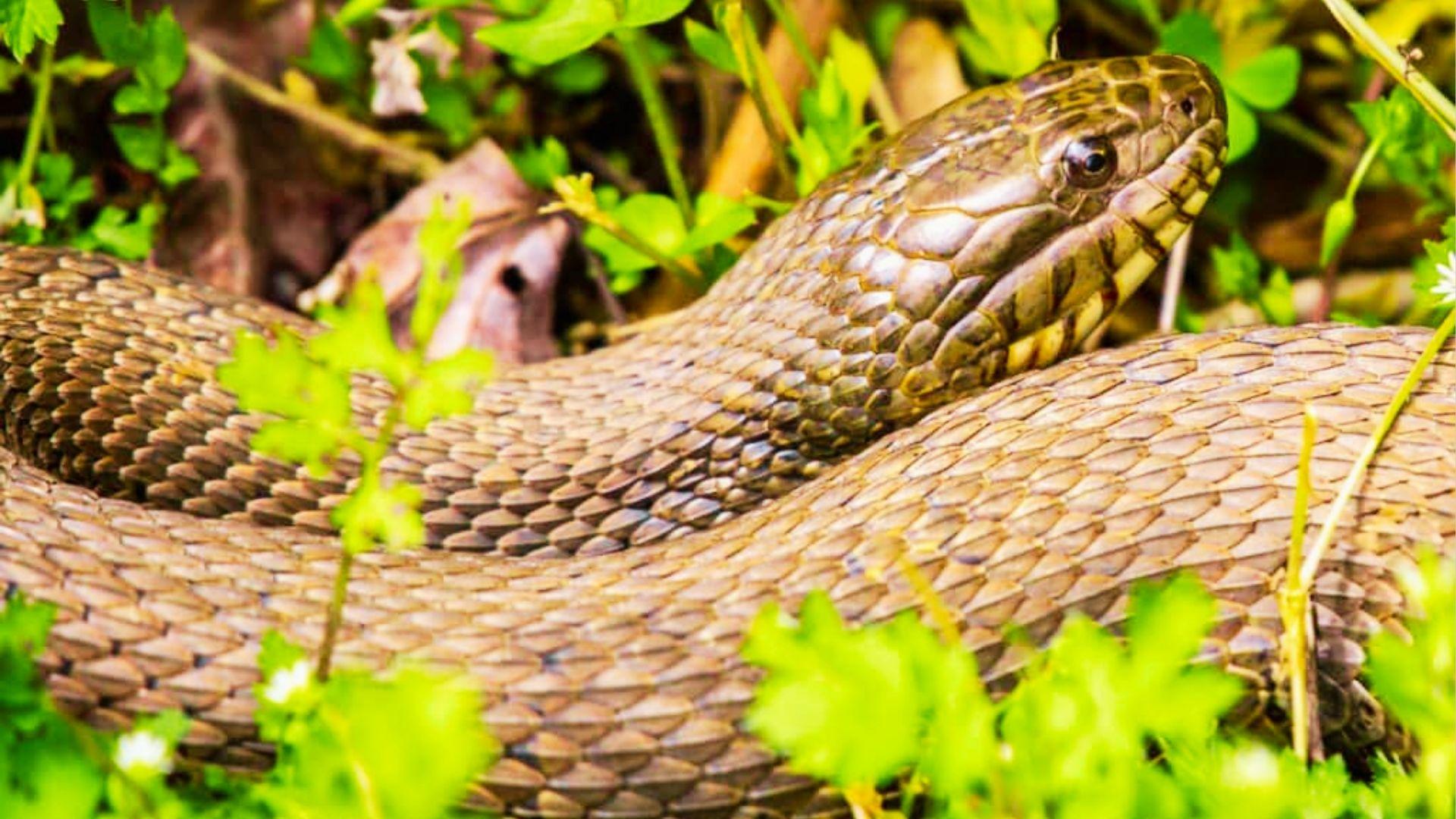
Not every brown snake in Georgia is the same species. The term "brown snake" is used loosely to describe any snake with brown, tan, or reddish-brown coloring.
Georgia has a wide range of snake species, and many of them share similar brown tones. Some are tiny and totally harmless. Others are venomous and require caution. The confusion comes from color alone because color does not tell the full story.
A true brown snake, like DeKay's Brown Snake, is a small, non-venomous species. But a Timber Rattlesnake or an Eastern Copperhead can also look brownish in certain lighting or terrain. This is why knowing the full picture matters.
Georgia sits in the southeastern United States, where warm weather and diverse ecosystems create the perfect home for many reptile species. The state is home to 46 snake species in total, six of which are venomous.
You are likely to encounter several of these snakes in your lifetime, especially in rural or suburban areas near woods or water.
How to Identify a Brown Snake in Georgia
Identifying a brown snake correctly can keep both you and the snake safe.
Start by looking at size. Small brown snakes under 12 inches are almost always harmless. Larger snakes with thick bodies deserve more attention.
Next, look at the head shape. Venomous snakes in Georgia particularly pit vipers like the Copperhead and both rattlesnakes often have triangular or arrow-shaped heads with small heat-sensing pits near the eyes. Non-venomous species usually have narrower, more rounded heads.
Check the body pattern. Bands, blotches, keeled scales, and belly color all help narrow down the species. Keeled scales feel rough to the touch, like a serrated edge, smooth scales feel glossy. A snake with crossband patterns and a copper-toned head is likely a Copperhead.
A snake with two rows of tiny dark spots along its back is probably a DeKay's Brown Snake.
One of the reasons brown snakes are hard to spot is their natural camouflage. Their coloring blends almost perfectly with leaf litter, logs, and mulch. Many encounters happen because someone reaches into a wood pile or steps through leaves without looking first.
Do not rely on tail shape alone. The "pit viper" tail-narrowing trick is not always reliable in the field.
When in doubt, keep your distance, observe from at least six feet away, and do not try to handle the snake.
13 Brown Snake Georgia Species
Find 13 brown snake species found in Georgia, from harmless garden dwellers to venomous copperheads.
1. DeKay's Brown Snake
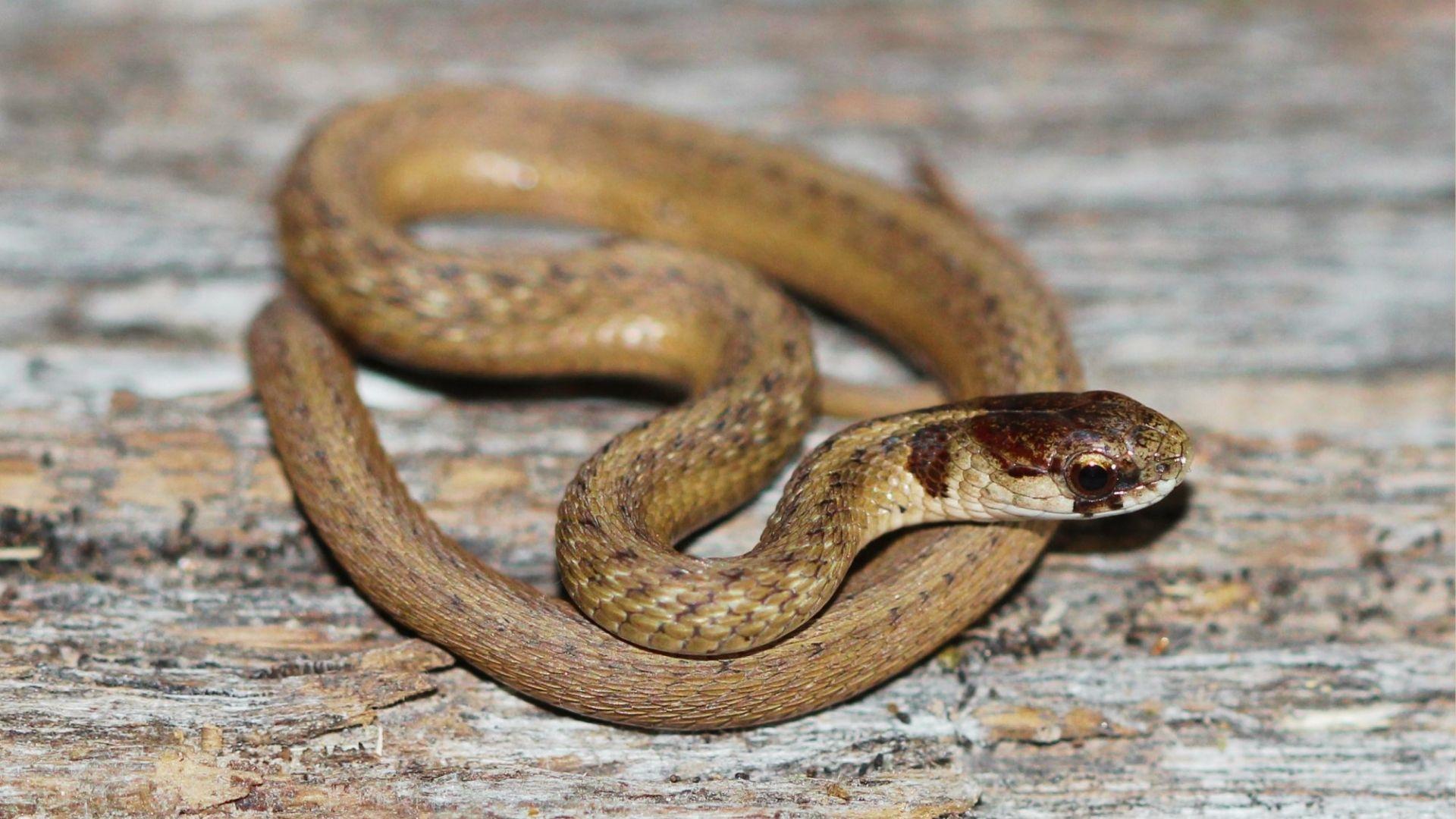
DeKay's Brown Snake is the most common brown snake in Georgia. It is small, usually between 9 and 15 inches long. The body is light to medium brown with two rows of small dark spots running down the back. The belly is pale pink or cream.
This snake is completely harmless. It lives in gardens, leaf piles, and wooded edges. It feeds mostly on slugs and earthworms, making it a quiet helper in your garden.
If you find one under a rock or board, it is not a threat. Just leave it alone.
2. Eastern Copperhead
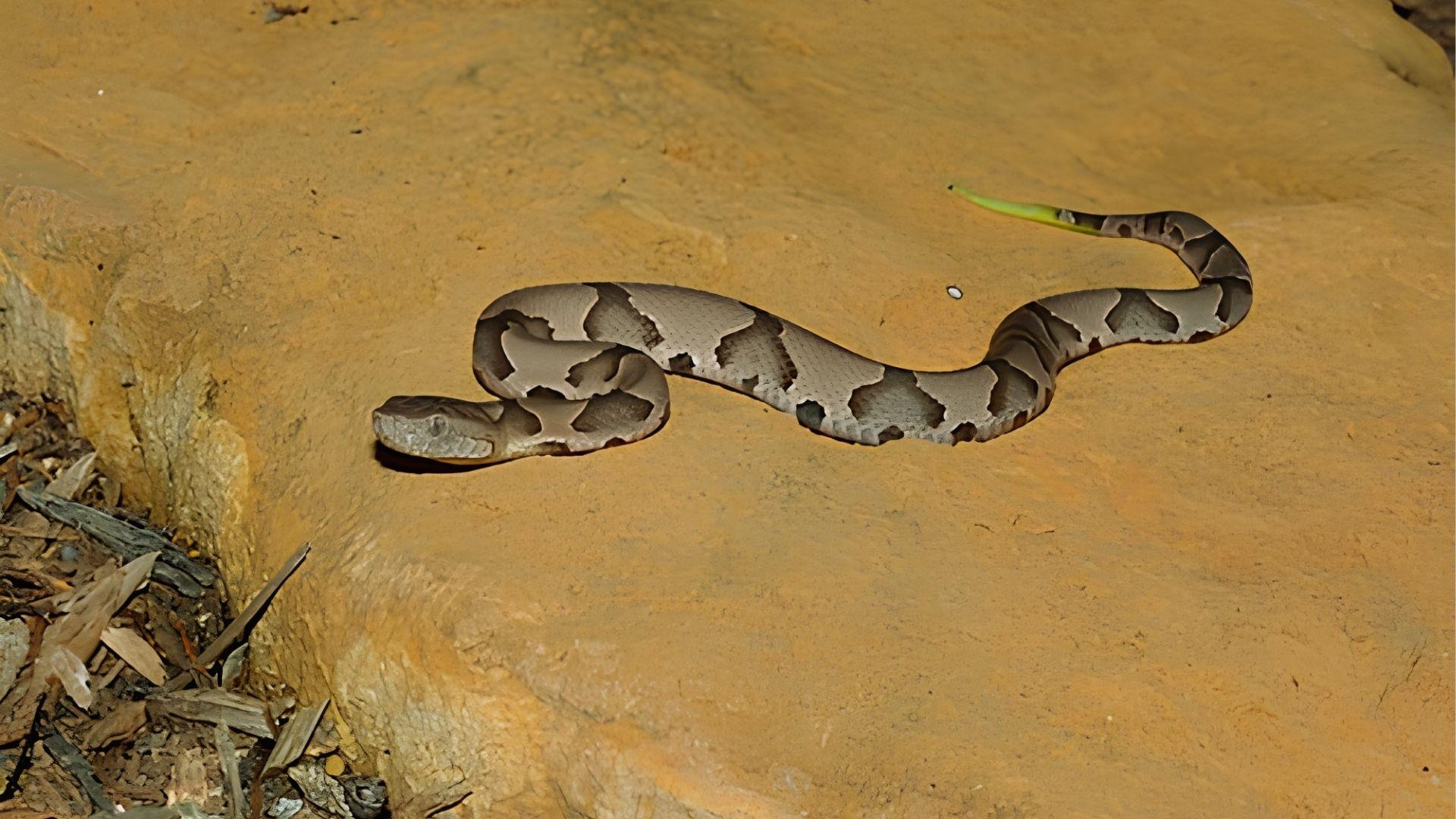
The Eastern Copperhead is one of Georgia's venomous snakes and one that causes the most bites each year. It has a thick body with hourglass-shaped bands in shades of brown, rust, and tan. The head has a distinct copper color and is broadly triangular.
As a pit viper, it has small heat-sensing pits between its eyes and nostrils that help it detect warm-blooded prey.
Adult Copperheads range from 24 to 36 inches. They prefer deciduous forests, mixed woodlands, and areas bordering wetlands.
They are nocturnal during summer and more active during the day in spring and fall. They tend to stay still when threatened, which makes stepping on one easy to do accidentally.
One important safety detail:Copperheads often deliver a warning bite first that injects little or no venom. This is still a medical event that needs prompt attention, but it does explain why many bites are less severe than people expect.
3. Brown Water Snake
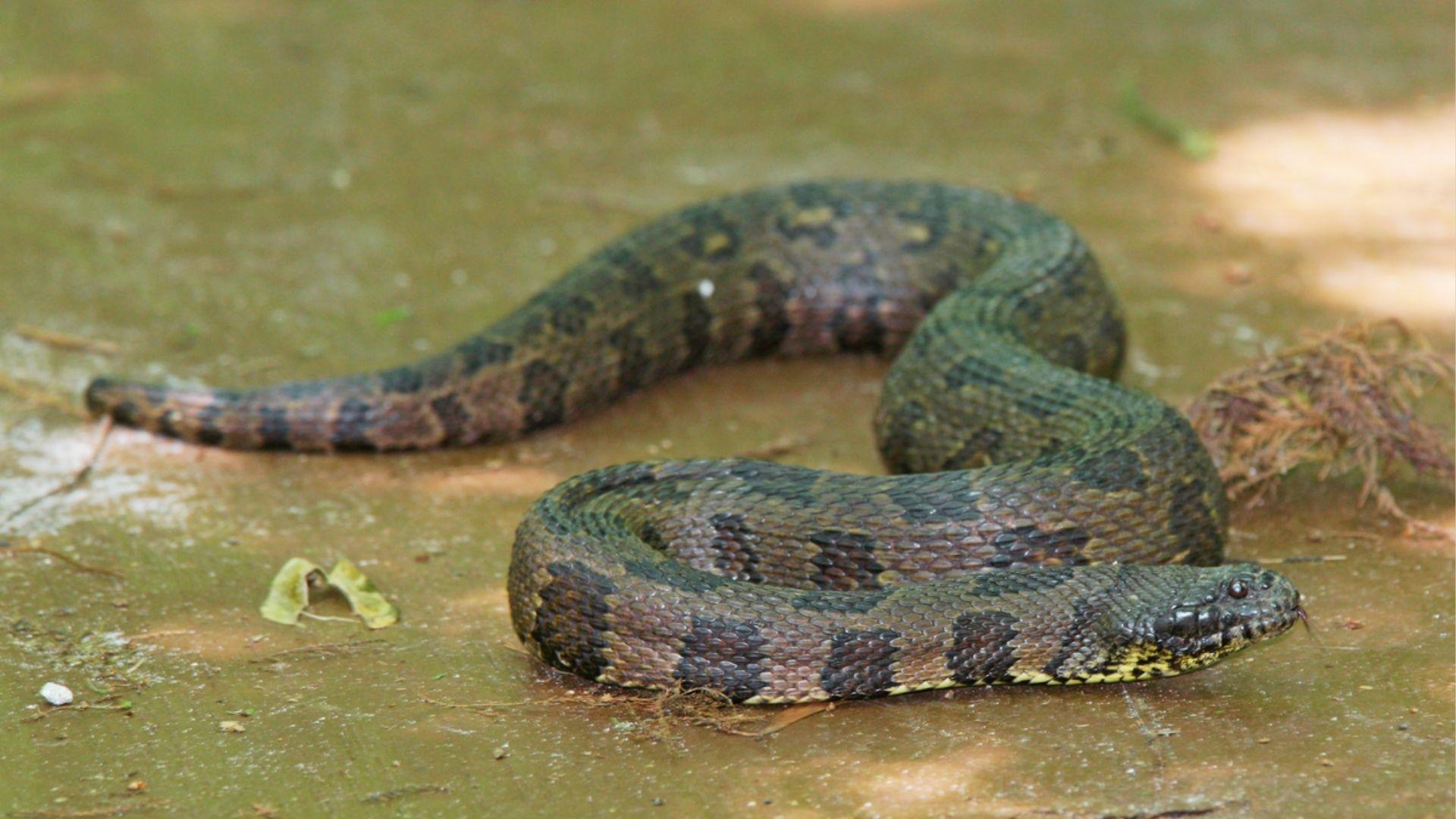
The Brown Water Snake is a large, non-venomous species that lives near rivers, lakes, and wetlands across Georgia. It can grow up to 60 inches long. The body is dark brown with squarish blotches along the sides and back.
Many people mistake it for a Cottonmouth because of its heavy body and aquatic habitat. However, the Brown Water Snake has a more rounded head and a rounder pupil.
A Cottonmouth has a broad, flat head and vertical, slit-like pupils two details that help separate the two in the field.
It is aggressive when cornered and will bite, but it is not venomous.
4. Smooth Earth Snake
Alt text:Plain light brown snake coiled on gray rock, smooth scales and dark eyes.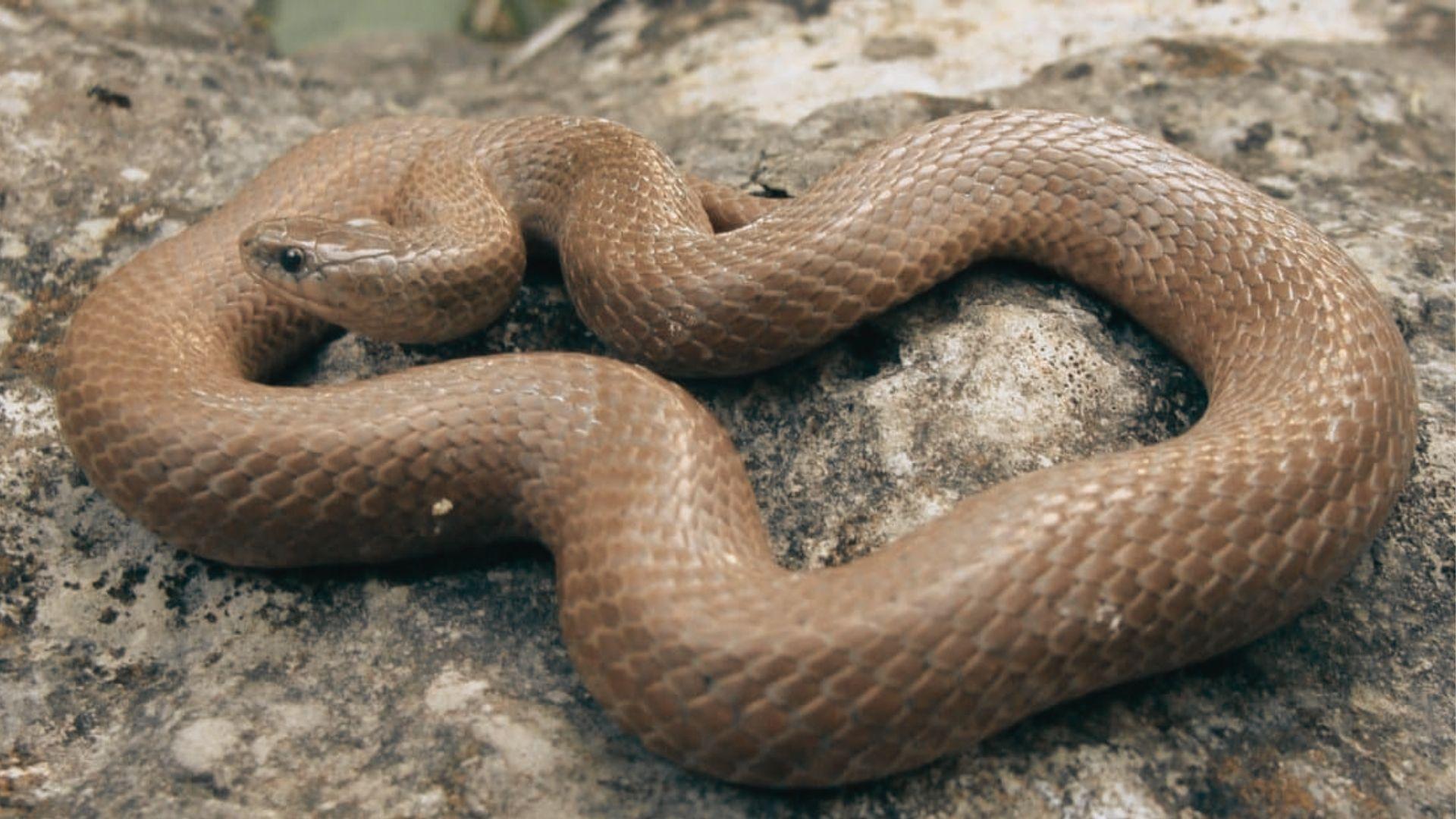
The Smooth Earth Snake is a tiny, plain-looking species. It is usually gray-brown to reddish-brown with smooth scales and very little pattern. Adults are typically 7 to 10 inches long.
It spends most of its time underground or under logs, mulch, and leaf debris. You might turn over a garden stone and find one curled up underneath. Females give birth to live young in late summer, typically around ten tiny juveniles that are barely two to three inches long.
It is completely harmless and feeds primarily on earthworms.
5. Eastern Worm Snake
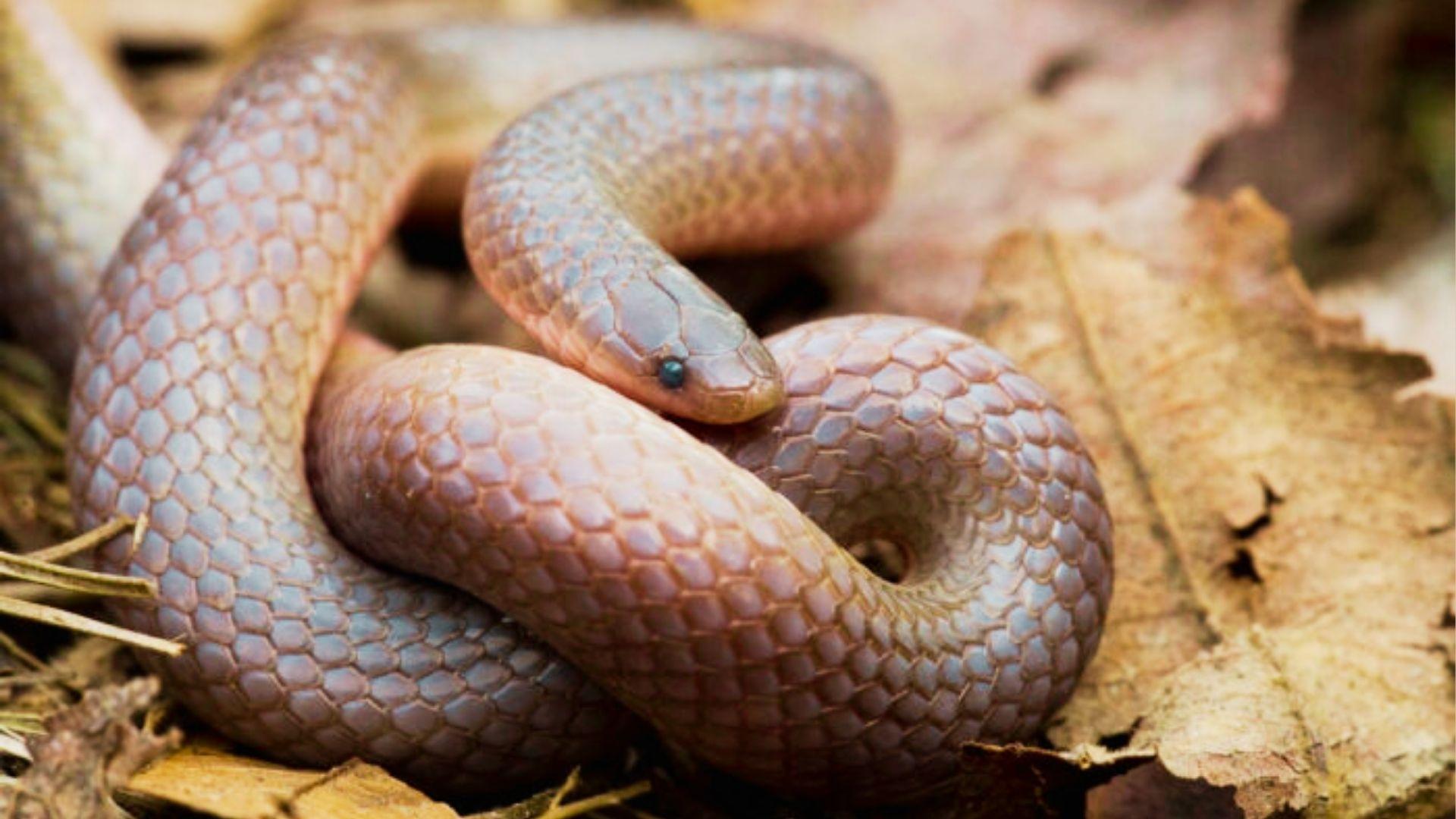
The Eastern Worm Snake is even smaller than the Smooth Earth Snake. It rarely grows past 11 inches. The back is brown, and the belly has a pinkish or reddish tone that makes it look similar to a large earthworm.
This snake is secretive and rarely seen above ground. It lives in moist forest soil and spends most of its time burrowing. Despite its small size, it does have predators in Georgia, including the Eastern Coral Snake, which actively hunts other snakes.
It poses no threat to humans and is harmless.
6. Queen Snake
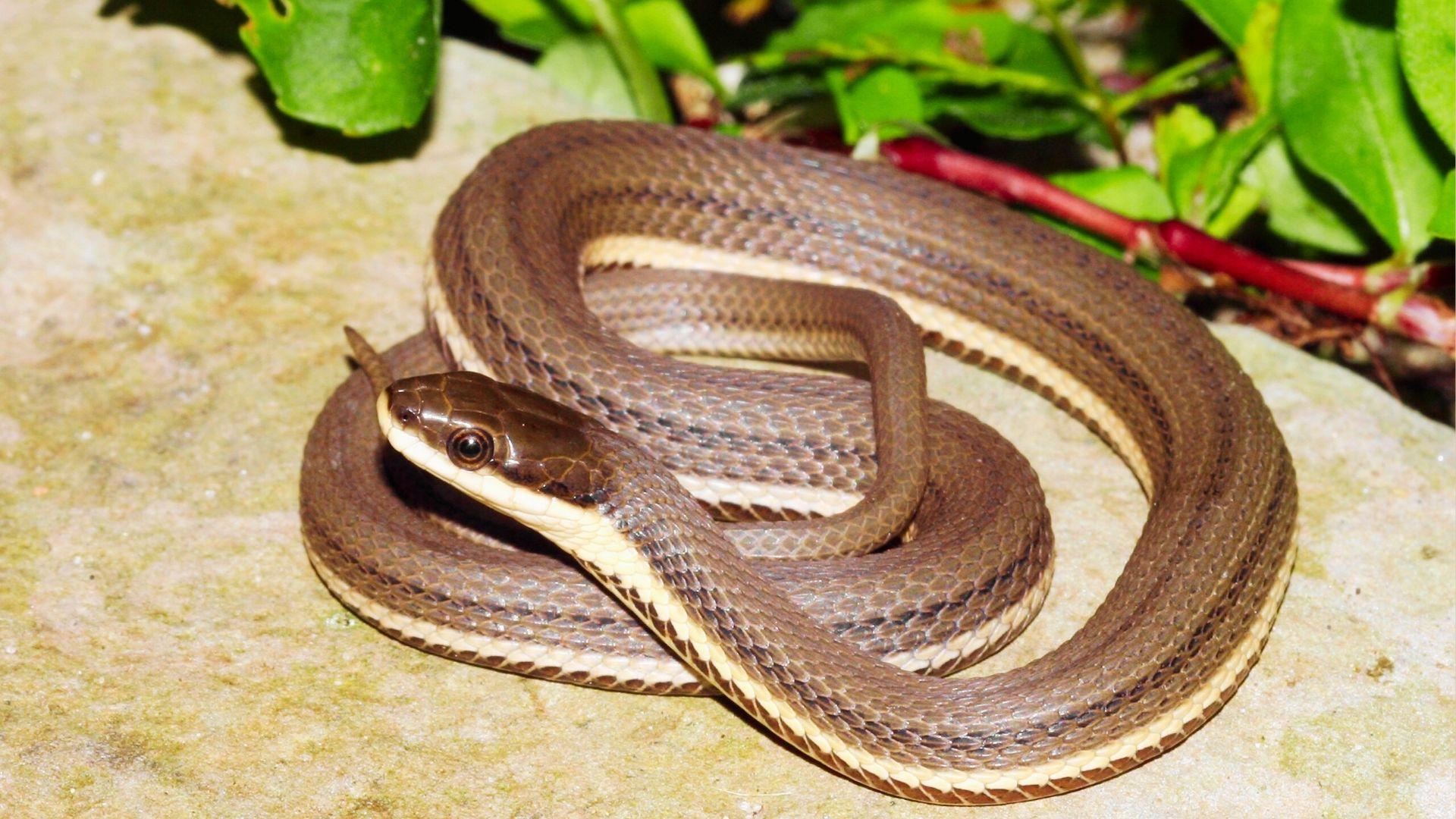
The Queen Snake is a slender, semi-aquatic species. It is olive-brown to dark brown with a yellowish stripe along each side of the lower body. Adults grow between 15 and 24 inches.
It is found near clean, rocky streams where it feeds almost exclusively on freshly molted crayfish.
It detects prey using only its sense of smell, which is highly specialized for finding soft-shelled crayfish. Because it is so picky about habitat and food, it is less common in urban areas.
It is non-venomous and generally calm.
7. Timber Rattlesnake
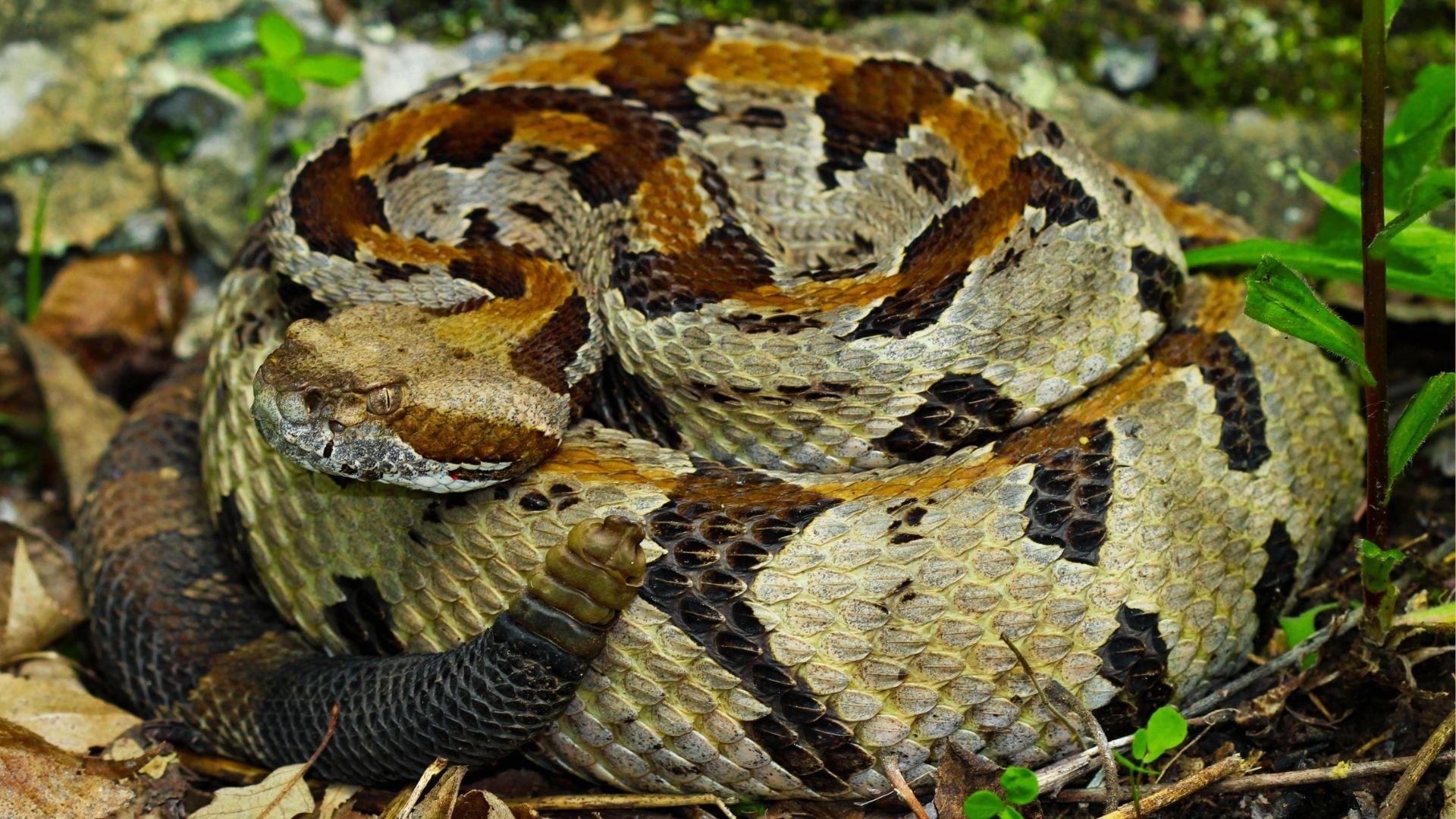
The Timber Rattlesnake is one of Georgia's most respected venomous species. It is large, often reaching 36 to 60 inches.
The body is yellowish, gray, or brown with dark brown or black crossband patterns. A rattle at the tail tip is the clearest identifier.
Like all rattlesnakes, it is a pit viper with long fangs capable of injecting a significant amount of venom.
It lives in deciduous forests in northern Georgia as well as lowland swamps in the south. Pregnant females tend to seek out open, rocky ledges where temperatures are warmer. It is not aggressive but will defend itself when provoked or cornered.
If you hear a rattle, freeze and slowly move away. Do not attempt to handle or relocate this snake on your own.
8. Northern Water Snake
Alt text:Gray and tan banded snake coiled among dry leaves and green sprouts on forest floor. 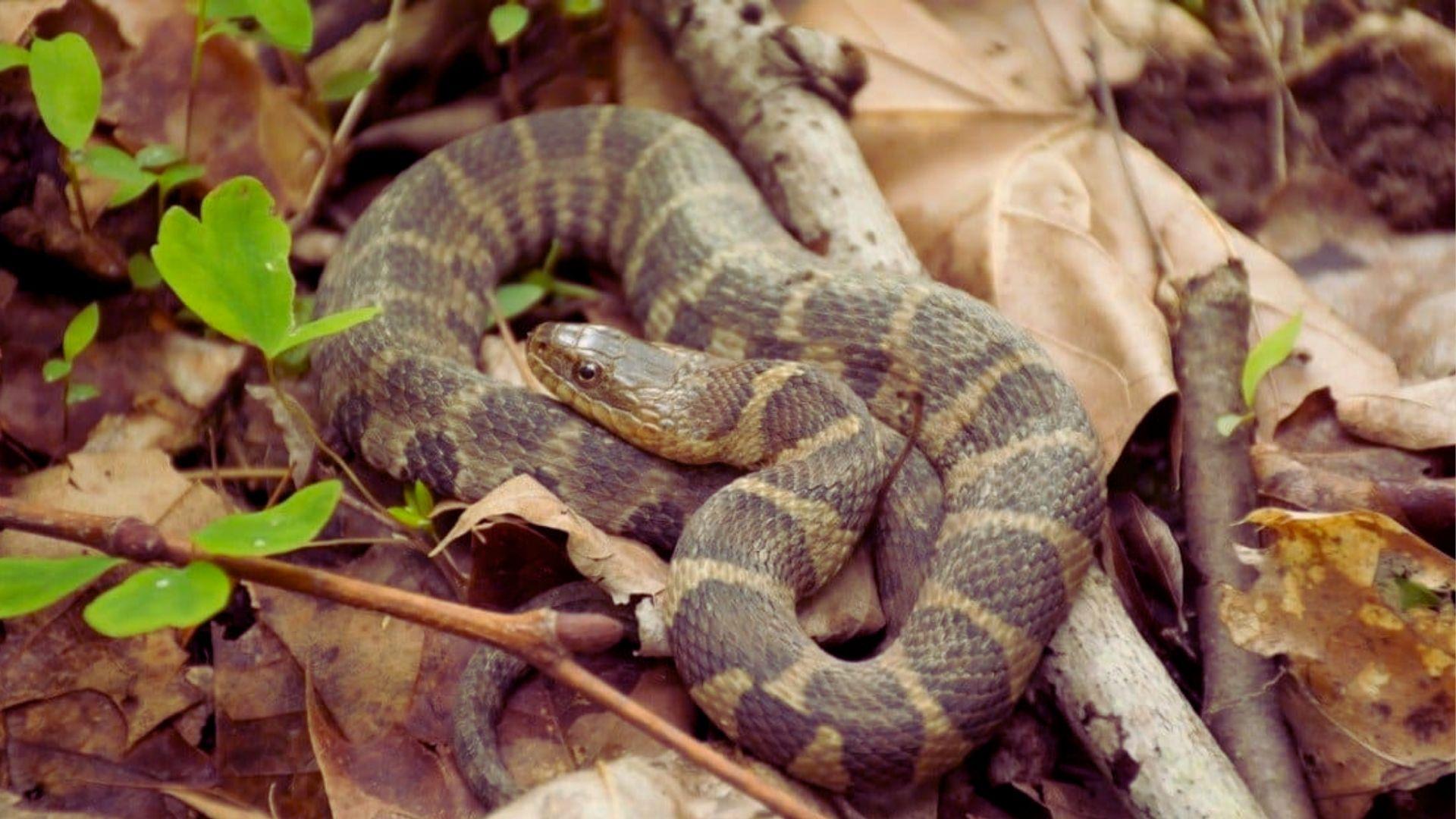
The Northern Water Snake is heavy-bodied and brown with dark crossbands near the neck and blotchy patterns toward the tail. It grows between 24 and 55 inches.
It is commonly found along rivers, ponds, and lake edges. Like the Brown Water Snake, it is often confused with the Cottonmouth.
The key difference is that it has a longer, narrower head and round pupils. Northern Water Snakes are also frequently seen basking on rocks and logs before retreating to the water at any sign of disturbance.
It is non-venomous but will bite repeatedly if handled.
9. Mole Kingsnake
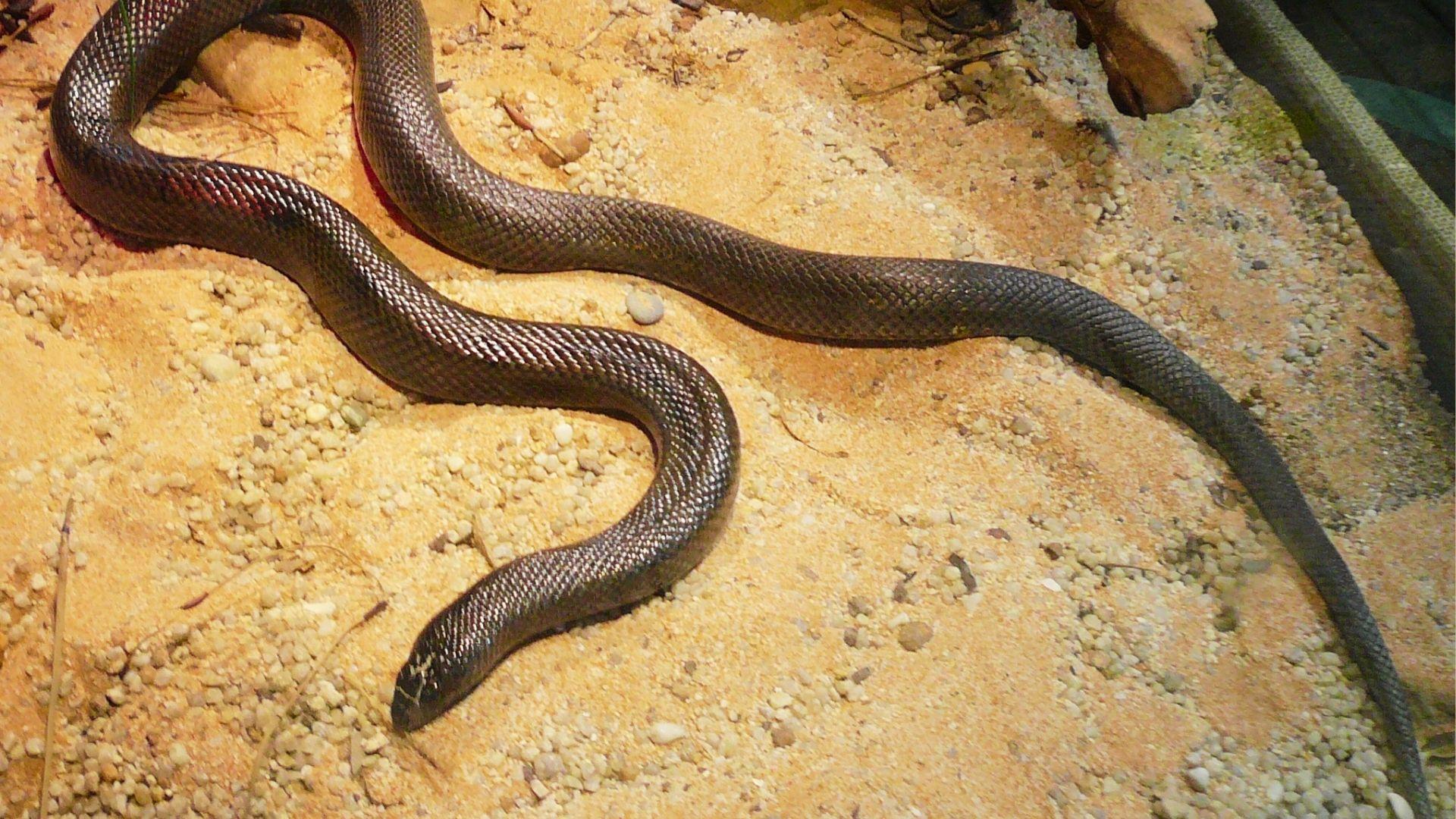
The Mole Kingsnake is a secretive, burrowing species with a reddish-brown to brown body and dark-edged blotches. Adults range from 30 to 47 inches.
It spends most of its time underground, hunting moles, mice, and other small mammals. It is rarely seen on the surface and tends to be found when gardens or fields are turned over.
When threatened, it will vibrate its tail in leaf litter, creating a buzzing sound that mimics a rattlesnake though it is not one.
It is non-venomous and actually helpful for controlling rodent populations.
10. Pine Woods Snake
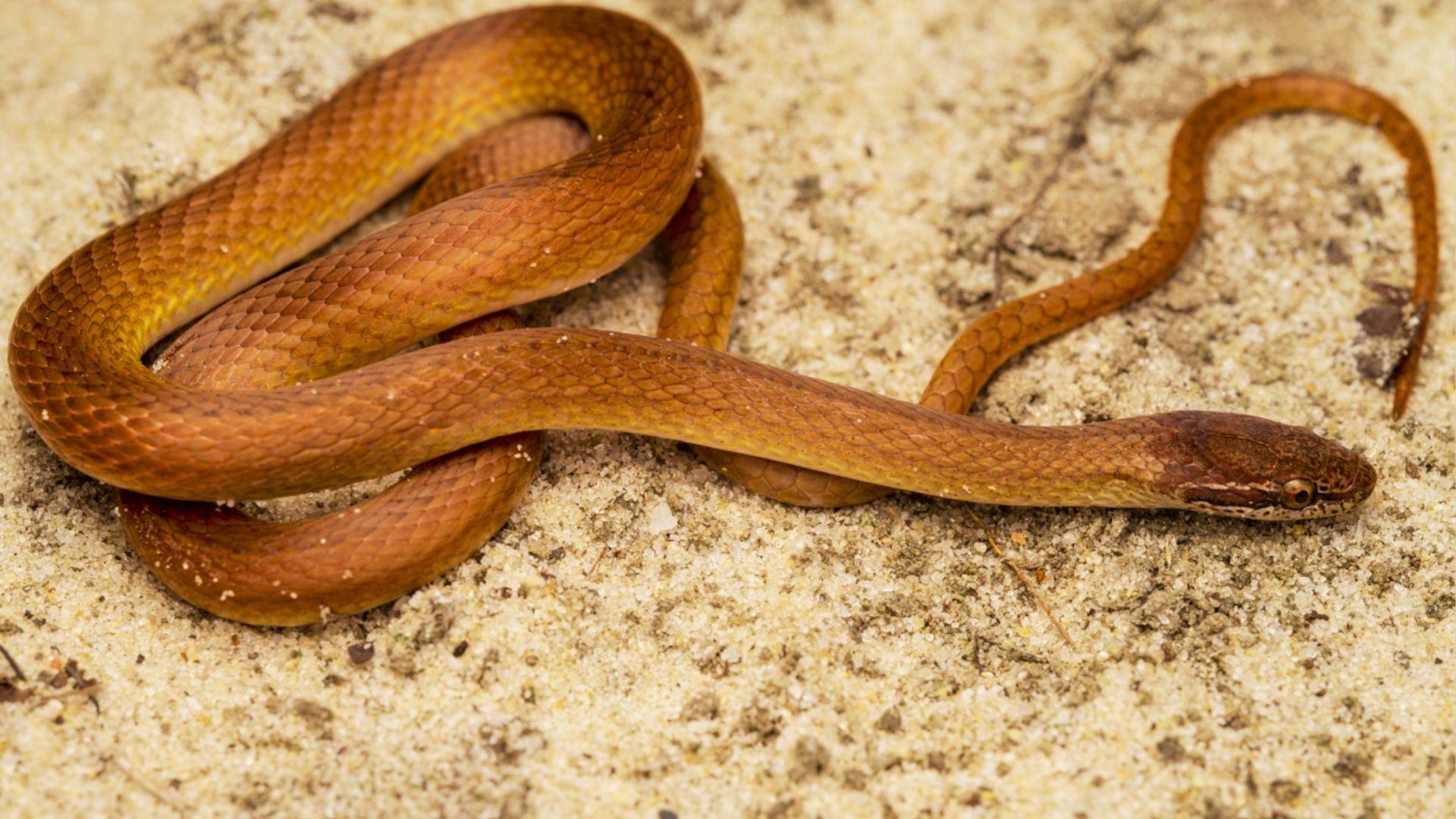
The Pine Woods Snake is a slender, glossy snake with a reddish-brown to orange-brown body and a pale or white belly. Adults are usually 10 to 15 inches long.
It lives in sandy pine flatwoods and coastal areas in the southeastern part of Georgia. It burrows into soft soil and leaf litter and is rarely encountered. It is nocturnal and feeds on small frogs, lizards, and salamanders.
It is not dangerous to humans, though it does produce mild venom that affects its small prey.
11. Eastern Diamondback Rattlesnake
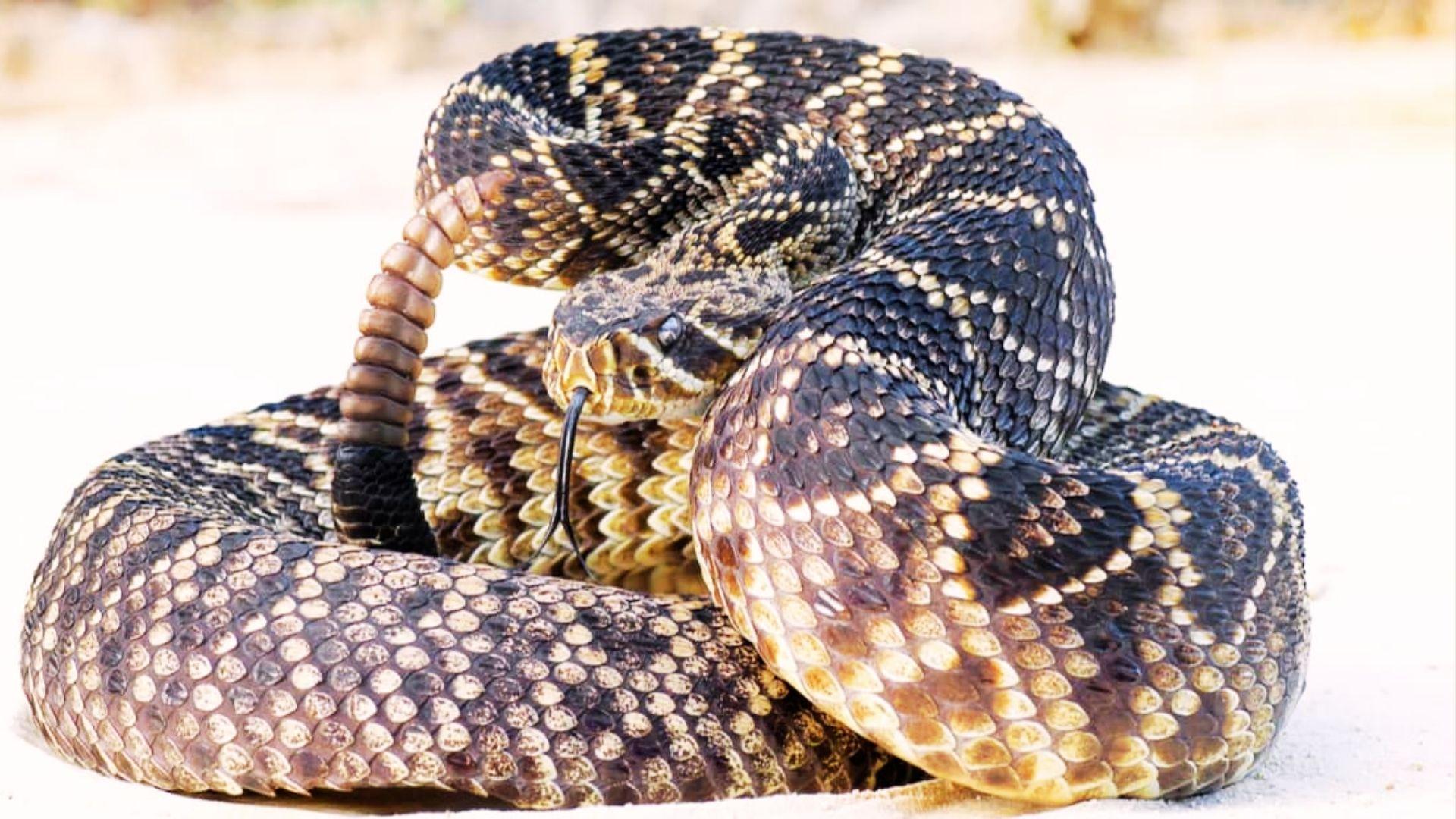
The Eastern Diamondback Rattlesnake is the largest venomous snake in North America. It can reach over 72 inches in length. Its brown body is marked with clear diamond shapes outlined in yellow or cream.
It is found in dry, sandy habitats, palmetto flatwoods, and cypress swamps in southern Georgia. It also uses gopher tortoise burrows as shelter during both summer and winter, which is one reason it can be found underground or in unexpected locations on sandy terrain.
It is also a capable swimmer and has been spotted crossing open water between coastal islands. It is a sit-and-wait predator and rarely moves unless startled.
This snake demands serious respect. Medical attention is required immediately after any bite.
12. Common Brown Snake Look-Alikes
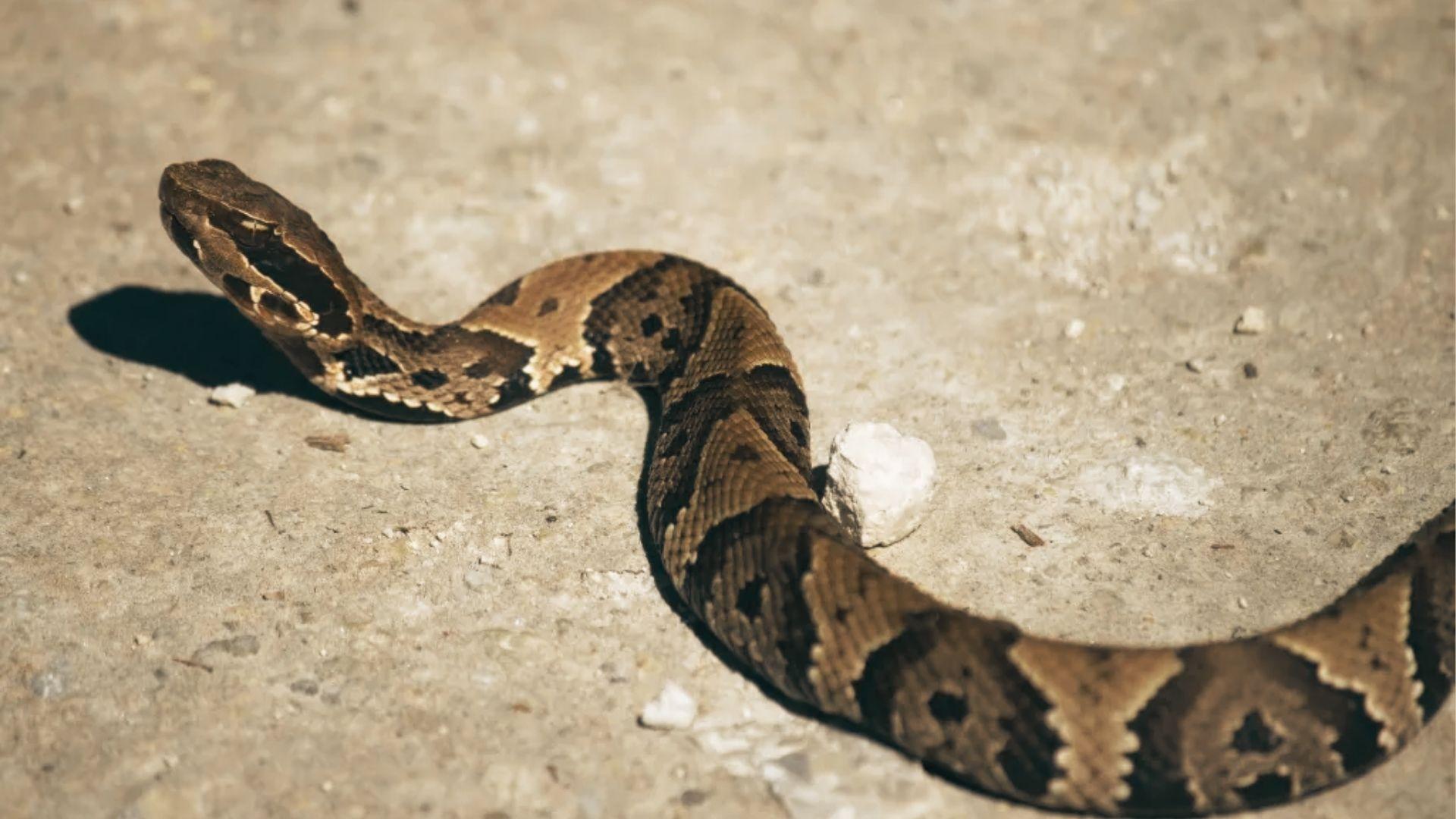
Several snakes in Georgia are not technically "brown snakes" but are brown enough to cause confusion. These include the Eastern Hognose Snake, the Corn Snake in its brownish phase, and juvenile Black Rat Snakes, which are pale gray-brown with blotchy patterns.
Young Black Rat Snakes especially confuse people. They look nothing like their sleek, dark adult form and are often misidentified as Copperheads.
Key tip:Corn Snakes have a spear-shaped mark on the head and bright belly checkerboard. Hognose Snakes have upturned snouts and will play dead dramatically. Their brown camouflage against leaf litter makes all of these species easy to overlook until you are right on top of them.
13. Rare Brown-Colored Snakes in Georgia
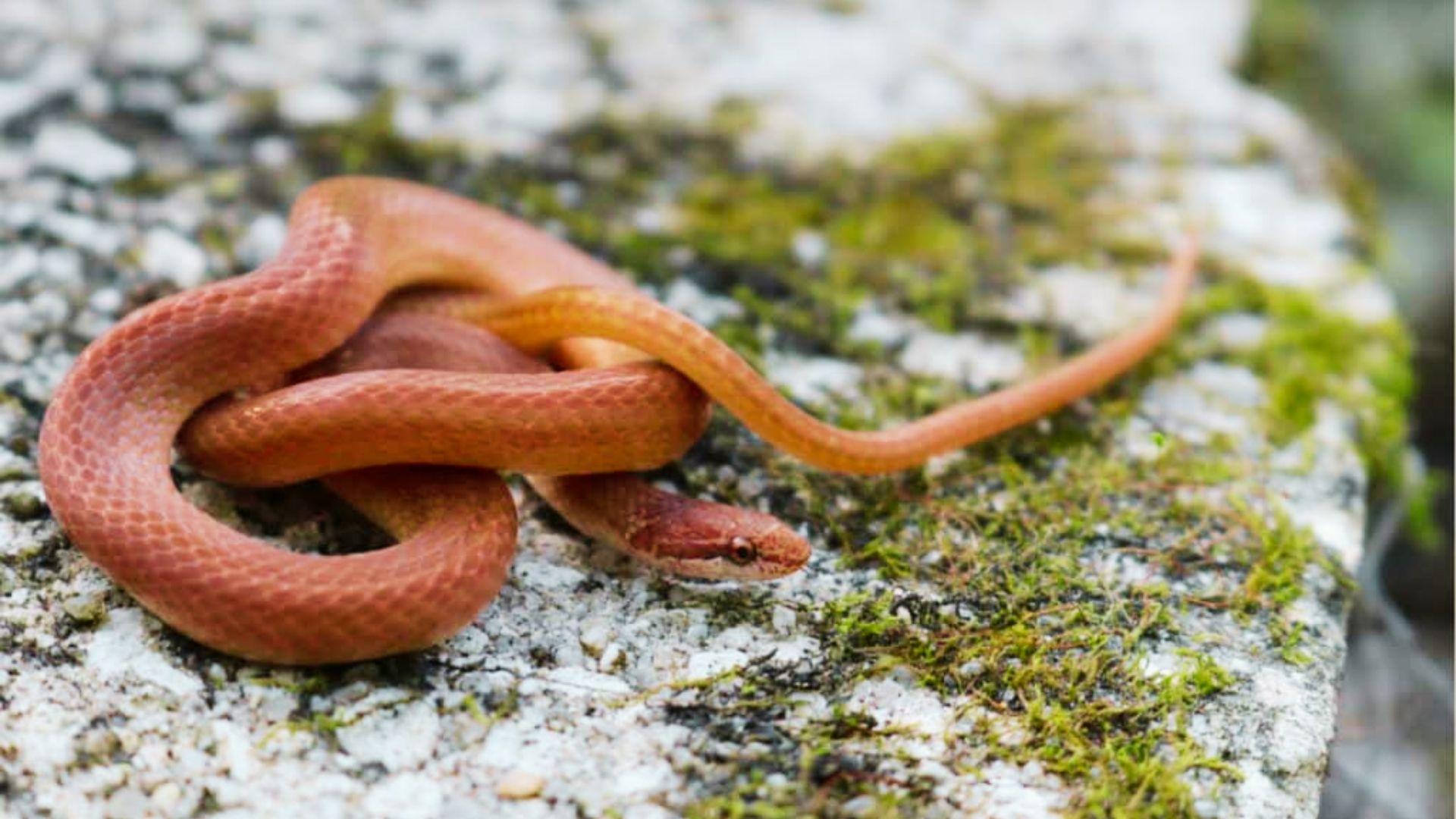
A few brown-toned snakes in Georgia are genuinely rare. The Scarlet Kingsnake, when faded or dirty, can appear brownish. The Southeastern Crowned Snake is a tiny, brown-colored burrower rarely seen by most people.
These species are protected and even harder to identify without close inspection. If you come across an unfamiliar small brown snake and cannot identify it, photograph it from a safe distance and contact a local wildlife extension office or herpetologist.
You can also submit a photo to iNaturalist, which uses community input and AI to help confirm species. Georgia's DNR wildlife resources division can also point you toward the right expert.
Do not attempt to catch or kill any snake, rare or common. It is both dangerous and, in some cases, illegal.
Where Do Brown Snakes Live in Georgia?
Georgia's diverse landscape gives brown snakes plenty of options.
You will find them across forests, wetlands, fields, suburban neighborhoods, and coastal plains. DeKay's Brown Snakes prefer disturbed areas like gardens and parks. Water snakes stick close to streams, rivers, and ponds.
Timber Rattlesnakes favor mountainous deciduous forests in northern Georgia. Mole Kingsnakes and Worm Snakes live underground in loose, moist soil.
Eastern Diamondback Rattlesnakes are more common in the sandy southern lowlands, often sheltering in gopher tortoise burrows.
Brown snakes do not pick one single environment. They go wherever food, cover, and temperature allow. This is why you might find one in a city park just as easily as in a rural woodlot.
Why Brown Snakes Are Found Around Homes

Snakes do not show up in your yard by accident.
They follow food. If your property has mice, frogs, earthworms, or insects, snakes will notice. Bird feeders attract rodents, and rodents attract snakes. It is a simple food chain.
They also follow shelter. Rock piles, wood stacks, overgrown shrubs, compost heaps, and cluttered garages all make ideal hiding spots. Cool concrete slabs and mulch beds offer the temperature and moisture snakes prefer.
Decorative rock walls and retaining walls are also common hiding areas that many homeowners overlook.
Water sources like birdbaths, garden ponds, and poor drainage also bring them in. Snakes are opportunists. If your yard offers food, water, and cover, it is a comfortable place for them to stay.
How to Keep Brown Snakes Away From Your Property
Keeping snakes out starts with making your yard less attractive to them.
- Remove wood piles, rock stacks, and debris where snakes can hide
- Keep grass cut short and trim overgrown shrubs
- Seal gaps in foundations, doors, and crawl spaces
- Store bird seed in sealed containers to reduce rodent activity
- Fix any standing water issues or poor drainage
- Move compost bins away from the house if possible
- Use a fine-mesh fence around garden beds if snakes are frequently entering
- Clear decorative rock walls or retaining walls away from the home's foundation if possible
Snake repellents have mixed results. Physical barriers and habitat changes work better long-term.
Are Brown Snakes Dangerous to Humans or Pets?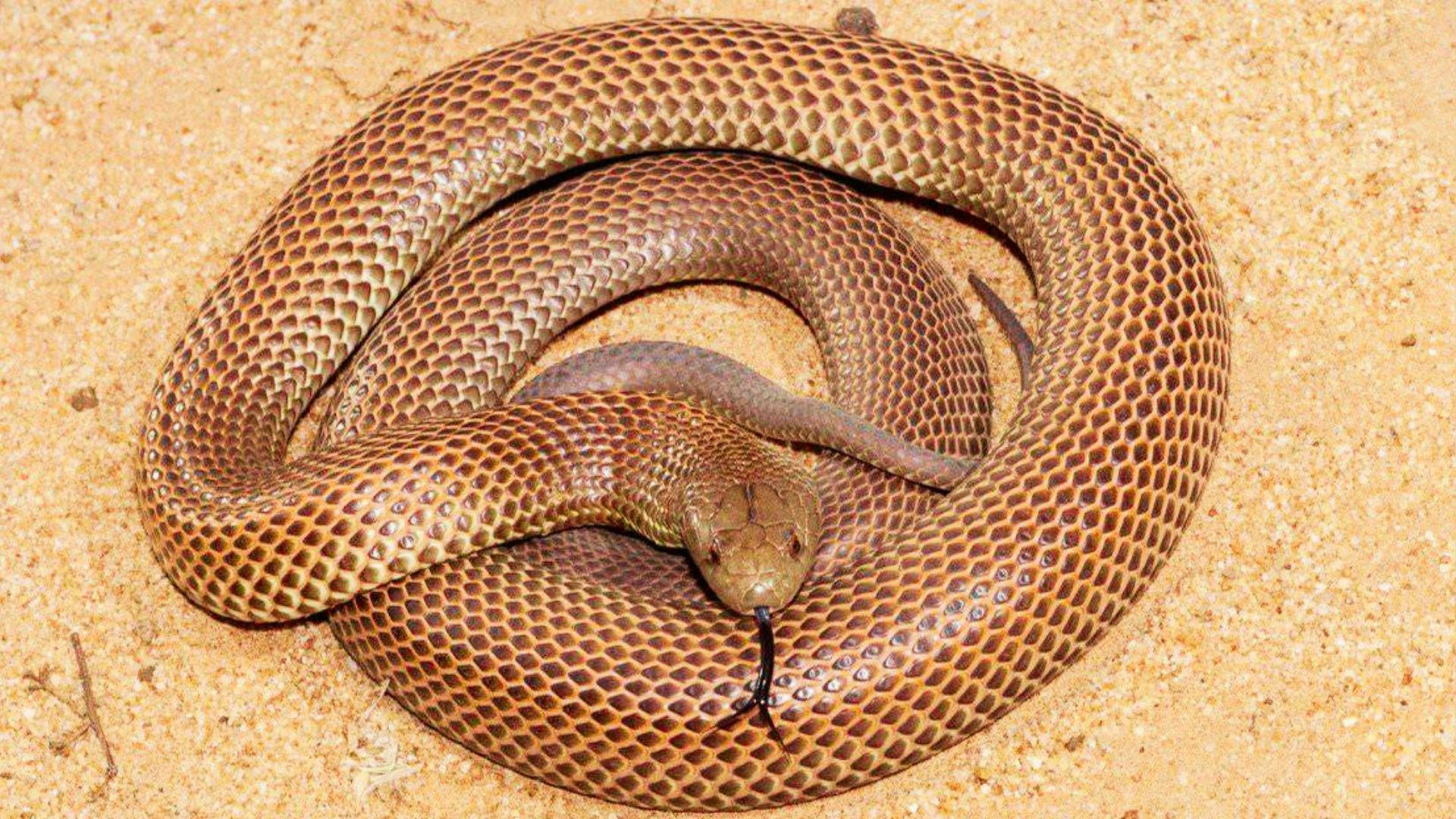
Alt text:Large light brown snake with dark scale pattern tightly coiled on sand, tongue flicking out.
Most brown snakes in Georgia are not dangerous to people or pets.
The harmless species, like DeKay's Brown Snake, Smooth Earth Snake, and Eastern Worm Snake, are too small to cause any harm. They might try to musk or squirm if handled, but they do not bite in any meaningful way.
However, the venomous pit vipers are a different story. Eastern Copperheads, Timber Rattlesnakes, and Eastern Diamondback Rattlesnakes can cause serious injury.
Their camouflage against leaf litter and mulch makes them especially easy to step on without seeing them first. Pets are especially vulnerable because they often approach snakes out of curiosity.
If your dog or cat is bitten, get to a vet as fast as possible. Do not try to treat a venomous snakebite at home. Call 911 or Poison Control at 1-800-222-1222 if a person is bitten.
Common Mistakes to Avoid Around Brown Snakes
Many snakebites and close calls happen because of avoidable errors.
- Trying to kill a snake instead of leaving it alone
- Assuming all brown snakes are harmless
- Reaching into bushes, wood piles, or under rocks without looking
- Picking up a snake to show children or take a closer look
- Walking barefoot in tall grass, especially at night
- Thinking a dead snake cannot bite (reflexive bites can still happen)
- Ignoring a snake inside the home and hoping it leaves on its own
Awareness is your best protection. Most people get bitten when they try to interact with a snake, not when they simply leave it alone.
What to Do If You See a Brown Snake in Georgia
Stay calm and keep your distance.
Most snakes bite only when they feel cornered or threatened. If you give them space, they will usually move along on their own. Back away slowly and watch where it goes.
Do not try to pick it up, even if you think it is harmless. Misidentification happens, and bites from even non-venomous snakes can cause infection.
If the snake is inside your home, keep people and pets out of the room. Open a door or window to give it an exit if possible. If it does not leave on its own, contact a licensed wildlife removal or professional snake control service to have it safely captured and relocated.
Do not wait too long, snakes that find shelter inside a structure can be hard to locate once they move deeper into walls or crawl spaces.
Photograph it from a safe distance if you want help identifying it. Georgia's DNR wildlife helpline or iNaturalist can help confirm the species.
Expert Tips for Safely Living Around Brown Snakes
Living in Georgia means living alongside snakes. Here is how to do it safely.
- Wear closed-toe shoes and long pants when working outdoors
- Use a flashlight when walking outside at night during warm months, especially in summer when Copperheads are most active after dark
- Check inside boots and gloves before putting them on if stored in a shed
- Teach children to look before reaching and never touch unknown snakes
- Keep a photo on your phone of common venomous species in Georgia for quick reference
- Contact a licensed wildlife control professional for repeated snake issues on your property
- Learn the three venomous species in your region so you can identify them fast
Most encounters end without incident. A little preparation goes a long way.
Conclusion
Brown snakes in Georgia are more varied than most people think. Some are tiny garden helpers. Others deserve real caution. Knowing the difference between a harmless DeKay's Brown Snake and a venomous Copperhead can protect both you and the snake.
Take what you have learned here and use it the next time you spot a brown snake in Georgia.
If this guide helped you, share it with a neighbor, a friend, or a local community group it might keep someone from making a dangerous mistake.
And if you have had your own close call with a brown snake in Georgia, drop your story in the comments below.
Your experience could be exactly what someone else needs to read.
Frequently Asked Questions
Is it illegal to kill a snake in Georgia?
Georgia does not have a blanket ban on killing snakes, but several species are protected. Killing a protected species can result in fines.
Can brown snakes climb walls or fences?
Some brown-toned snakes, like rat snakes, are excellent climbers. Most small ground-dwelling species stay at ground level.
Do brown snakes in Georgia hibernate?
Yes. Most snakes in Georgia become less active in winter and may shelter underground or under debris from late fall through early spring.
How long do brown snakes in Georgia live?
Small species like DeKay's Brown Snake live around five to seven years. Larger species like the Timber Rattlesnake can live over 30 years.